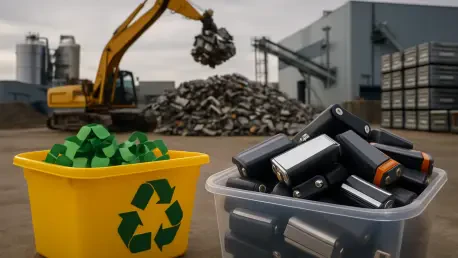

A new twelve-month initiative focuses on transforming what is currently viewed as industrial waste into a valuable asset for the automotive manufacturing sector. This shift represents a departure from the traditional linear model of consumption, where lithium-ion batteries reaching the end of their service life were often relegated to low-value scrap or energy-intensive smelting processes. As the global demand for electric vehicles continues to surge, the industry faces a critical bottleneck in the procurement of raw materials like lithium and cobalt. Traditional recycling methods, while functional, frequently result in significant material loss and a high carbon footprint that negates the environmental benefits of transitioning away from internal combustion engines. Short-loop recycling emerges as a sophisticated alternative, promising to recover cathode materials without breaking them down into basic chemical elements. By maintaining the structural integrity of these high-value components, manufacturers can significantly reduce the energy requirements of production.
Direct Cathode Reclamation: A Paradigm Shift in Processing
To understand the potential of direct reclamation, one must contrast it with the conventional pyrometallurgical and hydrometallurgical techniques that have dominated the industry for decades. Smelting involves melting batteries at extreme temperatures, which effectively recovers heavy metals but often loses lithium to the slag and releases substantial greenhouse gases. In contrast, the short-loop process utilizes mechanical and chemical steps designed to separate and rejuvenate the cathode powder directly. This involves removing binders and electrolytes through specialized solvent extraction or thermal treatments that operate at much lower temperatures. Once the cathode material is isolated, it undergoes a relithiation process to restore the lithium ions lost during years of use. This localized approach allows for the creation of a closed-loop system where the output of a recycling facility becomes the direct input for a neighboring battery assembly plant, bypassing the need for intensive refining.
The logistical advantages of this methodology are profound, especially as automakers seek to insulate themselves from the volatility of international commodity markets. By processing materials locally, companies can bypass the lengthy and environmentally taxing shipping routes that typically define the battery supply chain. This decentralized model is gaining traction across North America and Europe, where new facilities are being integrated into existing manufacturing hubs to minimize transportation risks. Furthermore, the economic viability of direct recycling is bolstered by the fact that it preserves the value-added engineering already present in the cathode crystals. Rather than paying to synthesize new crystals from scratch, manufacturers can essentially refresh existing ones for a lower cost. This efficiency is vital for the mass-market adoption of electric vehicles, where battery costs remain the single largest factor in the final sticker price. These technologies provide a roadmap for achieving true price parity.
Technological Barriers: Navigating the Path to Scalability
The economic landscape is also being reshaped by new regulatory frameworks that mandate higher levels of recycled content in new battery assemblies. Between 2026 and 2028, these mandates are expected to tighten significantly, forcing manufacturers to move beyond exploratory pilots and toward full-scale industrial implementation. Digital tools like the Battery Passport are playing a central role in this evolution by providing a transparent record of a battery’s composition, usage history, and recycling potential. This data-driven approach allows recyclers to optimize their processes for specific batches of material, increasing yield and reducing waste. Moreover, the emergence of government-backed incentives is encouraging private investment in the infrastructure needed to support short-loop systems. By de-risking the initial capital expenditure, these policies are enabling a faster rollout of innovative recovery technologies. This combination of legislative pressure and financial support is creating a powerful tailwind.
Stakeholders successfully demonstrated that the integration of direct recycling into the supply chain necessitated a fundamental rethink of battery design and material sourcing. By prioritizing ease of disassembly at the engineering stage, manufacturers simplified the reclamation process and increased the final purity of recovered cathodes. The pilot programs conducted during this period proved that short-loop methods were capable of producing battery-grade materials that met the performance specifications of virgin minerals. This success provided a clear path forward, emphasizing the need for continued investment in automated sorting and advanced relithiation techniques. Moving forward, the industry prioritized the establishment of global standards for recycled material quality to ensure consistency across different markets. Collaborative efforts between tech firms and OEMs proved essential in overcoming scaling challenges, ultimately leading to a more resilient and self-sufficient automotive ecosystem. These developments laid the groundwork for a circular economy.