
A Federal Catalyst for Local Environmental Change
Across the vast landscape of American waste management, a quiet revolution is taking place as local municipalities replace outdated guesswork with data-driven strategies funded by substantial federal investment. This transformation is not merely about adding more bins to street corners; it represents a fundamental shift in how communities perceive and interact with discarded materials. By moving beyond a passive approach, the federal government is now empowering local leaders to treat recycling as a critical component of national infrastructure rather than a secondary public service.
The transition from broad legislative goals, such as those established in the 2021 Infrastructure Investment and Jobs Act, toward active local initiatives marks a significant milestone in environmental policy. As programs rollout from 2026 toward 2028, the focus has shifted from high-level funding to the granular realities of city-level waste management. The $33 million Recycling Education and Outreach program serves as the primary engine for this change, providing the necessary capital to test innovative solutions in diverse environments.
Industry leaders view this funding as a pivotal moment for the American circular economy because it addresses the human element of the recycling chain. While mechanical sorting technology has advanced, the quality of the input remains dependent on individual household decisions. These grants allow organizations to move beyond traditional “blue bin” thinking, fostering a more sophisticated understanding of material lifecycles and the economic value of recovered resources across various regional markets.
The Strategic Diversification of Recycling Modernization
The current wave of modernization is defined by its refusal to accept a “one-size-fits-all” solution for the entire country. Instead, the strategy focuses on diversifying tactics to meet the unique economic and social profiles of different states. This involves a dual approach where high-tech sorting facilities are supported by localized education campaigns that speak directly to the habits of residents in specific neighborhoods.
By diversifying the application of these funds, the Environmental Protection Agency ensures that both rural and urban areas can develop systems that work within their existing frameworks. For some, this means improving the collection of traditional materials like paper and glass, while for others, it involves creating entirely new pathways for organic waste. The flexibility of these grants allows for a laboratory of innovation where the most successful tactics can eventually be scaled nationally.
Bridging the Data Divide to Measure True Diversion Rates
One of the most significant hurdles in waste management has been the critical lack of baseline metrics in major urban hubs like Chicago. Federal funding is finally quantifying residential behavior, allowing cities to see exactly what is being thrown away and what is being successfully diverted. Without this data, municipal leaders were essentially flying blind, unable to determine if their outreach programs were actually changing the habits of the residents they served.
Case studies like the “Feed The Cart” campaign illustrate how visual branding can simplify complex recovery requirements for the average citizen. By using a mascot to anthropomorphize recycling carts, the program identifies specific “treats” the cart wants, such as plastic jugs and cardboard, while discouraging “garbage” that clogs the system. This approach bypasses technical jargon and provides residents with a clear, actionable guide that reduces confusion at the point of disposal.
However, there remains a persistent friction between localized municipal rules and the need for standardized regional communication. While one city might accept certain plastics, a neighboring town might not, leading to “wishcycling” and contamination. Federal grants are now being used to bridge these gaps, encouraging regional cooperatives to harmonize their messaging so that residents receive consistent instructions regardless of their specific zip code or local hauler.
Tailoring Outreach to Regional Infrastructure Realities
Success in recycling often depends on the specific physical infrastructure available in a given city, necessitating a contrast between high-tech digital marketing and “boots on the ground” strategies. In places like Pittsburgh, the focus has shifted toward physical empowerment rather than just digital awareness. This involves moving beyond social media posts to provide communities with the actual tools and training needed to manage their waste more effectively on a local level.
The distribution of composting tools and the facilitation of community-led training sessions have proven that tangible resources often outweigh digital engagement. Providing a household with a compost bin and a thermometer creates a physical commitment to the process that a digital advertisement cannot replicate. When residents have the physical means to participate, the psychological barrier to entry drops significantly, leading to higher long-term participation rates.
Municipalities must carefully navigate the risk of “information overload,” which can lead to citizen apathy or confusion. The most successful programs have found that providing simple, tangible resources is far more effective than bombarding residents with complex charts and scientific data. By focusing on the physical act of sorting and providing the necessary bins, cities are creating a more intuitive and less intimidating experience for the public.
Revolutionizing Organics Recovery Beyond Traditional Waste Streams
Grants are increasingly being used to integrate composting into institutional settings, such as school systems in New Mexico. By teaching the next generation the value of organics recovery, these programs are embedding environmental responsibility into the educational curriculum. This institutional approach ensures that recycling behavior becomes a lifelong habit rather than a sporadic effort, creating a cultural shift that starts in the classroom and extends to the home.
Legislative compliance is also a major driver of change, particularly in states like Minnesota where digital toolkits prepare cities for upcoming 2030 organics mandates. These toolkits provide a roadmap for local governments to meet strict state requirements without having to reinvent the wheel. By providing editable templates and hauler contract guidance, the grants ensure that even smaller municipalities can stay ahead of the regulatory curve.
This evolution challenges the long-held assumption that recycling is a static industry focused solely on paper and plastic. The rise of niche organics recovery shows that the industry is becoming more dynamic and responsive to the actual composition of the American waste stream. As food waste recovery becomes a mainstream priority, the infrastructure and education surrounding it are catching up to the standards long held by traditional recycling programs.
Navigating the Financial Cliff and Building Institutional Longevity
As the initial three-year grant cycle nears its conclusion, organizations are increasingly focused on an “evergreen” model of resource creation. The goal is to build digital assets, training manuals, and community networks that can survive long after the federal subsidies have been exhausted. This forward-thinking approach ensures that the initial investment acts as a seed rather than a temporary life-support system for local environmental departments.
The precarious nature of grant-funded staffing remains a significant point of debate within the waste management industry. Many project leads are concerned that the momentum generated by these programs might dissipate if permanent funding is not secured to maintain the personnel who manage them. This has led to a call for more sustainable financial models that combine federal support with local revenue streams or public-private partnerships.
Speculative discussions are also emerging regarding the role of volunteer-led networks as a cost-effective alternative to professionalized outreach. While professional management is essential for large-scale operations, grassroots networks can provide the localized, peer-to-peer education that is often most effective at changing behavior. Building these networks now is seen as a vital insurance policy against future funding gaps and shifting political priorities.
Optimizing Future Waste Management Through Targeted Education
Data from recent pilot programs has synthesized the most effective strategies for the coming years, notably the 50% reduction in contamination seen through direct cart audits. These audits provide residents with personalized feedback on their recycling habits, turning a generic municipal service into a specific, educational interaction. This level of direct engagement has proven far more effective at improving bale quality than any broad-based advertising campaign.
Local governments are now being provided with a framework to adapt scalable templates and digital toolkits for their specific hauler requirements. This modular approach allows a city to take a successful mascot or a digital sorting tool and customize it to reflect the materials accepted by their local recovery facility. By lowering the cost of entry for high-quality communication materials, federal grants are democratizing the ability to run sophisticated environmental campaigns.
Balancing digital engagement with the physical needs of composting and recycling programs is the next great challenge for waste managers. While apps and websites can provide quick answers, the physical reality of managing waste requires bins, trucks, and sorting labor. The most successful future programs will be those that use digital tools to simplify the physical process, making it as easy as possible for residents to do the right thing.
Cementing the Link Between Infrastructure and Public Engagement
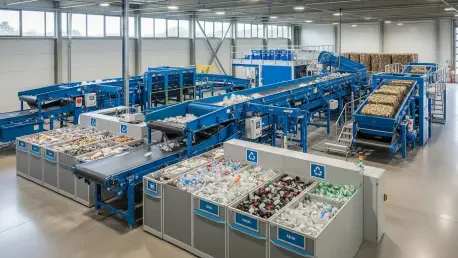
The ultimate lesson of the current grant cycle is that trucks and sorting facilities are largely ineffective without a culturally resonant and data-informed public. No matter how advanced a robotic sorter may be, it cannot overcome the challenge of a highly contaminated input stream. The focus must remain on the human element, ensuring that every resident understands their role in the broader circular economy and feels empowered to participate.
The long-term ripple effects of these 25 pilot programs will likely shape national waste policy for decades. By serving as a laboratory for what works and what does not, these initiatives are providing the data necessary to justify larger, more permanent investments in environmental justice and infrastructure. They have shown that when education is treated as a core component of the system, the entire waste management chain becomes more resilient and efficient.
The initiatives demonstrated that the most effective waste management solutions were those that prioritized human behavior alongside mechanical efficiency. These pilot programs established a blueprint for future environmental justice by ensuring that marginalized communities received the same level of educational investment as more affluent areas. Ultimately, federal support successfully bridged the gap between municipal capability and public participation, creating a unified system that functioned long after the initial funds were allocated. To maintain this progress, local leaders should prioritize the integration of these proven educational toolkits into their permanent annual budgets. Expanding volunteer training programs will also be essential to safeguard the legacy of these federal investments against future fiscal fluctuations. Consistent data collection must remain a priority to ensure that every future dollar spent is backed by measurable improvements in diversion rates.