
The implementation of the Recycling Modernization Act on July 1, 2025, signaled a monumental shift in the American approach to managing packaging waste and promoting environmental stewardship. This legislative framework transformed the state of Oregon into a premier laboratory for circular economy principles, establishing a system where producers bear primary responsibility for the lifecycle of their products. By empowering the Circular Action Alliance as the first operational Producer Responsibility Organization, Oregon moved beyond theoretical policy discussions into the practical realities of managing a statewide recycling network. This transition was not merely about changing who pays the bills; it represented a fundamental reimagining of the relationship between manufacturers, local governments, and consumers. As the nation watches these developments unfold in real-time throughout 2026, the initial results provide a comprehensive roadmap for other jurisdictions seeking to stabilize their recycling markets while reducing the environmental footprint of modern commerce.
Strengthening Local Infrastructure Through Private Capital
A primary achievement during the inaugural year of this program was the rapid deployment of private capital into a previously underfunded public recycling infrastructure. Over $25 million was directly allocated to processing facilities to upgrade outdated equipment and integrate advanced sorting technologies that can handle a wider variety of materials. This influx of funding serves as more than just a modernization tool; it acts as a critical financial buffer for local municipalities that were historically vulnerable to the volatile fluctuations of global commodity markets. By shifting the economic burden of system upgrades to the producers of packaging, the law ensures that the cost of doing business includes the cost of responsible disposal. This shared responsibility model allows local governments to focus on community-specific collection services while relying on a stable, producer-funded backbone for processing. The result is a more resilient recycling system capable of maintaining high-quality output regardless of the broader economic climate or shifting international trade policies.
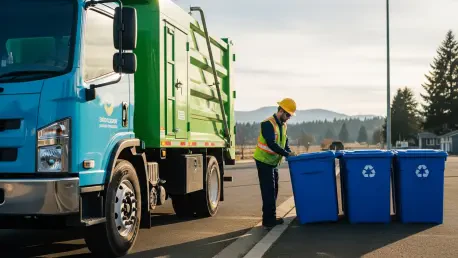
The program also successfully addressed geographic disparities by investing in the physical tools necessary to bring recycling services to underserved and rural communities across the state. With approximately $4.5 million dedicated to the purchase of new recycling carts and the distribution of comprehensive educational materials, the impact has been immediately felt in regions that previously lacked basic curbside options. For example, Baker City utilized $1.1 million in funding to acquire trucks and residential containers, launching its first-ever curbside recycling service that was once financially unattainable for the local tax base. This strategic focus on removing physical barriers ensures that the benefits of extended producer responsibility are not confined to urban centers but are instead distributed equitably. By providing the necessary hardware and clear guidance on how to use it, the state is effectively closing the loop for residents who were previously forced to rely on landfilling for materials that could have otherwise been reclaimed and reused in the manufacturing pipeline.
Balancing Corporate Privacy With Environmental Transparency
The transition to a producer-led system necessitated a delicate negotiation regarding the standards for what constitutes a responsible end market for recycled materials. Oregon’s regulations require that collected items be sent to facilities that adhere to rigorous environmental and social protections, ensuring that domestic waste does not contribute to pollution abroad. However, the initial rollout faced resistance from industry stakeholders who expressed significant concerns about the potential exposure of proprietary business data and trade secrets during the verification process. This conflict highlighted a central tension in extended producer responsibility: the need for public transparency versus the competitive requirements of the private sector. Regulators were tasked with creating a system that verifies material destinations without compromising the commercial interests of the companies participating in the program. Addressing this challenge required a nuanced approach to auditing that prioritizes high-level accountability while providing necessary protections for sensitive corporate information.
To resolve these discrepancies, state regulators and industry representatives engaged in an extensive series of public meetings and technical workshops aimed at developing workable solutions. This collaborative process allowed for the creation of a reporting framework that satisfies environmental integrity standards while respecting the operational realities of global supply chains. By fostering a culture of ongoing dialogue rather than relying solely on top-down mandates, Oregon demonstrated that successful policy implementation is an iterative process. This experience proved that the success of the program depends on the willingness of all parties to compromise on procedural details to achieve the broader goal of systemic reform. The resulting consensus has not only strengthened the legitimacy of the recycling system but also established a precedent for how other states can navigate similar industry pushback. This collaborative spirit ensures that the standards remain effective in the long term, preventing the legal and administrative gridlock that often stalls ambitious environmental initiatives before they can deliver measurable impacts.
Prioritizing Waste Prevention and Reuse Initiatives
Oregon’s framework distinguishes itself from other domestic recycling laws by proactively funding upstream interventions that aim to reduce waste at its source rather than just managing it after the fact. The legislation mandates a $15 million annual fee specifically designated for waste prevention and reuse programs, which supports the Department of Environmental Quality’s MIRROR initiative. This dedicated funding stream signals a fundamental shift in the state’s strategy, moving away from a narrow focus on the “blue bin” toward a more holistic view of material management. By investing in waste prevention, the state is forcing the packaging industry to account for the entire environmental impact of its products, encouraging the design of items that are inherently more sustainable. This approach recognizes that recycling is only one part of the solution and that significant progress toward a circular economy requires a simultaneous reduction in the total volume of single-use materials entering the market. This financial commitment ensures that waste prevention is not an afterthought but a core component of the state’s environmental strategy.
The initial application of these funds has targeted school systems, where the state is replacing single-use food service items with durable, reusable alternatives to create controlled, closed-loop environments. By starting in educational settings, the program provides a scalable model for reuse infrastructure while simultaneously educating younger generations about the importance of circular systems. These grants enable schools to invest in industrial dishwashers and permanent tableware, which reduces both long-term procurement costs and the volume of waste sent to landfills daily. While these reuse initiatives currently represent a smaller portion of the overall budget compared to traditional recycling upgrades, they establish a permanent financial foundation for future expansion. This strategy demonstrates how dedicated funding can be used to test innovative logistical models and build the public habit of reuse. As these programs mature, they are expected to serve as the blueprint for broader community-wide reuse networks, proving that the shift away from a throwaway culture is both economically viable and socially desirable when supported by proper infrastructure.
Navigating the Complex Landscape of Legal Scrutiny
As is common with significant regulatory shifts, the first year of the Recycling Modernization Act involved navigating complex legal challenges brought forth by national wholesaler groups and industry associations. These groups filed constitutional challenges questioning the state’s authority to impose such wide-ranging financial and operational requirements on private companies operating within its borders. While some temporary injunctions were briefly considered, the broader implementation of the law continued to move forward as the courts eventually dismissed several of the industry’s most expansive claims. These legal battles are now viewed by policymakers as an essential, albeit difficult, component of the policy-making process that helps to clarify the boundaries of the law and solidify its standing. Each legal victory for the state has reinforced the durability of the extended producer responsibility model, providing legal certainty for producers who are already complying with the new rules. This judicial testing ground is critical for other states, as it identifies potential legal vulnerabilities and helps draft more resilient legislation in the future.
Beyond the courtroom, the sheer technical complexity of reshaping an entire state’s waste system has required a relentless commitment to administrative detail and continuous rulemaking. Regulators are currently managing a third round of rulemaking to address intricate issues such as the specific life cycle impacts of various materials and the logistics of recycling specialized items like aerosols. This process involves a meticulous analysis of data and stakeholder feedback to ensure that the rules remain fair and functional for a diverse range of industries. The “continuous slog” of administrative work highlights that meaningful environmental reform is not achieved through a single legislative act but through years of diligent management and technical refinement. It requires a high level of expertise to translate broad environmental goals into the specific, day-to-day requirements that businesses must follow to ensure the system’s overall success. This ongoing work is necessary to maintain a level playing field and to ensure that the system can adapt to new packaging technologies and shifting consumer behaviors without losing its effectiveness or public trust.
Building a Resilient Framework for Future National Scaling
The initial year of Oregon’s implementation established a foundational evidence base that demonstrated the viability of producer-funded recycling on American soil. Policymakers successfully moved beyond the conceptual phase by operationalizing a system that balanced the diverse needs of local governments, private processors, and global manufacturers. The integration of the Circular Action Alliance provided a centralized mechanism for producer participation, which simplified compliance and ensured a consistent flow of capital into necessary infrastructure projects. These early successes proved that the logistical challenges of transitioning to a circular economy were manageable when supported by clear legislative mandates and robust public-private partnerships. The state effectively proved that a shift in financial responsibility did not have to result in service disruptions, but rather led to an expansion of access and an increase in system reliability. This period of rapid adaptation provided the necessary data to refine future goals and served as a proof of concept for the rest of the nation to follow.
Looking ahead, the next phase of this national evolution requires a concerted effort to standardize data protocols and regulatory requirements across state lines to reduce the administrative burden on producers. States currently considering similar legislation should prioritize the creation of modular regulatory frameworks that can be easily integrated into a larger, multi-state system. This approach would allow companies to use consistent reporting standards regardless of where their products are sold, fostering a more efficient and less fragmented marketplace. Furthermore, proactive engagement with producers during the early design phase of these programs can help identify potential logistical bottlenecks before they become legal hurdles. By focusing on scalability and cross-border coordination, the lessons learned in Oregon can be utilized to create a cohesive national strategy for waste reduction. The goal for the coming years should be to move toward a unified approach that treats the circular economy not as a series of isolated state projects, but as a comprehensive national priority that promotes sustainable growth and long-term environmental resilience.