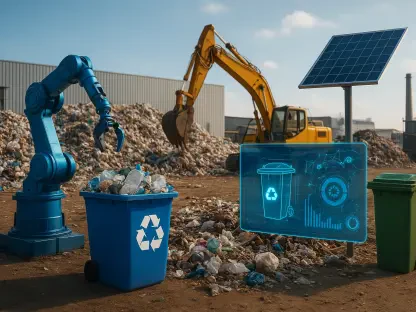

The recent Bureau of International Recycling convention held in Gothenburg marked a significant turning point for global industry leaders who gathered to address the inherent flaws in our current economic framework regarding plastic and rubber waste management. Delegates and industry experts collectively argued that the traditional linear model, which treats recycled materials as mere temporary substitutes for virgin resources, has become entirely unsustainable in a world characterized by resource scarcity and unpredictable market shifts. To build true economic resilience, there is an urgent and non-negotiable need to officially reclassify recycled polymers and rubber as strategic raw materials rather than secondary commodities. This ideological shift is not merely an environmental endeavor; it is a critical prerequisite for long-term economic stability. By elevating the status of recycled materials, the global economy can insulate itself from the erratic fluctuations of primary resource markets and ensure a steady supply of inputs for manufacturing sectors that are increasingly under pressure to demonstrate genuine circularity and resource security.
Overcoming the Volatility of Global Oil Dependencies
The global recycling industry currently operates under a precarious “fair-weather” purchasing pattern that fundamentally undermines its long-term viability and growth potential. Manufacturers frequently prioritize recycled resins only when high crude oil prices drive the cost of virgin plastics to prohibitive levels, creating a demand cycle that is entirely dependent on petroleum market volatility. Henk Alssema of the BIR Plastics Division emphasized that this reactive approach leaves the recycling infrastructure in a state of constant financial uncertainty. When oil prices experience a downward correction and virgin materials become more affordable, the demand for recycled stock often evaporates almost instantly. This inconsistency prevents recyclers from making the necessary capital investments in advanced sorting and processing technologies required to improve material quality. Without a steady stream of revenue that is decoupled from the price of a barrel of oil, the secondary raw material market remains a secondary thought for major industrial players rather than a reliable pillar of the supply chain.
This lack of market consistency poses a profound systemic risk to the broader circular economy, potentially leading to a “use it or lose it” scenario for major global brands. If the market fails to provide continuous support to the recycling sector during periods of low oil prices, the very infrastructure and operational capacity required to process waste will eventually atrophy or collapse. The consequence of such a failure is that when the next inevitable resource crisis or oil price spike occurs, the secondary material supply chains will be non-existent or severely degraded. Manufacturers will find themselves without any viable alternatives to keep their production lines running, leading to significant economic disruptions and product shortages. Protecting the recycling sector during market downturns is therefore an act of self-preservation for the manufacturing industry. It requires a fundamental shift in procurement strategies where recycled materials are treated as essential components that must be sourced consistently, regardless of the temporary price advantages offered by virgin materials.
Navigating Geopolitical Uncertainty Through Material Security
Recent surges in the demand for recycled plastics and rubber have been driven primarily by geopolitical conflicts that have severely throttled global oil supplies and disrupted primary resin production. Tensions in the Middle East and logistical bottlenecks in the Strait of Hormuz have restricted oil inflows to major manufacturing hubs, naturally driving up the cost of primary resin and making recycled alternatives more attractive. While these conditions have temporarily boosted the market value of recycled goods by approximately 20 percent, industry experts warn that this growth is dangerously fragile because it is rooted in crisis management rather than a genuine corporate commitment to sustainable practices. Relying on geopolitical instability to drive the circular economy is a short-sighted strategy that ignores the underlying need for structural reform. The current boom in the secondary material market highlights the vulnerability of primary supply chains and serves as a stark reminder that regional conflicts can instantly compromise the availability of essential manufacturing feedstocks.
To safeguard against the “short memory” of corporate buyers who often return to virgin materials as soon as a crisis abates, there is a growing push for brands to secure long-term contracts. Max Craipeau of the BIR Tyres & Rubber Committee noted that current supply chain successes are often temporary reactions to immediate global shocks, such as regional wars or the lingering aftereffects of international health crises. Securing strategic partnerships through formal Memorandums of Understanding is essential for ensuring that products remain on retail shelves during future periods of global unrest. These long-term agreements provide the financial security that recyclers need to maintain operations while giving manufacturers a guaranteed supply of materials. This approach is particularly critical as trade frictions between major powers continue to evolve, potentially creating new barriers to the flow of primary resources. By locking in secondary material streams, companies can create a localized and resilient buffer against the unpredictable nature of international trade and geopolitics.
Integrating Legislative Frameworks and Circular Product Design
Voluntary corporate measures have historically proven insufficient to stabilize the recycling sector, leading to a strong consensus that robust legislative intervention is required to decouple demand from crude oil prices. Policies like California’s Senate Bill 54 are being hailed as essential frameworks because they mandate specific recycled-content requirements and establish comprehensive Extended Producer Responsibility programs. These regulations effectively force a permanent transition toward circularity by preventing packaging producers from abandoning sustainable materials the moment virgin resins become slightly more affordable. By codifying these requirements into law, governments provide the regulatory certainty needed for long-term industrial planning and investment. Legislative mandates create a level playing field where all market participants must contribute to the circular economy, ensuring that the burden of waste management is shared by those who profit from the production of plastic and rubber goods. This shift from voluntary “green” initiatives to mandatory operational standards is necessary to transform recycled products into a permanent fixture.
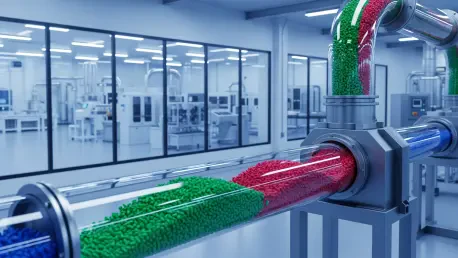
Beyond the scope of policy, achieving a truly circular economy requires a fundamental transformation in how products are conceptualized and designed from the very beginning of their lifecycle. Manufacturers must break down traditional walls of secrecy and engage in active collaboration with the recycling industry during the design phase to ensure that complex items are actually processable at the end of their lives. This includes everything from household appliances to technical footwear, which often utilize multi-material compositions that are nearly impossible to separate and recover using current technologies. By integrating design-for-recycling principles and developing sophisticated closed-loop systems, the global market can ensure that strategic raw materials are recovered and reused with maximum efficiency. This collaborative approach moves the industry away from a “waste management” mindset toward a “resource management” philosophy. When products are designed with their eventual recovery in mind, the quality and availability of secondary raw materials improve, making them a more competitive alternative to virgin resources.
Advancing Industrial Resiliency: Strategic Procurement and Integrated Supply Chains
The movement toward reclassifying recycled materials as strategic assets provided a clear roadmap for industries seeking to thrive in an era of resource instability. Stakeholders recognized that the transition required a departure from opportunistic procurement toward a model of integrated value chains where recyclers and manufacturers functioned as unified partners. Decision-makers implemented more aggressive internal mandates for secondary material usage, ensuring that circularity became a core metric of corporate performance rather than a secondary marketing objective. Governments accelerated the rollout of infrastructure grants and tax incentives to support the scaling of advanced chemical and mechanical recycling facilities, bridging the gap between waste generation and material recovery. These actions collectively established a more resilient economic foundation that mitigated the risks associated with global supply chain disruptions. By prioritizing the recovery of existing resources over the extraction of new ones, the global industrial complex began to secure its own future against the inevitable challenges of a resource-constrained world.
The successful integration of these materials required a shift in the cultural mindset of the manufacturing sector, where secondary raw materials were finally viewed with the same importance as primary inputs. Organizations moved away from viewing recycling as a philanthropic or environmental obligation and instead treated it as a core component of their risk management strategy. This evolution was supported by new digital tracking systems that provided transparency and traceability for recycled content, allowing companies to verify the origin and quality of their secondary feedstocks. As these systems became standard, the volatility that once defined the recycling market began to stabilize, creating a predictable environment for both producers and consumers. The legacy of this transition was a global economy that was less dependent on extractive industries and better equipped to handle the demands of a growing population. Ultimately, the reclassification of recycled goods as strategic assets ensured that the global manufacturing base remained robust and capable of sustained growth despite the growing scarcity of traditional raw materials.