
The global agricultural industry currently faces a profound contradiction where the very chemicals required to feed billions of people simultaneously threaten the health of aquatic ecosystems and the stability of the climate. Modern civilization’s reliance on nitrogen-based compounds has created a linear system of extraction and pollution that is increasingly unsustainable under current environmental pressures. While ammonia serves as the backbone of global food production and a promising carbon-free fuel for heavy shipping, its traditional synthesis consumes immense amounts of energy and relies heavily on fossil fuels. Furthermore, the excess nitrates that leach into water systems from industrial and agricultural activities trigger ecological collapses through toxic algal blooms. Researchers at McMaster University have developed a method to address these dual challenges by using renewable electricity to convert nitrate pollutants back into ammonia. This shift promises to close the loop on the nitrogen cycle by turning waste into a resource.
The High Environmental Cost: Challenges of Conventional Production
For over a century, the Haber-Bosch process has remained the primary industrial method for ammonia synthesis, yet its reliance on extreme temperature and pressure conditions results in a staggering carbon footprint. This thermochemical process requires temperatures exceeding 400 degrees Celsius and pressures reaching 200 atmospheres, consuming nearly 2% of the total global energy supply. Consequently, the industry accounts for approximately 500 million tons of carbon dioxide emissions annually, making it one of the most carbon-intensive chemical processes in existence today. As the demand for ammonia is projected to rise significantly through 2030 and beyond to support a growing population and new hydrogen energy markets, continuing with these legacy methods jeopardizes international climate commitments. The necessity for a lower-energy alternative has never been more pressing, as researchers seek to decouple essential chemical production from the burning of methane and the subsequent release of greenhouse gases.
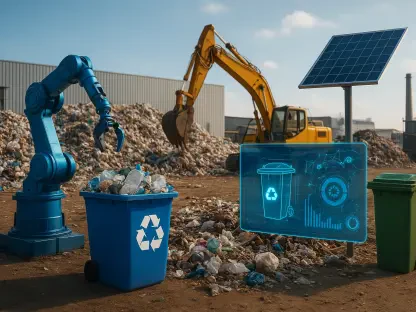
Beyond the heavy emissions generated during production, the mismanagement of nitrogen compounds leads to severe downstream consequences that traditional wastewater treatment facilities struggle to manage effectively. When excess nitrogen from fertilizers and industrial processes enters local waterways, it fuels the rapid growth of algae that suffocates fish populations and contaminates drinking water supplies. Current remediation strategies often involve biological denitrification, a process that converts harmful nitrates into inert nitrogen gas, which is then released back into the atmosphere. While this helps protect water quality, it essentially discards the substantial energy and chemical value originally invested in capturing that nitrogen for industrial use. This linear approach to nitrogen management is inherently inefficient, as it requires the constant synthesis of new ammonia to replace what is lost to the environment. Developing a method to recapture and upgrade these pollutants into useful products is therefore essential for reducing the overall environmental impact.
Electrochemical Innovation: Pioneering Sustainable Conversion
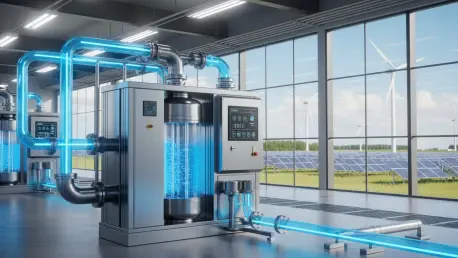
The McMaster research team addressed these inefficiencies by designing an electrochemical reactor that operates efficiently at room temperature, bypassing the need for fossil-fuel-intensive heating. This device utilizes an electric current, ideally sourced from wind or solar energy, to drive a chemical reaction that reduces nitrate ions in contaminated water back into ammonia at the molecular level. Unlike centralized chemical plants that require massive infrastructure and transport networks, this modular technology can be deployed locally at the source of pollution. Such a localized approach reduces the energy losses associated with long-distance transportation and allows for the immediate treatment of industrial effluent before it reaches sensitive ecosystems. By operating under ambient conditions, the system significantly lowers the barrier to entry for smaller-scale operations that cannot afford the high capital costs of traditional ammonia plants. This shift toward electrified chemical manufacturing represents a fundamental change in how the industry views the relationship between energy and production.
A major scientific milestone in this development was the creation of specialized iron-based catalysts that maximize the efficiency of the nitrate-to-ammonia conversion process. The researchers discovered that the performance of these catalysts depends on more than just the speed at which they transfer electrons; the physical structure of the material must be designed to create a hospitable surface for the reacting molecules. By optimizing the surface properties of the iron catalysts, the team ensured that water and nitrate molecules could easily interact with active chemical sites without being crowded out by competing reactions. This breakthrough in material science allows the reactor to maintain high selectivity, meaning it produces pure ammonia rather than unwanted byproducts. Understanding the fundamental interactions at the catalyst surface has provided a roadmap for scaling this technology to industrial volumes, ensuring that the conversion remains stable over long periods of operation. This research underscores the importance of precision engineering to solve global challenges.
Strategic Implementation: Pathways Toward a Circular Nitrogen Economy
The transition of this technology from laboratory environments to field applications redefined the role of wastewater treatment facilities in modern urban infrastructure. Rather than serving merely as filtration centers, these plants evolved into decentralized production hubs that generated both clean fuel for heavy machinery and essential nutrients for local agriculture. This integrated model cleaned the water supply more effectively than biological methods and created a new economic framework for municipal utilities to offset their operational costs. Farmers benefited from a more stable and locally sourced supply of fertilizer, which reduced their vulnerability to the price fluctuations of the global chemical market. Moreover, the production of ammonia as a liquid fuel provided a versatile medium for storing renewable energy, which was used to power transport or generate electricity during periods of low sun or wind. As industries sought to decarbonize, the ability to harvest high-value chemicals from waste became a strategic advantage.
The successful demonstration of nitrate conversion pointed toward a future where industrial waste ceased to be a liability and instead functioned as a valuable feedstock for the green economy. Stakeholders in the water and energy sectors recognized that the path forward required substantial investment in pilot projects to test the durability of electrochemical systems within the complex environments of municipal sewage. Policy frameworks were updated to incentivize the adoption of resource-recovery technologies, ensuring that utilities could recover the initial costs of upgrading their facilities. Engineers focused on refining the robustness of iron-based catalysts to withstand the various contaminants found in real-world wastewater streams. By prioritizing the integration of these modular reactors into existing infrastructure, society moved closer to a truly circular nitrogen economy. This collaborative effort across scientific and industrial spheres ensured that the technological potential was fully realized, securing a more sustainable supply of food and energy.