
As a seasoned professional in energy management and renewable utility systems, Christopher Hailstone has spent years at the intersection of grid reliability and resource recovery. His expertise offers a unique vantage point on how the modern waste industry is no longer just about disposal, but about the sophisticated generation of energy and raw materials. In this discussion, we explore the evolving landscape of the circular economy, focusing on the critical need for consumer trust, the economic ripple effects of food waste diversion, and the technological advancements shifting how we handle mixed waste streams. We also delve into the current volatility of the domestic recycled plastic market and the legislative levers required to stabilize the future of North American processing capacity.
Many consumers remain skeptical about whether curbside materials actually reach a processing facility. How can the waste industry bridge this gap and rebuild public trust in the recycling process?
The skepticism we see today is a natural reaction to a historical lack of transparency, and the only way to combat it is through better storytelling. We often fail to highlight the incredible circular loops happening right under people’s noses; for instance, many customers are unaware that the very trucks humming through their neighborhoods are powered by compressed natural gas derived directly from the landfills they serve. There is perhaps no greater circularity story than the fact that yesterday’s trash could be fueling the collection truck of tomorrow, turning a waste product into a literal kinetic force for the community. We need to move past simple anecdotes and show the tangible results of these investments to prove that when a resident places a bin at the curb, they are participating in a high-tech supply chain rather than a disappearing act. It is about shifting the narrative from “throwing away” to “repurposing” and ensuring that our operations, from collection to processing, are visible and understood as essential economic drivers.
Beyond the obvious environmental benefits, there is a significant economic argument for circularity. What does the growth of sectors like food waste diversion reveal about the hidden value in our waste streams?
When we look at food waste diversion through the lens of composting and anaerobic digestion, we aren’t just talking about keeping organic matter out of a hole in the ground; we are talking about the birth of entirely new manufacturing sectors. These projects create a ripple effect of economic value, generating renewable energy to power the grid and producing high-quality soil amendments that go back into our agricultural systems. It is a transition from a linear “take-make-waste” model to one where we are creating new jobs, domestic manufacturing opportunities, and specialized products that didn’t exist a decade ago. We have to stop viewing waste management as a cost center and start seeing it as a resource recovery industry that fuels regional economies and provides a stabilized source of domestic energy. If we do it right, we prove that circularity isn’t just a “virtue signaling” exercise, but a robust business strategy that works because it creates genuine, recapturable value.
When people are away from home, recycling often becomes an afterthought due to a lack of infrastructure in public spaces. How can technology compensate for these behavioral hurdles in stadiums, airports, and other high-traffic areas?
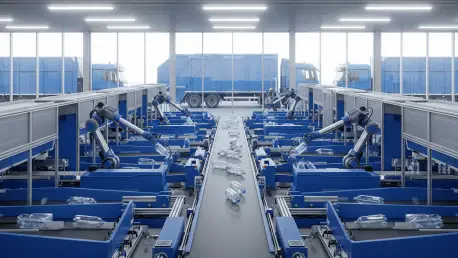
The reality is that even the most environmentally conscious person will make a different decision if a recycling bin isn’t easily accessible in the moment that matters, such as when they are rushing through an airport or navigating a crowded stadium. To solve this, we are looking toward advanced MSW processing systems that can effectively “unscramble the egg” by separating mixed trash into recyclables, organics, and residue streams after collection. Modern technology is significantly more sophisticated than it was five or ten years ago, allowing us to sort materials at incredibly high quality levels even from a contaminated mixed stream. This reduces the pressure on the consumer to be perfect and allows the industry to capture high volumes of valuable materials that would otherwise be lost to landfills simply because there wasn’t a blue bin in sight. By leveraging these high-tech sorting facilities, we can make the circular economy more resilient and less dependent on the immediate convenience of public infrastructure.
The domestic recycled plastic market, particularly for rPET, is currently facing what many call a crisis. What are the specific factors contributing to the closure of reclaimers, and how severe is the impact on North American capacity?
We are witnessing a deeply concerning period where the North American PET industry has lost 25% of its bottle-to-bottle processing capacity in just a single year. This crisis is fueled by a perfect storm of weakened demand as major brands pivot toward cheaper overseas imports and take advantage of the currently low prices of virgin resin. When reclaimers and processors face this kind of prolonged pressure, they simply cannot sustain operations, leading to the shuttering of facilities that are vital to our domestic supply chain. It is a heartbreaking scenario because the infrastructure is there, the technology is proven, but the economic floor has been pulled out from under it by unfair competition from foreign overcapacity. If we continue to allow domestic prices to be undercut by imports that don’t meet the same standards, we risk dismantling the very systems we need to achieve true plastic circularity.
While minimum recycled content laws are a step forward, they don’t always support local infrastructure. How can policy be refined to ensure that brands are incentivized to source materials domestically?
Current policy levers often mandate that a certain percentage of a product must be made from recycled content, but they frequently fail to specify where that content must originate, which is a major loophole. To truly stabilize the market, we need to advocate for policies that specifically link recycled content mandates to supplies sourced from domestic processors. This creates a guaranteed, long-term demand that gives companies the confidence they need to invest in and build out the expensive infrastructure required to process these materials on a large scale. By ensuring that “recycled” also means “locally sourced,” we protect our reclaimers from the volatility of global trade and ensure that the plastic collected in American neighborhoods actually ends up back on American shelves. It is an easy and effective way to align corporate sustainability goals with the practical realities of building a self-sustaining domestic industry.
What is your forecast for the circular economy?
I believe we are entering a period of “forced maturity” where the waste industry will transition from being a collection service to becoming a critical supplier of raw commodities. As domestic processing capacity for materials like PET faces these current hurdles, the next few years will see a massive push for legislative protections and technological upgrades to ensure our supply chains are not at the mercy of foreign markets. We will see the rise of more integrated systems where waste-to-energy and high-purity material recovery happen under the same roof, driven by the realization that our waste streams are actually our most reliable domestic “mines.” While the current market volatility is painful, it is also highlighting exactly where we need to reinforce our infrastructure to build a truly resilient, circular future. Focus on the long-term value, because the transition to a resource-constrained world makes circularity an economic necessity rather than an optional goal.