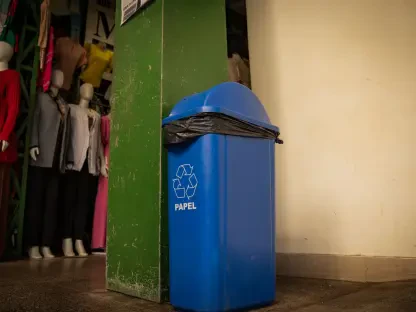

Veda Nair and Latavia Douglas, two seventh-grade students at the Mamawmatawa Holistic Education Centre, launched Project Z.E.R.O. with the simple ambition of making Constance Lake First Nation a cleaner place to live and learn. What began as a localized effort to encourage fellow students to sort their plastic and paper waste quickly evolved into a startling revelation regarding the systemic failures of provincial infrastructure. These young advocates discovered that despite their community’s willingness to participate in environmental stewardship, there was no logical or physical path for their collected materials to follow. Constance Lake, home to approximately 900 residents, found itself trapped in a logistical void where sorted recyclables were destined for the same landfill as common refuse. This disconnect highlights a significant oversight in the regional waste management framework, where the transition to a modern circular economy has inadvertently marginalized remote Indigenous communities. The students’ initiative, while grounded in the classroom, eventually exposed a massive gap between the province’s lofty sustainability goals and the ground-level reality of those living outside major urban centers. By documenting the lack of service providers willing to collect materials from their territory, Nair and Douglas transformed a school project into a high-level advocacy campaign that demanded answers from both provincial and corporate entities responsible for the new system.
The Regulatory Transition: Shifting Accountability to Producers
The core of the current crisis lies in the implementation of the Blue Box Regulation, a policy designed to shift the financial and operational burden of recycling from local municipalities to the companies that produce the packaging in the first place. This transition to an individual producer responsibility model was intended to incentivize manufacturers to design more sustainable packaging while relieving taxpayers of the mounting costs of waste management. Under this framework, a non-profit organization called Circular Materials was established to manage the province-wide system on behalf of these producers. In theory, this centralization was supposed to create a more streamlined and efficient recycling stream across Ontario, ensuring that materials are captured and processed consistently regardless of where they are generated. However, the practical application of this model has proven to be far more complex, particularly for communities that do not fit the standard municipal profile of southern Ontario.
While the new producer-led system aims for high-level efficiency, the rollout process has largely focused on large urban hubs where the volume of recyclable material is highest and transportation costs are lowest. This focus on economies of scale has left many Indigenous communities in a “service limbo” where the existing waste management structures have been dismantled before new, inclusive alternatives could be established. By centralizing authority under private contractors and producer responsibility organizations, the province has effectively removed the flexibility that previously allowed for localized, community-to-community agreements. For First Nations, this means that their inclusion in the provincial recycling network is no longer a matter of public service but a matter of corporate contract negotiation. This shift has created a significant barrier for smaller communities that lacks the administrative bandwidth to navigate the complex requirements set by Circular Materials.
Historical Partnerships: The Loss of Municipal Synergy
Before the recent provincial overhaul, Constance Lake maintained a functional and efficient recycling program through a long-standing cooperative agreement with the neighboring Town of Hearst. This partnership was a prime example of regional synergy, as it allowed the First Nation to transport its recyclables to Hearst’s processing facilities in exchange for a reasonable service fee. It was a practical solution that leveraged existing infrastructure to benefit both communities, ensuring that waste diversion goals were met without requiring the First Nation to build its own independent sorting facility. This localized arrangement provided the community with a sense of environmental agency and a clear outlet for their sorted materials, supporting the very habits that Nair and Douglas sought to cultivate among their peers at school. The success of this model was rooted in its simplicity and the shared geographic reality of the two neighboring towns.
However, once Hearst transitioned into the new producer-run model, the town lost the legal and administrative authority to manage its own recycling program and, by extension, its ability to service external partners like Constance Lake. Because Circular Materials and its private contractors now hold the exclusive rights and responsibilities for the recycling stream, the municipal government of Hearst can no longer accept materials from outside their contracted zone unless those parties are integrated into the provincial system. This legal shift effectively severed the lifeline that Constance Lake relied on for its environmental programs. Since 2022, the community has had no designated outlet for its recyclables, leading to the frustrating sight of garbage trucks collecting trash while strictly being barred from picking up the blue bins full of sorted materials. This contractual rigidity has created a scenario where sorted recyclables are treated as contaminants or common refuse, undermining years of community education.
Operational Obstacles: Logistics and Jurisdictional Friction
One of the most persistent hurdles preventing First Nations from accessing the new recycling system is the inherent jurisdictional friction between federal and provincial authorities. Many Indigenous communities are located on federal land, which often leads to confusion regarding whether provincial regulations, such as the Blue Box Regulation, apply to them or if private contractors are legally obligated to provide services. This ambiguity often results in a “wait-and-see” approach from both government levels, leaving the communities without clear guidance or support. Furthermore, the logistical costs associated with transporting recyclables from remote areas to southern processing hubs are prohibitively high for private contractors who are focused on minimizing overhead. Without specific provincial mandates or subsidies to cover these long-haul costs, contractors have little incentive to extend their services to First Nations, regardless of the environmental impact.
The administrative burden placed on these communities is another significant factor in their exclusion, as Circular Materials requires extensive data and reporting before a service contract can be finalized. Small communities often lack the specialized staff required to track waste volumes, contamination rates, and logistical metrics to the degree of precision demanded by the new system. When Nair and Douglas reached out to provincial and federal officials through their letter-writing campaign, they were met with a series of non-committal responses that redirected them to different departments. This bureaucratic runaround highlights a lack of accountability, where the province points to the producers, and the federal government points to provincial jurisdiction. This leaves the youth of Constance Lake in a position where they must advocate for a right to recycle that is readily available to residents just a few kilometers away in municipal centers.
Equitable Stewardship: Designing Inclusive Waste Systems
To bypass the current provincial deadlock, community leaders and educators at Constance Lake began exploring federal avenues, such as the First Nations Waste Management Initiative, to secure independent infrastructure. This program provides funding for waste diversion projects on reserves, offering a potential path for communities to purchase their own balers or transport equipment. However, while these federal grants are helpful, they do not address the underlying issue of a fragmented provincial system that fails to integrate all residents equitably. The struggle at Constance Lake serves as a critical case study in how environmental policy, no matter how well-intentioned, can fail if it does not account for the unique legal and geographic circumstances of Indigenous peoples. True sustainability requires a system that is inclusive by design rather than one that forces marginalized communities to fight for basic services that are considered standard elsewhere.
The advocacy efforts led by the youth of Constance Lake successfully illuminated the systemic failures within the provincial recycling framework, prompting a necessary reevaluation of how environmental equity was measured. While the initial promise of the producer-led model aimed for efficiency, the actual implementation demonstrated that without specific protections for First Nations, the policy merely replaced public inefficiency with private exclusion. Moving forward, the integration of federal funding and localized autonomy proved to be the most viable path toward bridging the service gap. It became clear that sustainability could not be achieved through a one-size-fits-all approach, especially when that size excluded those living on the geographic and economic margins of the province. By prioritizing regional cooperation and removing administrative hurdles, the transition began to shift toward a more universal system. The lessons learned from this period highlighted that environmental justice was inextricably linked to provincial-federal cooperation. Ultimately, the resolution of these disparities required a commitment to recognizing that every community, regardless of its size or location, possessed the inherent right to participate in the preservation of the natural world.