
Deploying a drone as a first responder program involves a complex six-role staffing model and rigorous data security protocols to satisfy information technology reviews. As the electrical grid faces record demand, the move from manual inspections to Beyond Visual Line of Sight (BVLOS) operations has become a strategic priority for utilities that want to stay resilient. Regulation is catching up. The FAA’s 2025 proposal for a new BVLOS rule would replace today’s case-by-case exemptions and waivers with standard, performance-based requirements. Among the uses it would support, the proposal lists inspection of energy production, transmission, and storage infrastructure.
Advanced sensor suites and AI now allow real-time analysis of long stretches of transmission line. Alongside aerial footage, decision-makers want integrated digital twins that can predict structural failures before they occur. Together, these technologies mark a fundamental shift in asset management and operational safety across the energy sector.
The Strategic Operationalization of Autonomous Grid Intelligence
The shift toward BVLOS operations rests on the maturation of Detect-and-Avoid (DAA) technology, the aircraft’s digital eyes. The FAA’s rule for routine BVLOS flights is still being finalized, so many operations continue to rely on waivers and exemptions. For utilities, managing the large data streams from autonomous fleets is becoming as pressing as buying the hardware. High-fidelity sensors such as LiDAR and thermal imaging produce vast amounts of data that AI algorithms must interpret. Manual line inspection is costly, risky, and slow because it depends on human observation, according to a 2025 review of deep learning in power line inspection by researchers at Qatar University and Iberdrola. The same review names small-object detection and data quality as areas that still need work.
Automated analysis helps grid operators find small defects in insulators or vegetation encroachment more consistently. Feeding these data sets into Building Information Modeling (BIM) systems supports a proactive maintenance cycle that keeps aging infrastructure in service.
Bridging the Speed Gap through Decision Intelligence
In 2026, utilities must address rising energy demand while infrastructure expansion lags. AI-powered drones help secure and integrate inspection data with enterprise IT systems, filter out noise, and prioritize critical issues. This lets operators oversee multiple autonomous missions and inspect grids more efficiently. As renewable energy expands, real-time visibility will become increasingly important for grid reliability and energy security.
The physical state of the grid adds another layer of complexity to these digital initiatives. Much of the U.S. transformer fleet was installed decades ago, before continuous monitoring was feasible. These aging components now need to fit into a digital framework that captures data from legacy systems and supplements it with modern sensors. The aim is to move from scheduled maintenance to predictive maintenance, where data signals when a transformer is likely to fail so utilities can prevent costly outages. By applying data engineering principles borrowed from other technology-heavy industries, utilities can unify their architecture while keeping their legacy enterprise systems. Developing these digital strategies together with the people who run the grid keeps the technology useful to them and their existing workflows simple.
Strategic Data Centralization and Security Frameworks
To turn raw data into operational intelligence, utilities need to centralize grid data. That means creating a common, usable layer where data is put in context, so every data point has a specific meaning in grid operations. An ontology then reveals relationships between data sets, such as how specific weather patterns affect the performance of aging conductors. Protecting this centralized architecture is a non-negotiable priority.
NERC’s 2026 roadmap for critical infrastructure protection warns that as the grid becomes more dynamic, interconnected and digitized, its exposure to sophisticated cyber and physical threats grows in parallel [CITATION]. Systems that can evolve with technology and demand need a robust, secure foundation. With a unified data architecture, utilities can get more value from assets already in service and keep reliability stable as the grid runs closer to its limits. Bringing IT and operations together this way is what the most advanced energy providers are doing today.
The transition from a hardware-centric business to a software-enabled one requires specialized expertise that many utilities lack internally. Strategic partnerships help connect grid technology with data network infrastructure. Modern software suites integrate with core grid components, such as transformers and asset performance management solutions, to support innovation. Utilities must manage data with the same precision and urgency as high-voltage transmission lines. Optimization improves efficiency when physical expansion cannot meet demand quickly enough. By prioritizing decision intelligence and visibility, utilities can provide affordable, safe power.
Implementation of Remote Docking Infrastructure
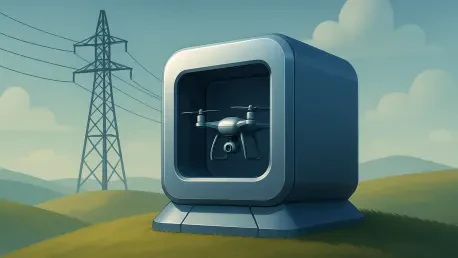
Autonomous fleets become more practical with standardized docking stations, often called drone-in-a-box solutions. These stations handle automated charging, data offloading, and weather protection, making them useful for remote or mountainous areas where access is difficult. Utilities can run frequent inspections and monitor the grid around the clock without relying on traditional crews. After storms, drones can quickly locate downed lines before ground crews arrive, speeding restoration and improving worker safety.
The newest specialized drones can also interact physically with the grid. Some platforms are designed to perch directly on high-voltage power lines and recharge from the electromagnetic field around them, collecting data on cable temperature and line sag while they sit. These systems are still being tested, with stress trials under way in Europe and field demonstrations planned with contractors working alongside Pacific Gas & Electric.
Platforms that can land on conductors to inspect at close range or install small sensors point toward drones taking on physical maintenance work. Over time, such tools could reduce how often lines must be de-energized for routine checks, keeping power flowing to consumers. The combination of autonomous flight, robotic manipulation, and AI is setting a new direction for utility maintenance. Organizations that adopt these multi-function platforms can improve operational uptime and asset longevity, and the overlap of aviation and electrical engineering looks set to deliver some of the largest gains in grid modernization.
Strategic Advancements in Modernized Grid Resiliency
The move to BVLOS and AI-integrated operations marks a turning point for the utility sector’s digital maturity. Utilities that manage this shift well can strengthen grid reliability while coping with a shrinking workforce and aging physical assets.
Once the FAA finalizes performance-based BVLOS rules, they should provide the framework for scaling these technologies safely across large service territories. The focus is moving from data collection to acting on the intelligence that data provides, which supports a stable power grid. Leaders who prioritize secure, automated workflows will build a resilient foundation for the ongoing energy transition.
Autonomous systems are making data central to grid modernization and paving the way for a more efficient, sustainable industrial future. These steps prepare infrastructure for the demands of the coming years.