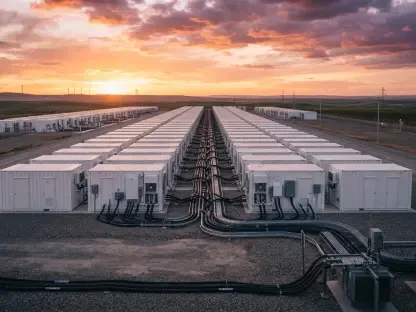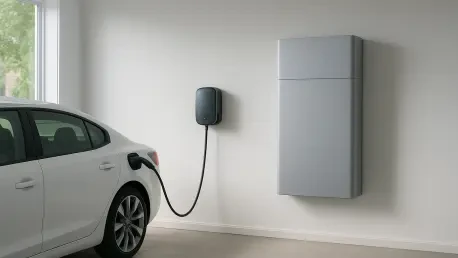

Modern lithium-based storage systems now come with warranties exceeding ten years, providing a durable and long-term solution for household energy security. This shift represents a fundamental change in how property owners perceive their relationship with utility providers, moving from passive consumers to active participants in a digital energy market. As geopolitical instability and aging infrastructure continue to threaten the stability of traditional power grids, the adoption of localized storage has transformed from a luxury into a necessity. These systems allow for the capture of excess energy during times of low demand, ensuring that essential appliances remain functional during unforeseen outages. By prioritizing storage first, individuals create a buffer that makes other renewable investments, such as solar panels or wind turbines, significantly more effective. The current landscape of 2026 demonstrates that energy autonomy begins not with the source of power, but with the ability to control its availability.
The Strategy: Strengthening Grid Resilience Through Decentralization
Centralized power systems are increasingly vulnerable to localized disruptions, making the transition to distributed storage a critical move for community stability. When a single substation fails, thousands of residents typically lose power, but a neighborhood equipped with individual battery units can effectively island itself from the broader grid. This decentralization prevents the cascading failures that have historically plagued metropolitan areas during extreme weather events. Modern smart inverters now communicate with these batteries to balance loads automatically, ensuring that critical medical equipment and communication devices stay online. Furthermore, the development of solid-state components has reduced the physical footprint of these units, allowing for seamless installation in urban apartments and suburban garages alike. The reliability of these systems fosters a sense of security that was previously unattainable, grounding the concept of energy independence in tangible, everyday hardware.
Economic incentives further justify the deployment of storage technology as a primary step toward financial autonomy from fluctuating utility rates. Many regions now employ time-of-use pricing, where electricity costs spike significantly during late afternoon and early evening hours. Households utilizing advanced storage systems can draw power from their batteries during these expensive intervals, effectively bypassing the highest rates on their monthly statements. This practice, known as peak shaving, not only lowers individual bills but also reduces the overall strain on the regional grid, preventing the need for utility companies to fire up inefficient peaker plants. Between 2026 and 2028, the widespread adoption of bidirectional charging is expected to amplify these savings by turning residential storage into a revenue-generating asset. By participating in demand-response programs, owners can sell stored power back to the grid, transforming a standard household expense into a strategic investment.
The Implementation: Maximizing Efficiency with Renewable Infrastructure
The efficacy of contemporary energy storage is maximized through its seamless integration with other smart home technologies and electric vehicle charging stations. Modern batteries act as the central nervous system for a home’s power ecosystem, intelligently directing energy to high-priority devices based on real-time usage data. For instance, vehicle-to-home technology allows a car’s battery to act as an auxiliary storage unit, doubling the backup capacity available during a power outage. This interconnectivity is facilitated by universal communication protocols that ensure different brands of hardware can operate in a unified manner. As households move toward total electrification, the ability to manage these high-demand loads becomes the determining factor in whether a home can truly stand alone from the utility grid. Building this storage foundation provides the necessary framework for future upgrades, such as high-efficiency heat pumps, ensuring that every kilowatt-hour is utilized to its maximum potential.
Strategic planning for energy independence focused on the immediate installation of scalable storage units to mitigate the risks of a volatile energy market. Property owners evaluated their specific consumption patterns and selected modular systems that allowed for future expansion as their power needs grew. This proactive approach prioritized high-discharge rates and deep cycle capabilities to ensure that heavy machinery could operate without taxing the system’s longevity. Industry experts recommended a comprehensive audit of household circuits to identify critical loads that required uninterruptible power during transitions. By establishing a robust battery foundation first, homeowners avoided the pitfalls of oversized renewable arrays that lacked the means to store surplus generation. The successful implementation of these systems provided a blueprint for achieving total self-sufficiency while maintaining a connection to the grid for emergency redundancy. Moving forward, the focus shifted toward optimizing software-defined power management to further refine the efficiency.