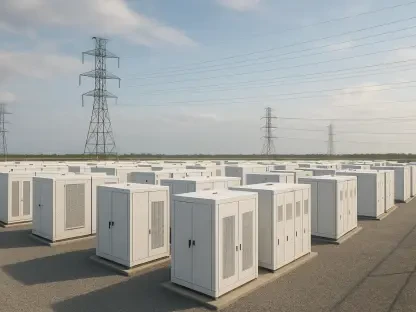

By early 2026, the Brazilian market saw nearly 1.9 gigawatt-hours of battery systems either sold or under contract for industrial use. This volume reflects a profound transformation in how Latin American enterprises view energy resilience and operational stability in a globalized economy. For years, the regional conversation focused predominantly on the installation of solar photovoltaic panels, yet the focus has now shifted toward the sophisticated management of that power. The Commercial and Industrial sector is leading this charge, recognizing that Battery Energy Storage Systems represent more than just backup power; they are essential economic safeguards. As industrial automation and precision manufacturing become the standard across the continent, the tolerance for power fluctuations has reached an all-time low. Leaders now understand that the true value of storage lies in its ability to mitigate the astronomical costs associated with sudden production halts. This fundamental realization has successfully repositioned battery technology from an elective environmental gesture to a core component of any serious industrial infrastructure project in the region.
Practical Implementation: Lessons from Guadalajara
A compelling demonstration of this shift recently emerged in Guadalajara, Mexico, where a high-tech manufacturing facility discovered that renewable generation alone was insufficient for modern industrial needs. Despite having a robust solar array, the factory frequently suffered from micro-outages—momentary voltage drops that last only fractions of a second but carry catastrophic consequences for precision machinery. In environments utilizing advanced welding robots or sensitive calibration tools, these interruptions do not merely pause operations; they often result in ruined materials and require hours of manual resets to restore production standards. To address this, the facility commissioned a specialized battery system with 150 kW of power and 261 kWh of capacity. The implementation followed months of careful pre-engineering to ensure the system could respond instantaneously to grid instability. This specific project has since served as a regional blueprint, highlighting how storage acts as a bridge between volatile power supply and the demands of high-precision manufacturing.
The success of the Guadalajara installation has fundamentally altered how regional planners calculate the return on investment for energy storage. Traditionally, financial analysts focused strictly on the kilowatt-hour savings generated by solar panels, often ignoring the secondary costs of electrical instability. However, the integration of battery systems has forced a broader perspective that includes the avoided costs of equipment damage and lost labor hours during restarts. By preventing even a single major shutdown per month, the system effectively pays for itself through operational continuity rather than just reduced utility bills. This realization is particularly relevant for facilities located in industrial hubs where the local grid may struggle to keep pace with rapid urban and industrial expansion. As a result, the conversation around battery adoption has moved away from simple payback periods toward a more comprehensive risk management framework. This broader economic view allows companies to justify the initial capital expenditure by demonstrating long-term resilience against the unpredictable nature of regional energy infrastructures.
Financial Dynamics: Redefining the Value Proposition
Beyond the immediate benefits of backup power, storage systems provide other critical economic levers such as load shifting and peak shaving. Load shifting allows industrial facilities to store energy during periods when electricity prices are at their lowest—typically during the middle of the day for solar-heavy sites or during late-night off-peak hours. This stored energy is then deployed when utility rates spike, effectively insulating the company from the highest prices on the grid. Simultaneously, peak shaving addresses the expensive demand charges that utilities impose based on a customer’s highest point of electricity usage during a billing cycle. By using batteries to handle these brief spikes in power consumption, businesses can significantly lower their monthly overhead without changing their actual production schedules. These dual strategies transform a battery system from a passive backup tool into an active financial asset that generates consistent monthly savings. The combination of these factors ensures that the storage unit is working to improve the bottom line every single day.
The rapid expansion of the energy storage market is being fundamentally driven by a historic and precipitous decline in hardware costs. Recent data indicates that the implementation costs for commercial-scale systems, particularly those within the 500 to 1000 kWh range, have dropped by more than half compared to prices seen earlier in the decade. In Mexico, the market is driven by heavy industries like metallurgy and aluminum manufacturing, as well as supermarkets that require stable power to protect inventory. Meanwhile, in Chile and Peru, the mining sector is the primary engine of growth, utilizing storage to integrate renewable sources into remote or weak-grid environments. Other nations are finding niche applications, such as Argentina’s agro-industry or general backup needs in the Dominican Republic and Bolivia. This acceleration demonstrates a clear consensus among regional businesses: the financial barriers to entry are falling just as the operational risks of relying solely on the grid are rising for these specialized sectors.
Future Pathways: Establishing Competitive Resilience
The narrative for energy in Latin America successfully shifted from a simple pursuit of green generation to a strategic focus on comprehensive energy control. The integration of battery storage into the industrial sector proved to be a decisive response to the high costs of downtime and the persistent volatility of local energy markets. As technology costs fell, the adoption of these systems became a standard component of modern industrial infrastructure. This transition allowed regional businesses to become more competitive on a global scale by ensuring that their production lines remained active regardless of external power conditions. The data-driven results from early 2026 clearly demonstrated that those who invested in storage early gained a significant advantage in operational reliability. This evolution was not merely about environmental compliance but was a calculated move toward economic resilience. By establishing a robust foundation of stored power, the industrial sector took a critical step toward a future where energy is viewed as a manageable resource rather than an unpredictable overhead cost.
Moving forward, industrial leaders must prioritize the integration of intelligent software and modular architectures to fully exploit their hardware investments. The next logical step involves the deployment of systems that allow for seamless scalability, enabling a facility to start with a smaller capacity and expand as its needs grow. Some of the latest configurations can now reach up to 15 MW, effectively bridging the gap between standard commercial applications and large-scale utility projects. This flexibility ensures that industrial players can tailor their energy storage strategy to match their specific operational goals without being locked into a rigid infrastructure. Stakeholders should also look toward emerging battery chemistries that offer longer lifecycles and higher safety ratings for specific industrial environments. The successful projects observed throughout the region have provided a clear roadmap: the focus should now be on optimizing performance to meet the growing demands of an increasingly electrified and competitive global industrial economy.