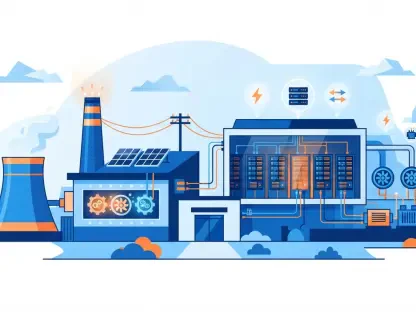

The Republic of Ireland faces a unique challenge in its energy transition as data centers now account for twenty-five percent of the nation’s total electricity usage. This massive industrial demand complicates the shift toward sustainable power, yet it provides a critical lens through which to view the progress of neighboring Northern Ireland. While the two regions share an island and a unified energy market, Northern Ireland currently finds itself at a distinct juncture. Recent data from 2025 indicates that the region generated exactly half of its total electricity from renewable sources, while forty-seven percent of its total consumption was green. This subtle discrepancy between generation and consumption highlights the complexity of modern electricity grids, where power is constantly imported and exported across borders to maintain stability. The region’s ability to reach these figures suggests a solid foundation in renewable infrastructure, but it also raises questions about whether this pace is sufficient to meet the highly ambitious targets set for the end of the current decade.
Regional Performance: The United Kingdom Context
When evaluating Northern Ireland’s standing within the United Kingdom, the region occupies a respectable middle-ground position that reflects both significant achievement and room for improvement. It currently sits slightly below the aggregate UK average, which recorded renewable generation at fifty-two percent and consumption at fifty-four percent. However, these national averages are significantly influenced by the exceptional performance of Scotland, which has effectively established itself as the renewable powerhouse of the British Isles. Scotland boasts a renewable generation rate of over seventy-three percent and a consumption rate exceeding one hundred percent. This surplus allows the Scottish grid to act as a major exporter of green energy to its neighbors, setting a benchmark for what is possible when high wind capacity is coupled with substantial hydroelectric assets—a luxury that Northern Ireland does not currently possess.
The comparison becomes even more nuanced when examining the specific energy profiles of Wales and England. Wales presents a unique paradox in which its renewable consumption figures appear high, reaching fifty-five percent, yet its domestic renewable generation remains lower than that of Northern Ireland at thirty-seven percent. This occurs because Wales exports massive quantities of electricity generated from gas-fired plants, making its internal share of green energy seem more dominant than it actually is. Meanwhile, England maintains a highly diversified technological mix, hosting the vast majority of the UK’s solar and bioenergy capacity alongside significant offshore wind developments. Northern Ireland, by contrast, relies almost exclusively on onshore wind, a strategy that has served it well for initial growth but may lack the diversity required for long-term grid resilience as the transition enters its most difficult phase.
Island Dynamics: Shared Markets and Data Pressures
Northern Ireland and the Republic of Ireland operate within the Single Electricity Market, a unified grid system that necessitates close cooperation and shared strategic goals. Both jurisdictions have committed to a statutory target of reaching eighty percent renewable electricity consumption by 2030, a goal that requires a dramatic scaling of current infrastructure. As of early 2026, Northern Ireland maintains a slight lead in consumption percentages over its southern neighbor, with forty-seven percent compared to the Republic’s forty-one percent. This lead is not necessarily a result of superior technological deployment in the north, but rather a reflection of the differing demand profiles between the two regions. The Republic of Ireland’s energy landscape is being reshaped by the rapid expansion of global technology firms, whose facilities require constant, high-volume power that often outpaces the arrival of new green generation capacity.
The surge in data center electricity usage in the Republic of Ireland means that even as significant wind and solar capacity is added to the grid, the percentage share of the total energy pie grows more slowly than in Northern Ireland. This pressure is less acute in the north, allowing for a more favorable statistical balance. However, the shared nature of the grid means that any bottleneck in one jurisdiction eventually impacts the other. The 2030 target remains a steep climb for both, requiring a unified approach to grid modernization. While Northern Ireland’s current statistics appear more favorable on paper, the underlying challenge remains the same: the grid must be capable of absorbing and distributing an unprecedented amount of variable energy without compromising the reliability that modern industry and residential consumers demand for their daily operations.
The Global Benchmark: From Denmark to China
On the international stage, Northern Ireland’s fifty percent generation rate places it marginally ahead of the European Union average, which currently stands at roughly forty-seven percent. While this position is commendable, the EU average is a composite of highly disparate performances, ranging from world leaders to nations that are only beginning their transition away from fossil fuels. When compared to the true leaders in the field, such as Denmark, Northern Ireland’s current progress appears more moderate. Denmark, which shares a similar geography of flat, windy landscapes and a lack of significant hydroelectric power, has achieved a renewable generation rate of over ninety-two percent. This comparison suggests that the limitations facing Northern Ireland are not primarily geographical or environmental, but are instead related to long-term policy frameworks, grid investment, and the speed of infrastructure planning approvals.
Expanding the view to a global scale, Northern Ireland remains well above the world average for renewable generation, which is currently recorded at approximately thirty-four percent. However, raw percentage figures do not always tell the full story of the energy transition’s intensity. Major global economies like China and the United States have lower percentage shares of renewables, yet they are adding capacity at a scale that is mathematically staggering. China, for example, added more solar capacity in the previous year than the rest of the world combined. While Northern Ireland is technically “greener” by percentage, it does not yet match the rapid industrial scaling or the diversified technological investment seen in larger economies. The region’s success is impressive for its size, but it is currently hitting a ceiling that larger nations are actively breaking through with massive capital expenditures.
Grid Reliability: The Onshore Wind Dependency
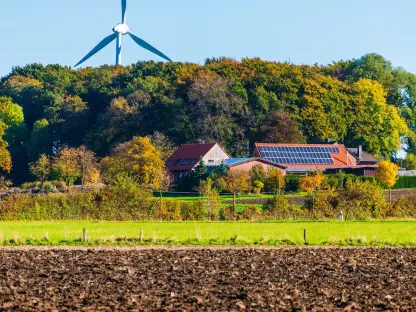
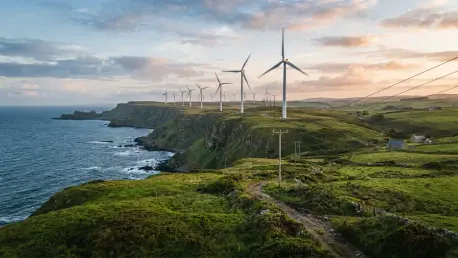
The primary driver of Northern Ireland’s green energy success has been onshore wind, which currently accounts for approximately seventy-two percent of its total renewable generation. This heavy reliance on a single technology represents both a strength and a structural vulnerability. While wind is a plentiful resource in the region, its intermittent nature means that power production is entirely dependent on favorable weather conditions. On days with low wind speeds, the grid must rely on fossil fuel backups, whereas during periods of high wind, the grid often lacks the capacity to handle the surge. This lack of diversification is a critical hurdle that must be cleared if the region hopes to reach its 2030 milestones. Other technologies, such as solar power and bioenergy, remain underdeveloped, with solar accounting for only six percent of the current renewable mix.
A direct consequence of this grid limitation is the phenomenon of “dispatch down,” where wind turbines are intentionally switched off because the electrical infrastructure cannot safely absorb the power they are producing. In the past year, nearly twenty-two percent of available wind energy was wasted due to these constraints. While this is an improvement from previous years, it represents a massive inefficiency in the system. Unlike Denmark, which utilizes robust interconnectors to export surplus wind power to neighboring countries, Northern Ireland’s grid is relatively isolated. Without significant upgrades to the physical wires and substations that move electricity from rural wind farms to urban centers, the region’s renewable growth will likely remain stagnant. Building more turbines is only half the battle; the other half is ensuring that every kilowatt produced can actually reach a consumer’s home or business.
Solving the Bottleneck: The Interconnector Challenge
The most critical project for addressing Northern Ireland’s grid congestion is the proposed North-South Interconnector. This high-capacity power line is designed to strengthen the link between the electricity grids of Northern Ireland and the Republic of Ireland, allowing for a much more efficient distribution of renewable energy across the entire island. Proponents of the project argue that it would significantly reduce the need for “dispatch down” events and lower the overall cost of electricity for consumers by creating a more competitive and integrated market. However, this vital piece of infrastructure has been delayed for years due to complex planning disputes, legal challenges, and logistical hurdles. These delays have created a persistent bottleneck that stifles new investment in the renewable sector and prevents the region from maximizing its existing green assets.
The failure to complete the interconnector in a timely manner has had a chilling effect on the development of new renewable projects. Developers are often hesitant to commit to large-scale wind or solar farms if they cannot be guaranteed that their power will actually be allowed onto the grid. Furthermore, the lack of interconnection limits the region’s ability to participate in the broader European energy market, where surplus power could be sold to help offset the costs of the transition. As the 2030 deadline approaches, the urgency of resolving these infrastructure delays has become a central theme in regional energy policy. Without a modernized, interconnected grid, Northern Ireland’s ambition to lead the global green energy race will remain hampered by a physical system that was designed for a different era of centralized fossil fuel production.
Deep Decarbonization: Addressing Heat and Transport
While the progress made in greening the electricity sector is substantial, it is important to recognize that electricity represents only a fraction of Northern Ireland’s total energy consumption. The broader challenge of decarbonization becomes much more difficult when considering domestic heating and transportation. Northern Ireland remains exceptionally dependent on fossil fuels for warmth, with sixty-one percent of households still using home heating oil and another thirty-six percent relying on natural gas. The transition to sustainable heating technologies, such as heat pumps, is currently in its infancy, with less than one percent of homes having adopted these systems. This reliance on carbon-intensive heating oil is one of the most significant barriers to the region achieving its overall net-zero targets and represents a much harder problem than simply adding wind turbines to the grid.
The transportation sector exhibits a similar pattern of slow transition. Despite a global push toward electric vehicles, only about five percent of the population in Northern Ireland currently owns an electric car. The infrastructure for charging these vehicles remains concentrated in urban areas, leaving rural residents with few viable alternatives to the internal combustion engine. Because heating and transport are considered “hard-to-abate” sectors, the region’s total renewable energy share—when factoring in all forms of energy use—is significantly lower than the fifty percent figure reported for electricity alone. This reality underscores the fact that decarbonizing the power grid was the relatively easy first step. The true test of Northern Ireland’s leadership will be its ability to transform how its citizens heat their homes and move across the countryside in the coming years.
Strategic Evolution: Path Toward the 2030 Goals
The region demonstrated a consistent commitment to expanding its renewable capacity, but the era of rapid, straightforward gains in the electricity sector appeared to have passed. Leaders recognized that to move from a middle-of-the-pack performer to a genuine global frontrunner, Northern Ireland needed to move beyond its heavy reliance on onshore wind. The strategy shifted toward a more balanced energy portfolio that prioritized the development of offshore wind and solar projects. By diversifying the sources of renewable generation, the grid became more resilient and less prone to the fluctuations of a single weather pattern. This transition also necessitated a massive overhaul of the planning system to ensure that critical infrastructure projects could move from concept to completion without the decade-long delays that characterized previous efforts.
Moving forward, the focus expanded into the total energy ecosystem, rather than just the power grid. Government initiatives sought to incentivize the mass adoption of heat pumps and the rapid expansion of electric vehicle charging networks to address the stagnation in the heating and transport sectors. The successful completion of the North-South Interconnector finally allowed the island to operate as a single, efficient energy unit, significantly reducing the wastage of clean power. These actions transformed the regional landscape, proving that technical and geographical hurdles could be overcome with decisive policy and sustained investment. The goal of reaching eighty percent renewable consumption by 2030 remained a challenging target, yet the strategic shifts made in the mid-2020s provided the necessary momentum to ensure that Northern Ireland remained a competitive player in the international transition to a sustainable economy.