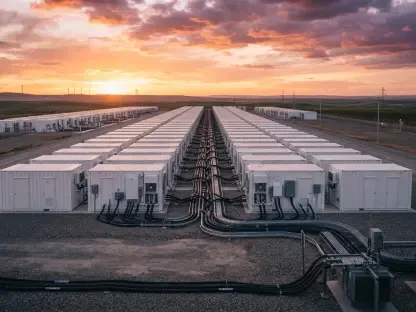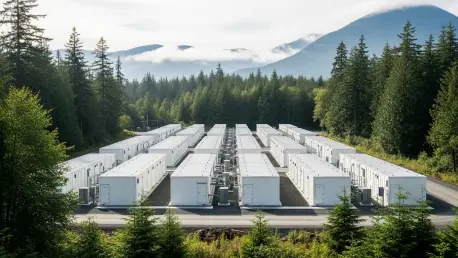

British Columbia’s recent decision to integrate utility-scale battery storage represents a pivotal moment for Vancouver Island’s aging electrical infrastructure, signaling a departure from traditional reliance on mainland imports. The provincial announcement in July 2026 detailed a significant infrastructural investment near Duncan, specifically at the Vancouver Island Terminal Substation, which serves as a critical junction for the regional grid. This facility is designed to provide at least 100 megawatts of power by the time it becomes fully operational in 2030, offering a modern solution to the unique energy demands of an island geography. Rather than just adding raw capacity, this project serves as a sophisticated high-speed buffer capable of responding to electrical fluctuations within milliseconds. By stabilizing the frequency and voltage of the local system, the battery will allow the existing grid to handle short-term load peaks more efficiently while providing a bridge for slower energy resources to come online during unexpected outages.
The Functional Mechanics: Storage Capacity versus Power Output
To understand the implications of this project, it is essential to distinguish between the roles of energy generation and energy storage within a modern power grid. Unlike hydroelectric dams or natural gas turbines, this battery facility does not create electricity from raw fuel or natural movement; it functions instead as a massive reservoir for energy produced elsewhere. It captures surplus power generated by remote hydroelectric assets or energy imported via the existing mainland transmission lines and holds it until demand spikes or supply drops. This process mirrors a holding tank for water, where the value lies in the ability to release resources during critical periods rather than in the creation of the resource itself. However, this cycle is not perfectly efficient, as minor energy losses occur during the conversion from alternating current to direct current for storage and then back again for distribution. These technical realities mean that the battery must be managed carefully to ensure it remains a net benefit to the overall system.
A significant detail currently absent from the public announcement is the total storage capacity measured in megawatt-hours, which determines the actual duration of the battery’s discharge. While the 100-megawatt rating describes the maximum rate at which power can flow—the “size of the pipe”—the megawatt-hour figure represents the “size of the tank” or how much total energy can be stored. Without this specific metric, it is challenging to evaluate whether the system is designed for brief frequency regulation or if it can provide a substantial reserve during a prolonged failure of the subsea cables. A system designed only for short bursts would stabilize the grid during minor hiccups but would do little to prevent blackouts during major winter storms that might last for several hours. As the province moves toward the 2030 operational date, clarifying this capacity will be vital for industrial partners and residential consumers who rely on a consistent and predictable power supply. The distinction between a two-hour and a six-hour battery changes the facility’s role entirely.
Economic Projections: Assessing Costs and Regional Benchmarks
Comparing the proposed 100-megawatt system to the energy needs of a major urban center like Nanaimo provides a concrete perspective on the project’s potential impact. Nanaimo requires a continuous power supply of approximately 129 megawatts on average, meaning that the Duncan battery could theoretically support a vast majority of the city’s essential functions during a localized emergency. However, the effectiveness of this support is entirely dependent on the duration for which the battery can sustain its maximum output. If the facility is built with a short-duration capacity, it might only provide relief for less than two hours, which is often insufficient for resolving complex grid failures or repairing damaged transmission lines. Conversely, a more robust six-hour storage window would offer a significant safety net, allowing the grid to survive extended periods of isolation from the mainland power sources. Understanding these performance limits is necessary for regional planners who must coordinate emergency response services and ensure that critical infrastructure remains operational.
The financial scope of the Duncan project will be largely dictated by these same storage duration requirements, with economic benchmarks from across Canada suggesting a wide range of potential costs. Analysis of similar utility-scale installations indicates that a short-duration system could require a capital investment of approximately $140 million, whereas a long-duration setup capable of several hours of discharge could exceed $500 million. These estimates must also account for the specialized engineering required to meet the seismic standards of Vancouver Island, where the risk of earthquake activity necessitates reinforced structures and advanced safety protocols. Beyond the initial purchase of the battery cells, the project involves significant expenditures on power conversion systems, thermal management technologies, and long-term maintenance contracts. Balancing the need for a high-capacity reservoir with the fiscal realities of provincial budgets will be a primary challenge for BC Hydro and its partners. Investment in this technology represents a bet on the long-term efficiency of batteries.
Reliability Challenges: Navigating the Transition From Gas to Storage
While the introduction of battery technology is a forward-looking step, it arrives at a time when the island faces a potential shortfall in local power generation. The Island Generation natural gas plant near Campbell River has historically provided 275 megawatts of continuous power, which is nearly three times the output of the proposed battery project. This gas facility serves as a “firm” resource, meaning it can run indefinitely as long as fuel is available, unlike a battery that must eventually be recharged. Because the current contract for the gas plant is set to expire several years before the Duncan battery becomes fully operational in 2030, there is a legitimate concern regarding a reliability gap in the interim. This transition period could leave the northern part of the island vulnerable to outages if the existing subsea transmission lines face mechanical issues or if winter demand exceeds the remaining local capacity. The ability of a 100-megawatt battery to replace the role of a 275-megawatt power plant is limited during a crisis.
Ensuring a secure energy future for Vancouver Island will likely require a diversified strategy that combines this new battery storage with other forms of reliable generation and demand management. Relying on a single technological solution like the Duncan facility may not be enough to address the complex requirements of a growing population and an increasingly electrified transportation sector. A comprehensive approach should include the modernization of existing hydroelectric assets, the exploration of small-scale renewable projects, and the implementation of smart-grid technologies that encourage consumers to shift their usage away from peak times. Clear communication from provincial authorities regarding the technical limitations of the battery project is essential to manage public expectations and to foster a realistic dialogue about the island’s energy independence. By integrating storage into a broader portfolio of assets, the region can create a more resilient network that is less susceptible to the failure of any single component.
Strategic Integration: Future Considerations for Grid Stability
As the 2030 operational date approaches, the focus must shift toward how this storage asset will interact with the evolving landscape of renewable energy production. The potential for local wind or tidal energy projects to charge the Duncan battery during off-peak hours offers an intriguing path toward a truly self-sustaining island grid. This synergy would allow for the capture of intermittent green energy that might otherwise go to waste, storing it for use when the wind stops blowing or the tides shift. Furthermore, the deployment of this battery system provides an opportunity to test advanced grid-forming inverters, which can help restart the electrical system from scratch after a total blackout. This “black start” capability is a critical component of regional resilience, yet it requires sophisticated coordination between the battery facility and other local generators. Planners must also consider the eventual decommissioning and recycling of the battery cells to ensure that the project’s environmental footprint remains minimal.
The transition toward a more robust energy framework on Vancouver Island required a comprehensive reassessment of how storage interacted with existing hydro and gas assets. Authorities prioritized the deployment of high-capacity lithium-ion arrays to mitigate the risk of voltage drops during peak winter months. This shift addressed the historical vulnerabilities of the subsea transmission lines that linked the island to the mainland. By focusing on decentralized storage, the province reduced the immediate need for costly new transmission corridors. Developers also explored the integration of local tidal and wind resources to feed the new battery systems during periods of low demand. These actions provided a blueprint for other isolated coastal regions facing similar energy security challenges. The focus remained on long-term stability rather than short-term fixes, ensuring that the infrastructure could withstand seismic events and changing climate patterns. Ultimately, the move toward large-scale storage redefined the regional relationship with electricity distribution.