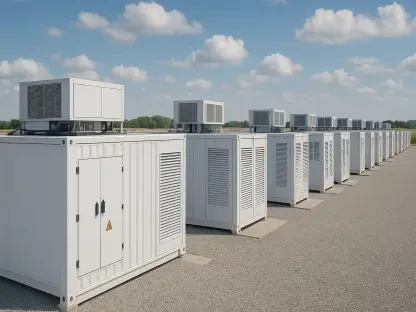

The collision between staggering data center demand and the glacial pace of physical transmission expansion has created a high-stakes bottleneck that threatens the very stability of the American industrial heartland. As the industry moves from 2026 to 2028, this growth is not merely a forecast but a tangible reality, with large-scale consumers manifesting gigawatts of demand in roughly two-year windows. This rapid surge is driven by several converging factors, including the expansion of energy-intensive artificial intelligence facilities and the widespread electrification of transport and heating systems. Historically, the utility response has been restricted to building centralized generation and high-voltage lines, yet traditional infrastructure projects often take a decade or more to reach completion, leaving a massive gap in the energy supply chain.
This market analysis explores the critical speed mismatch facing the power sector and highlights grid flexibility as the most viable bridge for this infrastructure deficit. By adjusting when and how electricity is consumed or stored, the industry can optimize existing assets rather than waiting for long-term construction. The following examination will argue that the primary barriers to this transition are no longer found in laboratory research or hardware manufacturing but in the outdated institutional frameworks governing the grid. Reforming these structures is the essential step required to unlock the latent potential of modern energy resources and ensure long-term reliability.
Addressing the Speed Mismatch in Modern Energy Demand
The current energy landscape is defined by a fundamental misalignment between the agility of demand and the rigidity of supply. Major tech corporations and industrial manufacturers are now capable of scaling their power needs at a velocity that far outpaces the regulatory and physical capabilities of most utilities. When a data center developer requests a multi-hundred-megawatt connection, the grid often lacks the immediate capacity to serve that load without triggering extensive network upgrades. These upgrades are frequently delayed by complex permitting processes and supply chain constraints that stretch into the next decade, creating a multi-year waiting list for critical economic development projects.
Grid flexibility provides a strategic alternative to this binary choice of building or waiting. By utilizing a diverse array of resources—from virtual power plants to sophisticated industrial demand response—system operators can manage peak loads with greater precision. This shift allows the industry to treat energy demand as a variable that can be managed in real-time rather than a fixed requirement that must be met through sheer physical volume. Understanding the speed mismatch is the first step toward adopting a more agile regulatory model that values responsiveness as much as it values raw capacity.
The Legacy of Centralized Power and the Need for a New Paradigm
The architectural foundation of the American power grid was built on a philosophy of centralized generation and one-way delivery. For more than a century, reliability was maintained by over-building capacity to meet occasional peaks in demand, a “build-to-peak” strategy that ensured stability through excess. This model favored massive, capital-intensive investments such as large coal or nuclear plants, and the regulatory environment was specifically designed to reward these long-term, low-risk physical assets. However, as the grid integrates higher levels of intermittent renewables and distributed energy resources, this legacy logic is becoming a liability rather than a strength.
Today, the industry faces a paradigm shift where decentralization and decarbonization require a more dynamic approach to system management. While the technological shift toward wind, solar, and battery storage is well underway, the underlying rules governing market participation and resource interconnection have remained stagnant. The grid is effectively attempting to support 21st-century innovations with 20th-century governance, leading to a bottleneck that stifles innovation. The transition to a modern energy ecosystem depends on recognizing that the old ways of guaranteeing reliability through physical volume are no longer sufficient in a landscape of rapid technological change.
Navigating the Technical and Regulatory Barriers to Agility
The path toward a flexible grid is currently obstructed by a combination of technical fragmentation and regulatory silos. Integrating millions of distributed assets into a coherent system requires not only robust software but also a clear framework for how these resources are valued and controlled.
Leveraging Electric Vehicles as Mobile Grid Resources
Electric vehicles represent one of the most significant yet underutilized assets in the push for grid flexibility. For years, utilities viewed EVs primarily as a burden on local distribution circuits, focusing on the potential for evening charging spikes to overwhelm transformers. However, the current outlook acknowledges that these vehicles are essentially mobile batteries with the capacity to provide significant support to the grid. Through vehicle-to-home and vehicle-to-grid technologies, EVs can discharge power during periods of extreme demand, acting as a decentralized buffer that protects system stability.
The primary obstacle to scaling this potential is the lack of standardized technical requirements across different vehicle manufacturers and utility jurisdictions. While the hardware for bidirectional charging is increasingly common, the business models to compensate owners for grid services remain inconsistent and underdeveloped. To fully leverage the millions of batteries already in the hands of consumers, the industry must establish uniform protocols that allow EVs to be treated as essential components of the energy ecosystem. This transformation requires a shift in perspective from viewing the car as a simple transportation device to seeing it as a dynamic grid resource.
The Evolution Toward Flexible Interconnection Models
A significant innovation in the interconnection process is the rise of non-firm or flexible connection agreements. Historically, a new customer either secured a “firm” connection that guaranteed power at all times or faced a multi-year delay while the utility performed massive grid upgrades. Under the newer flexible model, large-scale consumers—such as data centers or industrial plants—agree to have their power usage partially curtailed during rare moments of peak grid stress. In exchange for this flexibility, these customers receive a significantly faster path to connection, bypassing the traditional queue.
Major grid operators like PJM and the Southwest Power Pool are increasingly exploring these options under guidance from federal regulators. This represents a fundamental change in the relationship between the grid and its largest users, turning a rigid connection into a negotiable resource. However, there are lingering concerns regarding the enforcement of these curtailment agreements. Critics point out that if a major consumer refuses to scale back during a crisis, the reliability of the whole system could be compromised, necessitating a strong regulatory framework to ensure that “non-firm” means “binding.”
Identifying the Institutional Constraints on Market Innovation
Institutional inertia remains the single greatest hurdle to grid modernization. The decision-making processes of Regional Transmission Organizations were designed for an era of slow, predictable change, and they are struggling to keep up with the current pace of technological advancement. For example, the implementation of federal mandates intended to allow aggregated small-scale resources to participate in wholesale markets has been bogged down in stakeholder committees for years. This multi-year lag between policy creation and market execution creates a significant barrier for startups and innovators who rely on predictable regulatory environments.
These delays are often the result of governance structures that favor incumbent interests over new entrants. In many regional markets, the voting weight is distributed in a way that gives established power plants a disproportionate influence over the rules of competition. This creates a conflict where the resources most needed for flexibility are kept out of the market by the very entities they might eventually displace. To overcome this, the industry must address the velocity of its own decision-making processes, ensuring that the rules for new technologies are established before the technologies themselves become obsolete.
Modernizing Governance to Match the Pace of Technological Change
The future of grid reliability depends on the implementation of governance reforms that prioritize speed and efficiency. One emerging strategy is the introduction of “decision velocity” metrics, which would require grid operators to track and report how quickly they move from a regulatory proposal to a final rule. By implementing “shot clocks” for critical changes, regulators can ensure that the industry does not fall further behind the technological curve. This shift would force a cultural change within grid organizations, moving them away from endless stakeholder debates and toward actionable outcomes that benefit the consumer.
Furthermore, there is a growing movement to realign the incentive geometry of grid governance. Some analysts suggest that regional grid authorities should be restructured as interstate compacts with independent boards of directors. Such a model could prioritize “least-cost-reliability,” a standard that values consumer savings and system agility over traditional, capital-heavy infrastructure solutions. This would allow for a more objective evaluation of whether a new transmission line or a virtual power plant is the most efficient way to meet rising demand. Modernizing these structures is essential for creating a grid that is as dynamic as the economy it supports.
Actionable Paths Toward a Resilient and Flexible Energy Future
Unlocking the full potential of grid flexibility requires a coordinated effort across several sectors of the industry. Utilities and grid operators should adopt the “least-cost-reliability” objective, ensuring that demand-side resources are given the same weight as traditional physical generation. This involves creating clear pathways for aggregated distributed resources to compete in wholesale markets on a level playing field. By doing so, the industry can tap into a vast reservoir of existing capacity that is currently sitting idle in the form of smart thermostats, industrial heaters, and residential batteries.
For businesses and large industrial consumers, the primary strategy should be the adoption of flexible load management systems. Investing in the hardware and software necessary to participate in non-firm interconnection agreements can provide a significant competitive advantage by allowing faster access to power. Finally, regulators must prioritize the standardization of technical protocols to ensure that new technologies can be integrated seamlessly across different regions. By focusing on these actionable steps, the energy sector can transform a potential infrastructure crisis into an opportunity for a more efficient and resilient system.
Why Institutional Will Is the Final Frontier for Grid Modernization
The analysis demonstrated that the primary obstacle to a modern, flexible grid was not a lack of engineering solutions, but a deficiency in the agility of governing institutions. Experts realized that the traditional regulatory model, which prioritized large-scale physical capital over modular flexibility, had reached its limit of effectiveness in a rapidly changing market. Stakeholders observed that the most successful regions were those that moved toward decision velocity as a core performance metric, forcing regulatory bodies to keep pace with industrial demand. By the time the industry acknowledged the speed mismatch, the economic stakes had already necessitated a pivot toward least-cost reliability.
This shift proved that the integration of distributed resources functioned as the most viable path toward bridging the infrastructure gap while maintaining affordability for consumers. Policymakers ultimately concluded that the grid’s long-term resilience rested on its ability to evolve from a rigid physical system into a dynamic, responsive energy ecosystem. The transition required the courage to reform voting structures and the foresight to embrace non-firm interconnection as a standard practice. Ultimately, the successful modernization of the power grid was achieved through a strategic commitment to institutional reform, proving that structural agility was just as important as physical capacity.