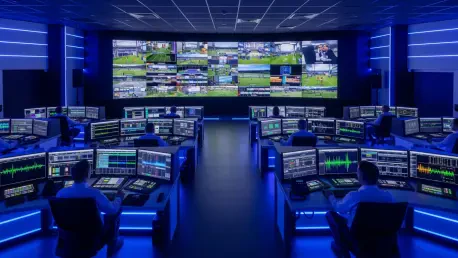

The transition from the comforting reliability of the living room television to the high-stakes world of digital streaming has reached a critical tipping point where technical failure is no longer an option for multibillion-dollar franchises. As millions of fans migrate from legacy cable subscriptions toward Over-the-Top (OTT) platforms, the sheer volume of data being pushed through the global internet is creating unprecedented pressure on service providers. This shift is not merely a change in viewing habits but a fundamental restructuring of how live media is produced, delivered, and monetized in a hyper-connected environment.
This current era represents a defining moment for the industry, as the disconnect between massive financial investments in distribution rights and the actual technical delivery standards becomes increasingly apparent. Broadcasters and streaming giants are now forced to confront the reality that a three-second delay or a buffering wheel can alienate millions of subscribers in an instant. Consequently, the industry is moving away from a model of experimental expansion and toward a disciplined focus on hardened, reliable infrastructure that can support the weight of global demand.
Innovation is no longer a luxury but a necessity for survival in this crowded marketplace. Emerging developments in cloud production, granular personalization protocols, and ultra-low-latency transport mechanisms are beginning to reshape the fan experience from the ground up. By integrating these high-tech solutions, providers hope to bridge the gap between the rock-solid reliability of traditional broadcast and the interactive, data-rich potential of the modern digital landscape.
The “Moment of Truth” for Digital Broadcasting Infrastructure
The migration from linear television to digital streaming platforms has placed a spotlight on the inherent vulnerabilities of the current internet infrastructure. For decades, traditional broadcasting offered a one-to-many delivery model that was inherently stable and predictable. In contrast, the OTT model requires maintaining individual connections with millions of unique users, each with varying bandwidth capacities and device types. This shift has created a massive logistical challenge, requiring a total rethink of how data is distributed across the globe to ensure that a viewer in Tokyo experiences the same quality as one in New York.
Industry veterans suggest that the industry is currently facing a “moment of truth” where the technical execution must finally catch up with the economic hype. There is a growing realization that having the most expensive rights to a sporting event means little if the stream cannot handle peak concurrency. Service providers are now under immense pressure to prove that they can deliver a broadcast-quality experience at scale, especially as more high-profile events move exclusively to digital platforms. This pressure is driving a surge in investment toward backend stability and more efficient encoding processes.
Looking ahead, the focus is shifting toward creating a more resilient ecosystem that can withstand the unpredictable surges of live sports. The introduction of smarter edge computing and more sophisticated content delivery networks is intended to mitigate the risks associated with massive live audiences. As these technologies mature, the goal is to create a seamless environment where the technical complexities of the stream remain completely invisible to the fan, allowing the content to take center stage without interruption.
Navigating the Technical and Economic Crossroads of Live Media
The Billion-Dollar Gamble: Balancing Record Rights Acquisitions with Elusive ROI
The financial stakes in the sports streaming world have reached staggering heights, with global outlays for distribution rights projected to exceed $64 billion in the coming years. Despite these astronomical figures, the return on investment remains a complex puzzle for many platforms. Analysts note that while the move to digital is inevitable, traditional pay TV still commands a significant majority of live viewing hours. This creates a situation where streamers are overpaying for content to capture a market that has not yet fully transitioned away from legacy systems.
Moreover, there is a growing skepticism regarding the metrics used to justify these multibillion-dollar licensing fees. Critics argue that “inflated numbers” often mask the underlying struggle for profitability among major streaming services. Platforms are finding that simply acquiring the rights is only half the battle; they must also navigate a fragmented market where fans are increasingly frustrated by the need for multiple subscriptions. To achieve long-term sustainability, providers must find ways to scale their infrastructure without letting operational costs eat away at their already thin margins.
The challenge of justifying these investments is compounded by the technical requirements of high-density video. To satisfy a modern audience, a platform must support 4K resolution and high dynamic range, both of which require significantly more bandwidth and processing power. As a result, the “gamble” is not just about which sport to buy, but whether the platform can afford the recurring technical costs associated with delivering that sport to a global audience. This economic reality is forcing a more conservative approach to infrastructure, prioritizing efficiency over purely experimental features.
Beyond Marketing Gimmicks: Engineering Intuitive Discovery and Hyper-Personalization
For years, the concept of personalization in streaming was largely limited to basic recommendation engines that suggested content based on past viewing history. However, industry leaders now recognize that these tools are often little more than marketing gimmicks that fail to solve the core problem of content discovery. In a live sports context, a user should not have to scroll through dozens of menus to find a game that is already in progress. True personalization must be intuitive and respond to the immediate, “in-the-moment” needs of the fan.
To address this, developers are looking toward the Delta protocol and other emerging standards that allow for granular, per-user customization at an unprecedented scale. Instead of a one-size-fits-all interface, these systems can adjust the user experience in real-time based on specific interests or even active betting slips. This level of technical sophistication is necessary to reduce subscriber churn, as fans are far more likely to remain on a platform that anticipates their needs and removes the friction of manual navigation.
The competitive necessity of these real-time interface adjustments cannot be overstated in an era of short attention spans. If a platform can surface a key moment from a secondary game or provide an instant update on a specific player, it creates a much deeper level of engagement. Engineering these features requires a robust data pipeline that can process millions of data points per second and translate them into actionable UI changes. This move away from static design toward a living, breathing interface represents the next frontier of digital fan engagement.
Solving the Fragmentation Crisis Through Seamless Multiview and Cloud Scaling
The fragmentation of sports rights has left many fans feeling overwhelmed, as they struggle to keep track of multiple events happening simultaneously across different apps. To combat this “cognitive load,” leading technology providers are introducing advanced multiview capabilities that allow users to watch several feeds at once on a single screen. Unlike previous iterations of this technology, which often suffered from lag or limited choice, next-generation platforms are utilizing cloud-based rendering to offer near-instant switching and high-density video quality across all active windows.
By leveraging on-demand cloud scaling, broadcasters can deliver these complex, multi-feed experiences without exhausting the hardware limitations of the user’s device. This is particularly important for mobile viewers, where battery life and processing power are at a premium. Cloud-based solutions move the heavy lifting away from the client-side app, allowing even mid-range devices to support a professional-grade production environment. This approach ensures that the “multiview” experience is as smooth and responsive as a single-stream broadcast.
Furthermore, these platforms are integrating real-time data overlays that sync perfectly with the video feeds. Whether it is a live shot chart in a basketball game or telemetry data from a racing car, the ability to see multiple streams of information simultaneously transforms the viewing experience. This shift helps streamers mitigate the hassle of the fragmented market by turning their app into a centralized “mission control” for the fan. Such innovations are essential for maintaining a competitive edge in a landscape where convenience is a primary driver of subscriber loyalty.
The MOQ Revolution: Redefining Latency for Interactive and Wagering-Focused Streams
Latency remains the “final boss” of the sports streaming industry, particularly as the rise of real-time wagering demands sub-second synchronization. The disruptive potential of Media over QUIC (MOQ) Transport is now at the forefront of this battle, offering a way to achieve sub-500 millisecond latency. Unlike traditional protocols that were designed for staggered delivery, MOQ is built on a foundation that prioritizes speed and reliability, making it the ideal candidate for interactive and betting-focused content that requires an immediate response.
The versatility of MOQ allows for the creation of different “latency tiers” within a single broadcast. For the general fan, a “conservative” live speed that matches traditional broadcast parity might be sufficient, while a sports bettor could opt for an ultra-fast track that provides the action in real-time. This flexibility enables streamers to monetize their feeds in new ways, offering premium, low-latency access to those who need it most. By separating the media into different tracks, providers can optimize the delivery for every specific use case without compromising the overall quality of the stream.
Furthermore, the integration of automated production workflows and cloud-based SCTE 35 markers is helping to align these high-speed streams with targeted digital monetization. These markers allow for the seamless insertion of ads and interactive elements without adding significant delay to the pipeline. As the industry moves toward a more automated, cloud-centric model, the ability to maintain high production values while achieving real-time speeds will become the standard. This revolution in transport protocols is effectively closing the last remaining gap between digital delivery and legacy television.
Strategic Pillars for a Sustainable and High-Performance Streaming Future
The transition toward a more sustainable streaming model requires a focus on hardened, profitable infrastructure rather than just audience growth at any cost. Industry experts emphasized the need for broadcasters to prioritize protocol flexibility, ensuring that their systems can adapt to new standards like MOQ without requiring a total overhaul of their backend. By building modular systems, companies can protect their investments while still taking advantage of the latest technological breakthroughs.
Automating advertising workflows in the cloud was also identified as a critical pillar for future success. The ability to insert regionally targeted, high-resolution ads during live events allows platforms to maximize their revenue without disrupting the fan experience. This requires a sophisticated orchestration of metadata and video chunks, ensuring that every transition is frame-accurate and seamless. As these automated systems become more prevalent, the financial viability of sports streaming will likely improve, providing the margins necessary to sustain high rights fees.
Practical insights into bridging the gap with legacy cable suggest that reliability must be the top priority. Broadcasters were encouraged to implement redundant delivery paths and multi-CDN strategies to ensure that a single point of failure does not take down an entire event. By adopting the “rock-solid” mentality of traditional television and combining it with the flexibility of the cloud, streamers can finally offer an experience that satisfies both the casual viewer and the most demanding sports enthusiast.
Redefining the Fan Experience in an Era of Borderless Competition
The collective insights from this roundup made it clear that holding distribution rights was no longer sufficient to guarantee success in the modern era. The quality and speed of the delivery medium emerged as the primary differentiators in a market where fans had endless options and very little patience for technical shortcomings. Experts highlighted how the next two years would be vital as organizations like the IETF finalized the specifications that will dictate sports consumption for the next decade.
It was widely observed that streaming has successfully evolved from a simple digital copy of television into a fully interactive, low-latency ecosystem. The discussion showed that the industry moved past the initial phase of “making it work” and transitioned into a sophisticated period of “making it better.” This evolution allowed for a more dynamic relationship between the viewer and the content, where the fan was no longer just a passive observer but an active participant in the digital experience.
Ultimately, the strategies discussed by these industry leaders suggested a future where the barriers between different forms of media continued to dissolve. The shift toward more efficient protocols and cloud-based production helped stabilize the economic realities of the market while pushing the boundaries of what was technically possible. As these systems matured, they provided a blueprint for a global broadcasting landscape that was more resilient, more personal, and faster than anything that came before it.