
Strengthening the American Power Network through Microgrid Innovation
The introduction of the Supporting Transformative Resilience, Operations, and Next-Generation Grid Innovation Deployment Act represents a decisive shift in how the United States plans to safeguard its power networks against mounting environmental and industrial pressures. Introduced by federal legislators in August 2026, this legislation seeks to authorize $700 million to modernize a national electrical infrastructure that has struggled to keep pace with modern requirements. By prioritizing the integration of microgrids and distributed energy resources, the bill intends to transform these technologies from experimental applications into foundational components of the domestic energy strategy. This market analysis explores how the act addresses growing consumption, enhances climate resilience, and provides a localized path toward reliability for diverse communities.
The Evolution of Grid Resilience and the Shift Toward Decentralization
For the better part of a century, the American energy strategy relied almost exclusively on a centralized macro-grid designed to transmit electricity from large plants over vast distances. While this model facilitated industrial growth, it is increasingly viewed as a liability in a landscape defined by localized volatility and rapid technological change. Recent years have seen a significant shift as extreme weather events and rising electricity consumption pushed traditional infrastructure beyond its intended limits. Historical reliance on centralized transmission often resulted in cascading failures, where a single point of weakness led to widespread regional blackouts. These systemic challenges necessitated a fundamental rethink of power distribution, laying the groundwork for the decentralized approach championed by the new legislative framework.
Examining the Framework and Impact of the STRONG GRID Act
Strategic Funding Pillars: From DOE Pilots to State-Level Implementation
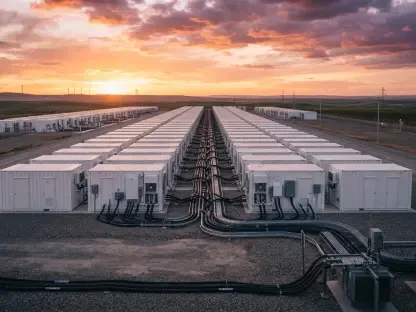
The legislation is built upon two distinct financial pillars designed to catalyze innovation and accelerate physical deployment. The first is a $200 million pilot program overseen by the Department of Energy, which focuses on high-tech microgrid capabilities and sophisticated grid management. These funds are earmarked for projects that demonstrate virtual power plants and provide ancillary services, such as managing supply fluctuations and preventing voltage instability. The second pillar allocates $500 million toward state energy programs to empower local governments to conduct feasibility studies and fund the construction of storage assets. By integrating advanced cybersecurity measures into these projects, the legislation ensures that as the grid becomes more decentralized, it remains protected against digital threats.
Addressing the Surge in Power Demand and Climate Volatility
The urgency of this market shift is driven by a stark reality where electricity consumption is projected to grow by over 55 percent by the year 2050. This surge is largely fueled by the rapid expansion of high-demand loads, including massive data centers, electric vehicle charging networks, and advanced manufacturing facilities. At the same time, grid operators are increasingly issuing resource adequacy warnings, signaling that the current system cannot consistently meet peak demand. When coupled with the increasing frequency of extreme weather, the macro-grid faces unprecedented strain. Microgrids offer a solution by providing immediate, localized resilience that can be deployed faster than massive transmission projects, which often face decades of regulatory delays.
Industry Alignment and the Role of Distributed Energy Resources
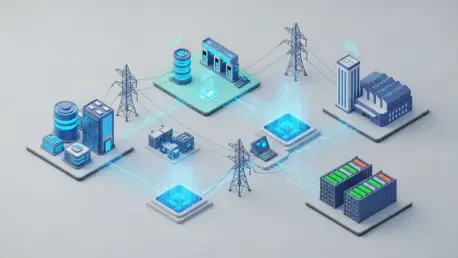
A broad coalition of stakeholders, ranging from state energy officials to major electrical manufacturers, has expressed strong support for the new act. This consensus reflects a growing understanding that local energy resources are no longer optional but are instead essential for national security. Sector experts argue that microgrids represent a faster path to reliability because they can bypass many of the physical hurdles associated with large-scale infrastructure expansion. By making these systems eligible for the same state grants that have historically supported traditional utilities, the legislation legitimizes distributed resources as a core part of the American energy landscape. This shift allows for a more flexible grid that balances local supply and demand in real time.
The Future Landscape of Distributed Power and Grid Modernization
Looking ahead, the passage of this act signals a permanent change in how the nation approaches energy security and grid management. As microgrid technology matures, the industry anticipates a move toward smart grids that utilize artificial intelligence to manage virtual power plants with unprecedented efficiency. Regulatory frameworks are likely to evolve further, giving states and local municipalities greater autonomy over their energy portfolios. Analysts predict that the integration of localized storage and renewable generation will become the standard for high-growth areas, particularly where the traditional grid is most constrained. This transition toward a grid of grids is expected to stimulate economic growth in the green technology sector while providing a necessary buffer against power instability.
Navigating the New Energy Paradigm: Key Takeaways for Stakeholders
The analysis of the legislative framework reveals several critical strategies for businesses and policymakers aiming to adapt to this new environment. First, financial clarity is essential, as the bill provides a clear roadmap for accessing federal and state funds, making it easier for private entities to invest in resilience projects. Second, the emphasis on virtual power plants suggests that companies should look toward aggregating their energy resources to provide ancillary services back to the grid, creating new revenue streams. Finally, for local governments, the primary takeaway is the importance of early-stage planning and engineering studies. By leveraging state energy program grants now, communities can ensure they are ready to break ground when construction funds become available.
Securing America’s Energy Future through Resilience and Localization
The analysis of the Supporting Transformative Resilience, Operations, and Next-Generation Grid Innovation Deployment Act demonstrated that the legislation functioned as a necessary response to infrastructure fragility. The findings suggested that the strategic investment of $700 million established a framework for a more agile and interconnected power system. It was observed that the themes of decentralization, cybersecurity, and local resilience were treated not as temporary fixes, but as the essential building blocks of a modern economy. This shift toward localized power ensured that communities remained energized and secure despite the uncertainties of climate volatility and technological growth. The move to a decentralized model marks the beginning of an era where energy reliability is defined by local strength rather than centralized dependence.