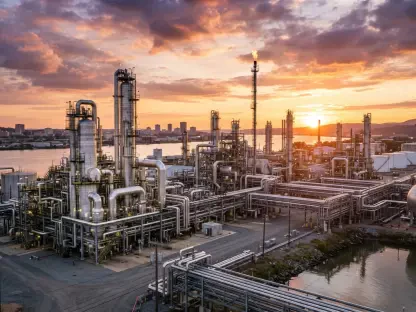

The global industrial landscape is currently navigating a complex transition where the urgent demand for environmental stewardship often clashes with the harsh realities of bottom-line profitability. Many organizations find themselves paralyzed by the perceived high costs of reducing carbon footprints, viewing sustainability as a burdensome expense rather than a strategic investment. However, the recent partnership between Mitsubishi Heavy Industries and Green AI Co., Ltd. challenges this narrative by demonstrating that “Green Transformation” or GX can actually serve as a primary catalyst for operational excellence. By synthesizing MHI’s deep engineering heritage with advanced artificial intelligence, this collaboration provides a blueprint for manufacturers to decarbonize without sacrificing their market position. This initiative arrives at a critical juncture when fuel price volatility and shifting regulatory standards have made traditional energy consumption patterns increasingly risky. The goal is no longer just to meet international climate accords but to reinvent the manufacturing floor into a high-efficiency powerhouse where every ton of carbon saved translates directly into financial stability.
Prioritizing Economic Feasibility: Aligning Efficiency With Profit
A fundamental tenet of the MHI and Green AI alliance is the belief that for environmental measures to be adopted globally, they must first enhance a company’s fundamental competitiveness. Reducing energy consumption represents the most logical and immediate entry point for decarbonization because it targets the direct reduction of operational overhead while shielding firms from the turbulence of global fuel markets. In an environment where energy prices can swing wildly due to geopolitical shifts, efficiency functions as a form of insurance against external shocks. This strategy moves beyond superficial corporate social responsibility by treating carbon reduction as a rigorous discipline of resource management. By focusing on the intrinsic link between low-carbon operations and high-yield productivity, the partnership ensures that businesses do not have to choose between the planet and their shareholders. This economic-first approach is designed to overcome the inertia that often plagues heavy industry, providing a clear financial rationale for immediate action.
Mitsubishi Heavy Industries provides more than just theoretical frameworks; the company brings a wealth of field-tested experience gained from optimizing its own massive manufacturing facilities. To navigate the complexities of facility upgrades, MHI utilizes Marginal Abatement Cost (MAC) curves, which allow decision-makers to visualize exactly how much carbon reduction is achieved for every dollar of capital expenditure. This data-driven methodology ensures that investments are prioritized based on objective performance metrics rather than vague environmental aspirations. For instance, by identifying specific high-impact modifications in steam systems or heavy machinery, MHI has demonstrated that substantial emissions cuts can be achieved with relatively short payback periods. This focus on “low-hanging fruit” combined with high-tech retrofits provides a roadmap for other heavy industrial players who may feel overwhelmed by the scale of the transition. By proving these concepts within their own walls, MHI acts as a primary laboratory for the cost-effective decarbonization techniques that are now being exported to the wider industrial sector.
Digital Intelligence: Leveraging AI For Strategic Implementation
Green AI Co., Ltd. serves as the technological engine of this partnership, offering a proprietary platform that contains a massive database of over 5,700 unique energy-saving measures. This expansive library allows for a level of granular analysis that was previously impossible or prohibitively expensive for individual consulting firms to provide. The AI-driven system can ingest complex data from a specific facility and automatically generate a customized reduction roadmap, identifying the most efficient pathways for that unique environment. This automation drastically reduces the time required to move from an initial energy audit to actual project execution, which is crucial in a market where speed is a competitive advantage. Furthermore, the software provides a dynamic interface that allows facility managers to simulate various scenarios, balancing potential energy savings against the impact on production schedules. By transforming raw industrial data into clear, actionable intelligence, Green AI removes the guesswork that often stalls decarbonization projects, allowing leadership to make confident, informed decisions regarding their long-term infrastructure.
The synergy between MHI’s industrial hardware and Green AI’s software intelligence creates what can be described as a comprehensive turnkey framework for the Green Transformation. While Green AI drafts the digital roadmap and calculates the financial benefits, MHI provides the physical engineering solutions and specialized equipment necessary to bring those plans to life. This end-to-end service model is particularly valuable for large industrial groups that operate multiple sites with diverse machinery and energy requirements. Instead of managing a patchwork of different vendors, companies can rely on a unified strategy that covers everything from the initial data analysis to the final installation and commissioning of energy-efficient turbines, heat pumps, or carbon capture systems. This integrated approach ensures that the digital strategy and the mechanical implementation are perfectly aligned, maximizing the overall system efficiency. By streamlining the procurement and implementation process, the partnership helps manufacturers avoid the common pitfalls of technical incompatibility and fragmented project management that often lead to cost overruns and delays.
Democratizing Efficiency: Supporting The Global Supply Chain
One of the most significant challenges in the global push toward carbon neutrality is the inherent resource disparity between multinational corporations and small to medium-sized enterprises (SMEs). While major players may have dedicated sustainability departments, SMEs often lack the specialized staff and capital needed to navigate complex energy-saving technologies. To bridge this gap, MHI has collaborated with the Shoko Chukin Bank to provide a combination of financial and technical support specifically tailored for upstream manufacturers. This initiative ensures that the critical smaller links in the industrial supply chain are not left behind as the sector moves toward lower emissions. By offering accessible financing alongside high-level technical consulting, the program allows smaller manufacturers to adopt the same sophisticated tools used by industry giants. This holistic view of the supply chain recognizes that true decarbonization cannot be achieved in isolation; the carbon footprint of a finished product is the sum of every component’s manufacturing process, making the success of SMEs vital to the success of the entire industry.
Providing these smaller manufacturers with access to the Green AI database and MHI’s engineering expertise creates a “democratization of efficiency” that strengthens the broader industrial ecosystem. When an SME implements a sophisticated heat recovery system or optimizes its electricity usage through AI, it not only reduces its own costs but also improves the environmental profile of the larger companies it supplies. This collaborative model transforms the relationship between manufacturers and their suppliers from one of simple procurement to a strategic partnership focused on mutual resilience. The Shoko Chukin Bank’s involvement adds a layer of financial security, ensuring that the initial capital requirements for these upgrades do not compromise the liquidity of growing businesses. As these smaller firms become more efficient, they become more competitive on a global scale, protecting domestic manufacturing jobs and ensuring that the transition to a green economy is inclusive. This focus on the “mid-stream” of the economy is a crucial component of ensuring that the benefits of the Green Transformation are felt across all levels of the industrial sector.
Total Optimization: Strategic Pathways For Long-Term Success
The ultimate goal of the collaboration between Mitsubishi Heavy Industries and Green AI is the realization of what is known as “Innovative Total Optimization.” This concept moves beyond optimizing individual machines or single production lines to look at the efficiency of entire industrial groups and geographic clusters. By analyzing energy flows across an entire organization, the partnership can identify opportunities for systemic improvements, such as waste heat sharing or synchronized power management, that would be invisible at a local level. This macro-scale approach is essential for future-proofing the industrial sector against the long-term trend of rising energy costs and more stringent carbon pricing. As global markets increasingly demand transparency regarding the carbon intensity of goods, companies that have achieved total optimization will find themselves with a significant competitive edge. The partnership’s ability to scale these solutions across different industries—from chemicals and steel to food processing—demonstrates the versatility and robustness of the data-backed GX strategy in maintaining a high level of industrial output.
The most successful organizations moved beyond viewing carbon targets as a compliance exercise and instead integrated energy data into their core financial planning cycles. By adopting the turnkey solutions developed by MHI and Green AI, firms were able to create a closed-loop system where efficiency gains funded further technological innovation. These companies established clear protocols for monitoring real-time energy metrics, ensuring that any deviations from the optimized roadmap were quickly addressed through AI-assisted troubleshooting. The transition also emphasized the importance of cross-departmental collaboration, where engineering, finance, and procurement teams worked in unison to validate the ROI of green initiatives. This proactive stance allowed the manufacturing sector to navigate the complexities of the mid-2020s with resilience, transforming the necessity of decarbonization into a powerful engine for long-term economic growth and structural modernization. Future considerations will involve expanding these data networks to include regional power grids, allowing industrial facilities to serve as flexible assets that stabilize the broader energy transition.