
The Urgent Pivot: Toward Energy Independence in the AI Era
The global digital infrastructure landscape is undergoing a profound metamorphosis as the sheer energy appetite of advanced artificial intelligence outstrips the physical capacity of national electrical grids. Power availability has surpassed cooling and low-latency connectivity to become the single most critical factor in determining the viability of new data center developments. This fundamental shift marks the beginning of the “Gigawatt Era,” a period where the industry must move beyond the constraints of centralized utilities. To maintain the current pace of innovation, developers are looking toward technical solutions that offer energy independence and rapid deployment capabilities at the edge of the network.
As the industry transitions away from the reliance on public utilities, the concept of the data center is evolving from a mere consumer of electricity into a sophisticated energy ecosystem. This transformation is driven by the need for speed and the physical reality that traditional transmission lines cannot be upgraded fast enough to meet AI workloads. By adopting onsite power generation, developers are not only securing their own supply but are also fundamentally altering the power distribution model. This article explores how these innovations are redefining the market and whether self-sourcing can bridge the gap left by an aging and overtaxed electrical grid.
The Gigawatt Campus: Challenging the Limits of Tradition
Historically, a facility consuming thirty or forty megawatts was considered a large-scale enterprise, but current market projections indicate that nearly twenty percent of new projects will reach the gigawatt threshold by 2030. By the end of the current decade, that figure is expected to rise to one-third of all global data center developments, creating an unprecedented strain on regional energy supplies. A single gigawatt-scale campus requires as much electricity as a medium-sized city, effectively turning these facilities into system-defining assets that dictate regional transmission planning.
This explosion in scale renders traditional electrical architectures and transmission strategies virtually obsolete. The legacy model of building a facility and requesting a connection from the local utility is failing because the scale of demand now exceeds what a typical substation can provide without years of upgrades. Consequently, the industry is witnessing a total redesign of the power delivery stack. Developers are moving toward facilities that are designed from the ground up to manage their own base-load requirements, moving the point of generation as close as possible to the point of consumption to minimize losses and maximize uptime.
Decentralized Generation: A Response to Infrastructure Strain
Time-to-Power: The Rapid Rise of Onsite Solutions
The most significant hurdle for modern developers is the growing delta between construction timelines and utility interconnection availability. While a physical shell can be erected in months, waiting for a utility to deliver hundreds of megawatts of capacity often takes eighteen to twenty-four months longer than anticipated. In a competitive market where being first to market with new AI hardware is the primary advantage, these delays represent a multi-million-dollar loss in potential revenue and market share.
As confidence in the traditional grid’s ability to deliver timely power wanes, many hyperscalers have started treating onsite generation as a primary source of power rather than a secondary backup system. This shift allows developers to decouple their growth from utility constraints, enabling them to build and launch capacity according to their own business cycles. By generating electricity at the facility level, companies can ensure that their hardware deployments are never stalled by external infrastructure bottlenecks, creating a more predictable and agile expansion strategy.
Technical Innovation: Advancing Onsite Energy Deployment
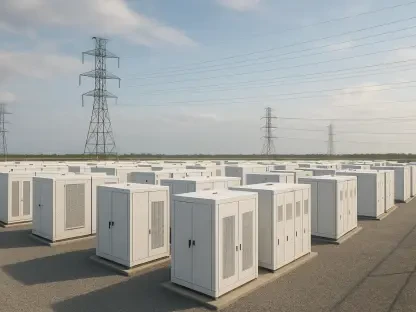
Innovation in energy hardware is moving at an accelerated pace to accommodate the necessity for modularity and immediate availability. Solid Oxide Fuel Cells have gained significant traction within the industry, with nearly half of all new high-density projects favoring them due to their low emission profiles and ability to be deployed in scalable units. Unlike massive centralized power plants that require years to permit and build, fuel cells can be installed in modular banks that grow in lockstep with the data center’s server count.
Other solutions, such as high-efficiency reciprocating engines and mobile turbines, provide the flexibility needed to power a site while permanent grid infrastructure is being completed. Furthermore, the industry is increasingly adopting high-voltage central busways and direct current distribution systems to reduce the conversion steps between generation and the server rack. These architectures are helping to mitigate the thermal challenges inherent in AI compute, ensuring that the power generated onsite is utilized with the highest possible degree of efficiency.
Geographic Realignment: Navigating the New Power Map
The quest for reliable electricity is actively redrawing the geographical footprint of the data center industry across North America. Traditional dominance in regions like Northern Virginia and Silicon Valley is eroding as these markets reach their peak capacity and struggle with the high costs of upgrading aging grid infrastructure. This saturation has led to a significant migration of capital toward regions with more permissive energy regulations and available land, with Texas emerging as the clear leader in new capacity.
By 2028, the Texas market is projected to host over forty gigawatts of capacity, representing a massive shift in market share away from California and Oregon. This migration highlights a new reality where developers prioritize “electrons in the ground” over historical industry ties or proximity to urban centers. The resulting decentralization is creating new economic hubs in regions that were previously overlooked, as the availability of reliable, scalable power becomes the ultimate arbiter of where the next generation of AI compute will live.
Emerging Trends: Shaping the Future of Utility Partnerships
Rather than a complete separation from the grid, a more collaborative “grid-parallel” model is becoming the standard for the next decade of infrastructure development. Forward-thinking utilities are starting to offer onsite generation technologies as part of their service packages, essentially acting as bridge providers for their largest industrial customers. This allows a facility to come online using modular fuel cells or turbines while the utility builds out the necessary transmission lines over a period of several years.
This hybrid approach creates a more resilient ecosystem where data centers can function as microgrids, supporting the regional grid during peak demand while maintaining their own operational stability. In this configuration, the data center becomes a grid asset rather than a liability, capable of shedding load or even feeding power back into the network during emergencies. We are entering a period where the boundary between private energy generation and public utility services is blurring, leading to a more integrated and flexible national energy strategy.
Strategic Recommendations: Thriving in a High-Density Landscape
To navigate this high-density environment successfully, organizations must adopt a site-selection criteria that prioritizes speed to power over all other traditional factors. Implementing modular power architectures is essential for ensuring that capacity can scale incrementally, reducing the risk of stranded assets if demand fluctuates. Organizations should also prioritize the integration of direct current distribution architectures to mitigate the thermal and efficiency challenges that are inherent in gigawatt-scale operations.
Developing deep, strategic partnerships with utilities to create “bridge-to-grid” roadmaps will be the most effective way to ensure long-term energy security without sacrificing immediate growth. This involves early engagement with energy providers to identify where onsite generation can alleviate grid stress and where long-term infrastructure investments should be focused. By viewing energy as a core competency rather than an external utility service, data center operators can protect themselves from the volatility and constraints of the traditional power market.
The Future: Toward a Self-Sustaining Infrastructure
The emergence of the gigawatt crisis necessitated a total reevaluation of how digital infrastructure integrated with the national electrical grid. Stakeholders recognized that waiting for traditional utility timelines was no longer a viable business model in an environment defined by the rapid deployment of artificial intelligence. The transition toward onsite power generation allowed the most innovative companies to bypass traditional bottlenecks and secure their own energy destinies. This shift from grid-reliance to energy self-sufficiency proved to be the most critical competitive advantage in a landscape where power became the ultimate currency of the digital world. The adoption of fuel cells and modular turbines empowered a new generation of self-sustaining facilities that transformed the industry’s relationship with public utilities forever. As these facilities continued to scale, they became independent nodes of a more resilient and distributed global network, ensuring that the progress of computation was never hindered by the limitations of the past.