
The massive $12 million modernization of the Mid-Valley Recycling facility in Fresno stands as a testament to the transformative power of advanced technology in addressing the persistent global waste crisis. By replacing antiquated machinery with a state-of-the-art commercial processing line, the facility has successfully transitioned into a high-capacity hub capable of handling an impressive 25 tons of material per hour. This significant overhaul is not merely a quantitative increase in processing speed; it represents a fundamental strategic shift toward a future where automated precision dictates the success of environmental sustainability. In the heart of California’s Central Valley, the facility now serves as a critical infrastructure point, bridging the gap between traditional waste management practices and the high-tech requirements of modern materials recovery. This evolution underscores a broader commitment to efficiency, as the facility tackles the complex logistics of sorting.
Integrating Advanced Automation and Smart Sorting Infrastructure
The foundation of this technological leap begins with proprietary screening technologies designed to manage the rugged nature of comingled waste. Helical auger screens have been implemented to specifically target cardboard, lifting it efficiently while allowing smaller items to drop through, which prevents the clogging that often plagues older sorting lines. Simultaneously, high-durability glass breakers are utilized to fracture bottles and jars into manageable cullet early in the process, protecting sensitive downstream machinery from the abrasive effects of broken glass fragments. These mechanical interventions ensure that the material stream is thoroughly cleaned and categorized before it reaches the more delicate electronic components of the system. By removing contaminants and bulky items at the start, the facility maintains a consistent and rapid flow of materials, eliminating the bottlenecks that previously limited daily output and hindered the quality of recovered commodities.
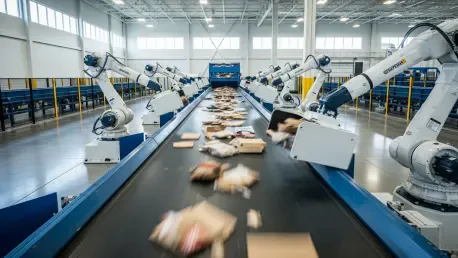
Beyond the mechanical foundations, the facility utilizes a sophisticated network of near-infrared optical sorters and artificial intelligence to refine the separation process. These optical units can identify specific plastic resins and paper grades in a matter of milliseconds, triggering compressed air jets to divert items into the correct bins with pinpoint accuracy. This layer of digital oversight is further enhanced by six Glacier AI robotic units, which employ advanced computer vision to distinguish between similar-looking materials that might confuse traditional sensors. These robots mimic human movements but operate at speeds and consistency levels that manual labor simply cannot match. This integrated AI system allows the facility to adapt to changing material compositions in real-time, drastically reducing the contamination rates that have historically devalued recycled products. Consequently, the output meets the stringent purity standards required by global markets today.
Boosting Regional Throughput and Local Economic Impact
The addition of the new commercial processing line has effectively transformed the Fresno site into a dual-line powerhouse, bringing the total regional capacity to an astounding 60 tons per hour. This massive upgrade allows for the simultaneous processing of residential curbside recyclables and diverse commercial waste streams, providing a much-needed comprehensive solution for the expanding needs of the Central Valley. Throughout the past year, the facility successfully managed over 130,000 tons of material, a figure that continues to climb as the newly integrated systems reach full operational maturity. This increased throughput is vital for a region experiencing steady population growth, as it ensures that the local waste infrastructure can keep pace with rising demand without requiring the expansion of existing landfill footprints. The synergy between the two lines provides a level of operational flexibility that was previously unattainable, allowing for better resource allocation.
The environmental and economic dividends of this technological shift are felt throughout the San Joaquin Valley, as the facility acts as a dedicated steward for the local landscape. By processing materials with greater speed and accuracy, the facility significantly diverts thousands of tons of waste away from landfills, effectively extending the lifespan of these sites and reducing the release of greenhouse gases associated with decomposing refuse. This efficiency ensures that valuable raw materials like aluminum and high-density polyethylene are captured and reintegrated into the supply chain rather than being buried and lost. This transition supports a localized commitment to environmental responsibility while simultaneously bolstering the regional economy through the creation of a more resilient and tech-driven waste infrastructure. The high-purity bales produced by the facility are in high demand, creating a self-sustaining economic model that proves sustainability and profitability can easily coexist.
Strategic Investment and the Path Toward a Circular Economy
Much of this ambitious transformation was facilitated by a strategic $4.6 million grant from CalRecycle, reflecting a broader statewide movement toward establishing a circular economy. California’s policy shift focuses on moving away from the traditional “take-make-dispose” model in favor of a system where waste is viewed as a valuable feedstock for domestic manufacturing. The Fresno facility serves as a primary example of how public-private partnerships can drive large-scale industrial change, providing the necessary capital to adopt high-cost technologies that yield long-term public benefits. This alignment with state goals highlights the critical role that infrastructure plays in meeting legislative mandates for waste reduction and climate action. By proving that AI and advanced sorting can handle the complexities of modern waste, this project has established a scalable blueprint for other municipalities looking to upgrade their facilities through proactive and targeted investments.
The successful integration of AI-driven systems at the Mid-Valley Recycling facility provided a clear roadmap for the future of sustainable waste management. Industry leaders recognized that the transition to automated sorting was no longer optional but a necessary step for maintaining competitiveness in a volatile global market. To build upon this success, regional planners focused on integrating these facilities into larger regional networks to optimize the collection and distribution of processed materials. Stakeholders identified that continuous investment in software updates for AI vision systems was essential to keep pace with the ever-evolving packaging landscape. Educational initiatives were expanded to inform the public about the importance of reducing contamination at the source, which further enhanced the efficiency of the facility’s robotics. Ultimately, the lessons learned from the Fresno modernization paved the way for more robust circular supply chains and stronger environmental policy.