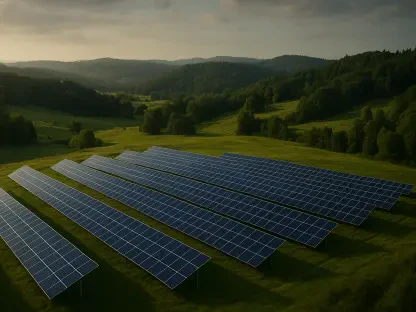

The rapid expansion of green infrastructure across the Chinese interior represents a monumental shift in the global quest for decarbonization as the nation aims for a total of 3,500 gigawatts of capacity. This initiative is not merely a regional project but a systemic overhaul of the world’s most extensive power network, requiring a level of financial and logistical coordination that sets a new bar for international climate benchmarks. By focusing on massive installations in sparsely populated regions, the central government is attempting to decouple its vast industrial output from the carbon-heavy legacy of coal-fired generation. As we observe the progress from 2026 to 2030, the implications for global manufacturing and energy security become increasingly clear, suggesting that the era of fossil fuel dominance is entering its final stage of relevance. Such a transition carries with it profound risks and rewards, challenging the resilience of existing market structures and the agility of global supply chains.
Strategic Infrastructure: Managing the Geographical Divide
Developing High-Capacity Transmission Networks
One of the primary challenges in achieving these ambitious renewable targets involves the efficient transfer of electricity from the wind-swept plains of the north and the sun-drenched deserts of the west to the dense urban centers along the eastern seaboard. To address this, massive investment has been channeled into ultra-high-voltage transmission lines, which act as the high-speed arteries of the modern electrical grid. These advanced conduits are designed to minimize energy loss over thousands of miles, ensuring that the solar and wind power generated in remote locations is not wasted. Engineers have had to pioneer new materials and management protocols to handle the extreme voltages required for such long-distance transport. This technical achievement is crucial for maintaining the economic viability of the transition, as it allows for the centralization of generation in areas where land is abundant and resource density is highest. Without this infrastructure, the target would remain a theoretical ambition rather than a functional reality.
Beyond the physical cables, the integration of these vast amounts of renewable energy requires a sophisticated digital layer capable of predicting and reacting to fluctuations in weather patterns. Artificial intelligence and machine learning are being deployed to manage the load balancing across multiple provinces, creating a more responsive and resilient network than ever before. This digital transformation allows for the real-time adjustment of power flows, prioritizing renewable sources whenever they are available and reducing reliance on traditional thermal plants. The coordination between local governments and national grid operators has become more streamlined as data-sharing protocols improve across the board. By leveraging these predictive technologies, the grid can better handle the inherent variability of wind and solar power, which was previously a significant barrier to large-scale adoption. This holistic approach ensures that the expansion of capacity is matched by the capability to utilize that capacity effectively throughout the year.
Implementing Scalable Energy Storage Systems
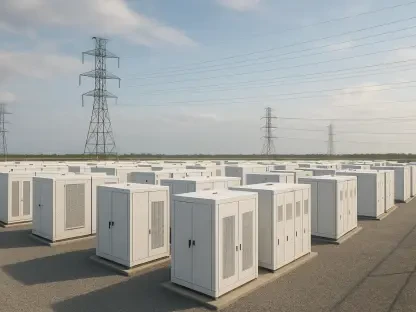
To solve the problem of intermittency, the development of large-scale energy storage has become a cornerstone of the national strategy, focusing on both lithium-ion batteries and long-duration solutions like pumped hydro. These systems act as a critical buffer, storing excess energy during periods of peak production and discharging it when demand surges or when environmental conditions are not favorable for generation. The rapid decline in battery manufacturing costs has facilitated the deployment of massive storage farms adjacent to solar and wind installations. Furthermore, the integration of diverse storage technologies ensures that the grid remains stable even during extended periods of low wind or cloud cover. This diversification of storage assets is essential for replacing the “spinning reserve” traditionally provided by coal and gas plants. As the technology matures, the focus is shifting toward improving the cycle life and safety of these installations, ensuring they can serve the grid for decades. This emphasis on reliability is what allows the transition to proceed at such an aggressive and high-speed pace.
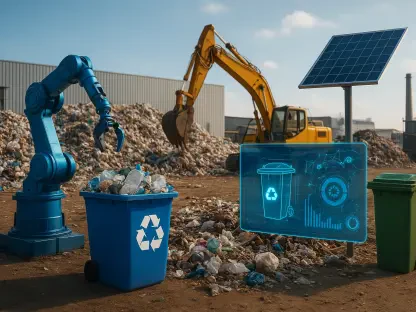
Businesses and policy experts recognized that the success of the renewable transition depended on a robust commitment to supply chain transparency and international cooperation regarding raw material procurement. The lessons learned during the period from 2026 to 2030 highlighted the necessity of diversifying the sources of rare earth elements and critical minerals to avoid bottlenecks in turbine and panel production. Stakeholders who prioritized the development of circular economies—recycling materials from decommissioned hardware—found themselves better positioned to maintain long-term growth. It was concluded that a focus on modularity and standardization across the industry allowed for faster scaling and lower maintenance costs. Moving forward, organizations must invest in domestic manufacturing capabilities while fostering cross-border partnerships to ensure a resilient energy future. The focus had to remain on continuous innovation in energy density and grid-scale intelligence to sustain the gains made. Adopting these proactive strategies proved to be the only way to navigate the complexities of a rapidly evolving global energy marketplace effectively.