
International diplomats and local officials agree that reliable energy serves as the bedrock for community growth and a catalyst for development throughout the Hunza district. The Energy Plus Project represents a landmark collaboration between the European Union, the Aga Khan Foundation, and NPAK Energy, designed to redefine the energy landscape of northern Pakistan by transitioning toward a low-carbon economy. This initiative focuses on modernizing aging infrastructure while simultaneously harnessing the region’s vast natural resources. By integrating international funding with localized governance, the project serves as a strategic blueprint for sustainable development in remote mountainous areas. The primary challenge has been overcoming chronic inefficiencies in an outdated electrical grid that previously hindered both daily life and broader economic growth. Through systematic technical upgrades and the promotion of climate-resilient engineering, the project ensures that electricity is delivered reliably to the people.
Infrastructure Modernization and Efficiency
Network Stabilization and System Reliability
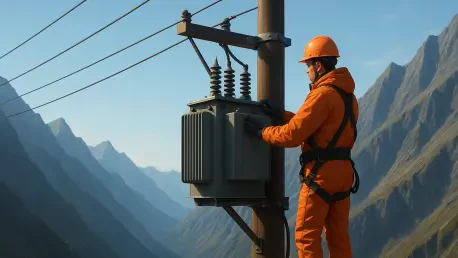
Phase I of the Loss Reduction Programme focused on a massive technical renovation to ensure system stability. The deployment of a new substation and 55 upgraded transformers has significantly reinforced the grid, allowing it to handle the rising demand of the local population. This effort was coupled with the installation of 25.3 kilometers of transmission lines and 86.5 kilometers of distribution lines, extending the physical reach of the network to underserved areas. By stabilizing the voltage, which previously fluctuated between 90 and 130V, the project has ensured a consistent flow of power at the standard 200 to 220V. This technical correction is vital for the safe operation of household appliances and industrial machinery, preventing the frequent damage caused by power surges. The result is a robust infrastructure backbone that supports modern lifestyle requirements and commercial expansion, providing a reliable foundation for the district’s future energy needs in 2026.
A pivotal achievement of this modernization phase was the drastic reduction of system losses, which plummeted from 47% to a manageable 15%. This improvement was largely driven by the installation of approximately 9,000 new energy meters and the creation of a specialized laboratory to test and calibrate equipment. The Energy Meter Laboratory provides a transparent mechanism for resolving billing disputes and identifying defective units, which has fostered greater trust between the utility provider and the community. By moving toward a data-driven billing system, NPAK Energy has not only conserved a significant amount of electricity but also ensured that the utility remains financially sustainable. These efficiency gains effectively increase the available power supply without requiring the immediate construction of new generation facilities. This focus on conservation and administrative transparency represents a fundamental shift in how energy is managed in the region, ensuring that resources are utilized fully.
Hydropower Restoration and Regional Growth
On the generation side, the Energy Plus Project is revitalizing the Misgar Hydropower Plant to maximize the region’s renewable energy output. As the largest facility in Hunza with a 3 MW capacity, the plant had long been operating at a fraction of its potential due to decaying civil infrastructure. Current rehabilitation efforts target the plant’s core water conveyance channels and forebay structures, which are essential for maintaining the necessary water pressure for power generation. By clearing sediment and reinforcing the engineering components, the project aims to restore the facility to its full operational capacity. This restoration is critical for reducing the region’s dependence on less sustainable, carbon-intensive power sources that are often more expensive and less reliable. The focus on hydropower aligns with global climate objectives by providing a clean energy baseline that supports the local economy while protecting the fragile mountain environment from the pollution associated with fossil fuel alternatives.
The consensus among international partners and local leaders is that this stable energy foundation is the primary driver of socio-economic growth and climate resilience. With reliable power now reaching homes, schools, and hospitals, the quality of essential services has improved significantly throughout the Hunza district. The stability provided by the project has allowed for the expansion of the digital economy and the modernization of the tourism sector, which are vital for local livelihoods. Looking ahead, the focus shifted toward maintaining this infrastructure through local capacity building and the potential integration of solar-hydro hybrid systems to manage seasonal water variations. The project proved that decentralized energy management is the most effective way to address the challenges of remote high-altitude regions. By establishing a sustainable and transparent energy model, the initiative paved the way for long-term prosperity, ensuring that the community remains resilient in the face of future environmental shifts.