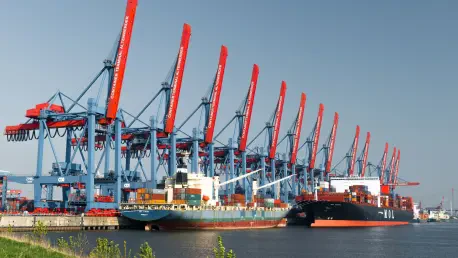

The successful connection of two Brittany Ferries and the MS Amadea to a single shore power source marks a major shift in how urban ports manage ship-to-shore energy. This breakthrough in Portsmouth signifies a departure from traditional maritime operations where idling engines were the standard while docked. For years, the maritime industry struggled with the logistical and financial hurdles of providing clean energy to massive vessels. Now, through the Sea Change project, the United Kingdom has demonstrated a scalable blueprint for port decarbonization that balances operational efficiency with environmental stewardship. This initiative represents the culmination of intense collaboration between local government, academia, and private industry, aiming to reconcile the heavy demands of international shipping with the air quality needs of a densely populated coastal city. As the first of its kind in the nation, this high-voltage system serves as a functional prototype for ports worldwide seeking to mitigate their carbon footprints.
Advancing Maritime Sustainability Through Technical Integration
The Engineering Design of Multi-Frequency Power Systems
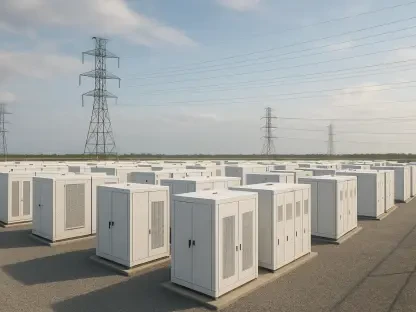
The technical backbone of the Sea Change project involves a sophisticated power distribution network capable of handling the immense electrical loads required by modern cruise ships and ferries. Supported by a £19.8 million grant from the Zero Emission Vessels and Infrastructure competition, the facility was meticulously designed to accommodate different vessel types and power requirements. This flexibility is crucial because international ships often operate on varying electrical frequencies, making a universal “plug and play” solution difficult to achieve. By implementing a multi-frequency system, Portsmouth has bypassed the need for ships to carry heavy on-board conversion equipment, thereby lowering the barrier for entry for various shipping lines. The installation reflects a significant capital investment by the Portsmouth City Council and the UK government, signaling a long-term commitment to infrastructure that supports the transition toward net-zero maritime transport by the year 2050.
Operational Impacts of Simultaneous Shore Power Connections
On September 23, the port reached a defining operational milestone when it successfully powered three large vessels simultaneously, allowing them to completely shut down their primary diesel engines. This trio, consisting of two Brittany Ferries and the MS Amadea, drew entirely from the local grid, effectively silencing the hum of idling machinery that typically accompanies port stays. The immediate impact on localized air quality was palpable, as the elimination of auxiliary engine emissions reduced nitrogen oxides and particulate matter in the surrounding urban area. Projections indicate that this infrastructure will prevent approximately 20,000 tonnes of carbon dioxide equivalent from entering the atmosphere annually, providing a tangible contribution to national environmental targets. Beyond the statistics, the achievement proves that multi-berth shore power is no longer a theoretical concept but a viable reality for busy commercial hubs. This success provides the necessary confidence for other international ports to invest in similar large-scale electrical upgrades.
Strategic Research and the Data-Driven Maritime Model
Living Laboratories and Predictive Emission Analytics
Central to the project’s long-term viability is the living laboratory framework established by researchers from the University of Portsmouth. Rather than viewing the shore power system as a static piece of equipment, the team at the Centre for Environmental and Renewable Energy Solutions treats it as a source of invaluable operational data. By integrating diverse datasets—ranging from real-time ship movements and weather patterns to local traffic flow and air quality sensors—the researchers have created sophisticated digital twins of the port environment. This digital representation allows for high-fidelity simulations that reveal how maritime activities interact with the broader city infrastructure. This academic involvement ensures that every kilowatt of energy used is tracked and analyzed, providing a level of transparency that was previously impossible. This evidentiary approach moves the project beyond simple emission reduction and into the realm of intelligent resource management, where data informs every operational decision made by port authorities.
Strategic Outcomes for the Global Maritime Sector
The successful implementation of the Sea Change initiative offered several clear lessons for the global maritime community. Stakeholders recognized that early and consistent collaboration between local municipalities, academic institutions, and private shipping companies was essential for overcoming the financial and technical hurdles of shore power. The project demonstrated that infrastructure investments must be accompanied by robust data collection systems to prove their environmental and economic value to skeptical investors. Experts recommended that future developments prioritize modular designs to allow for easy expansion as more vessels adopt shore power capabilities. Furthermore, the transition highlighted the importance of standardized international protocols to ensure compatibility between shore-based systems and diverse vessel fleets. Portsmouth’s journey served as a definitive case study, showing that the path to zero-emission shipping required a holistic view of the port as a vital node within a larger, interconnected urban and ecological network.