
The lightning-fast expansion of neural network capabilities has triggered an industrial hardware buildup so massive that it now threatens to bury the planet under millions of tons of discarded silicon and steel. As global tech leaders compete for dominance in the artificial intelligence sector, the focus remains primarily on power consumption and carbon emissions, yet the physical leftovers of this revolution present a far more immediate logistical nightmare. Millions of specialized chips and high-performance servers are currently being deployed at a rate that outpaces any previous technological shift, creating a disposal challenge of unprecedented magnitude. This analysis examines how the rapid turnover of infrastructure is setting the stage for a global environmental crisis that demands immediate industrial intervention.
Trillions of dollars in capital expenditure are expected to flow into AI infrastructure between 2026 and 2030, representing a gold rush for hardware that has few historical parallels. While the digital output of these systems is intangible, the physical reality is anything but; the sheer volume of silicon, copper, and specialized plastics required to build these data centers is staggering. This surge is not merely a continuation of previous trends but a fundamental expansion of the physical footprint of the internet. As hardware cycles compress to keep up with algorithmic breakthroughs, the industry faces the daunting task of managing a mounting pile of decommissioned electromechanical components.
The Hidden Environmental Cost of the Artificial Intelligence Revolution
The hidden environmental cost of this shift lies in the physical mass of the hardware itself and the speed at which it becomes obsolete. For every kilowatt-hour of energy consumed by a generative model, there is a corresponding weight of physical components that will eventually be discarded. Unlike traditional computing, AI requires hardware that operates at its absolute limit, leading to faster degradation and a significantly shortened operational lifespan. High-intensity workloads generate extreme heat, which accelerates the wear and tear on sensitive electronics, forcing data center operators into frequent replacement schedules that were once reserved for consumer gadgets.
Moreover, the financial scale of this development serves as a precursor to the physical waste it will eventually produce. With billions being allocated to build the next generation of computing clusters, the world is witnessing a physical buildup that must eventually be decommissioned. This massive investment translates into a physical reality where infrastructure is treated as a consumable rather than a long-term asset. The resulting turnover creates a tidal wave of e-waste that current recycling systems are ill-equipped to manage, especially as the industry prioritizes rapid deployment over lifecycle longevity.
From Silicon Dreams to Physical Scraps: The Evolution of Computing Waste
History shows that computing hardware usually followed a predictable path of obsolescence defined by Moore’s Law. However, the current transition marks a sharp break from that history. General-purpose servers could often be repurposed or utilized for lower-intensity tasks for nearly a decade, providing a buffer against immediate waste. In contrast, modern AI accelerators are so specialized and run so hot that their utility fades as soon as a new, more efficient architecture is released. This shift from long-term utility to rapid replacement cycles is the primary driver behind the sudden swelling of the global waste stream.
Understanding this shift is vital, as the industry moves from a model of gradual upgrades to a “rip-and-replace” mentality. The infrastructure supporting generative models is fundamentally different from the web-hosting or cloud-storage systems of the past. These new systems require specialized high-performance hardware that operates under thermal and electrical stress levels that would have been unimaginable just a decade ago. Consequently, the transition to AI represents a fundamental departure from the gradual progression of computing, setting the stage for an environmental challenge that is as physical as it is digital.
Quantifying the Massive Scale of the AI Waste Stream
The Total Ecosystem Beyond Chips and Servers
While most academic forecasts focus narrowly on high-profile components like graphics processing units and servers, a comprehensive analysis reveals a much larger problem. The primary hardware—servers and accelerators—accounts for only about 13% of a data center’s total mass. The remaining 87% is comprised of supporting infrastructure, including massive racks, networking equipment, power distribution units, and complex cooling systems. By the end of the decade, the annual retirement of AI-specific equipment is projected to reach between 8.6 and 13.1 million metric tons, a figure that dwarfs previous estimates because it accounts for the entire electromechanical ecosystem.
The Phenomenon of AI Waste Contagion
The crisis is not limited to massive data centers; it is spreading to the broader consumer market through a trend known as AI waste contagion. As software developers optimize applications for AI-ready hardware, older smartphones, laptops, and edge devices are becoming prematurely obsolete. Even if a device is functionally sound, its inability to run the latest AI-integrated operating systems or features forces users to upgrade. This shift causes a massive ripple effect across the global telecommunications landscape, discarding millions of tons of hardware that could have otherwise served for several more years.
Technological Shifts and the Risk of “Forever Chemicals”
Adding to the complexity are disruptive innovations in hardware design that threaten to render current data centers obsolete almost overnight. Transitions to liquid cooling systems and superconducting power delivery mean that existing facilities often require total overhauls rather than simple component swaps. Furthermore, the industry is increasingly relying on per- and polyfluoroalkyl substances, often called forever chemicals, to manage heat and ensure durability. These substances do not break down in the environment, meaning that when this massive volume of hardware reaches a landfill, the toxic legacy will persist for generations.
Emerging Trends and the Future of AI Infrastructure
Looking ahead, the trajectory of AI hardware points toward even more frequent replacement cycles as processing demands continue to climb. Experts predict that the lifespan of AI equipment will be significantly shorter than that of conventional hardware due to the relentless intensity of the workloads and the rapid pace of chip innovation. However, regulatory shifts are on the horizon as governments begin to recognize the environmental stakes. New legislation focusing on extended producer responsibility could soon force tech giants to account for the full lifecycle of their products, potentially slowing the race to discard.
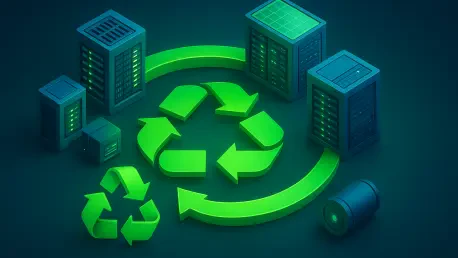
In response to these pressures, the industry is exploring modular data center designs that allow for the replacement of specific components rather than entire server racks. Future innovations may prioritize hardware that can be easily disassembled and recycled, or even refurbished for use in less demanding environments. The economic pressure to reduce waste is also growing, as the rare earth minerals required for high-end chips become increasingly scarce and expensive. This economic reality, combined with rising environmental awareness, is pushing the industry toward a more circular model of hardware management.
Strategies for Mitigating the Impending E-Waste Tsunami
To address this crisis, the technology sector must move toward deep lifecycle accountability. For businesses, this means investing in modularity and prioritizing the refurbishing of secondary components like power units and cooling frames. Such components often have a longer functional life than the chips they support and can be reused in multiple hardware generations. Consumers and professionals can contribute by resisting the urge to upgrade hardware solely for marginal AI capabilities unless the performance gain is absolutely essential for their specific operations.
Furthermore, the global community must standardize e-waste recycling protocols to ensure that the vast majority of waste currently managed irresponsibly does not end up in vulnerable regions. Strategic investments in local recycling infrastructure and the recovery of precious metals from decommissioned hardware can turn a waste crisis into a resource opportunity. By fostering a market for certified refurbished AI hardware, the industry can extend the utility of its physical assets and reduce the demand for raw materials, creating a more sustainable path for technological growth.
Securing a Sustainable Digital Future
The necessity of preserving the physical environment forced the technology sector to move beyond a singular obsession with raw processing power. It was determined that a closed-loop system for high-performance hardware was the only viable path forward for the industry to maintain its social license to operate. Leaders in the field recognized that solving the e-waste crisis required immediate investments in modularity and the establishment of robust secondary markets for specialized components. These strategic shifts allowed for the recovery of rare minerals and the reduction of hazardous waste entering the global supply chain.
Global regulators played a crucial role by enforcing extended producer responsibility, ensuring that manufacturers accounted for the environmental costs of their hardware from the design phase. They established standardized recycling protocols that prevented toxic materials from being exported to vulnerable communities. These interventions successfully shifted the market toward a circular model where hardware longevity finally shared the spotlight with algorithmic efficiency. Ultimately, the industry demonstrated that the true success of the AI revolution was measured not just by its processing capabilities, but by its ability to protect the planet for the generations that followed.