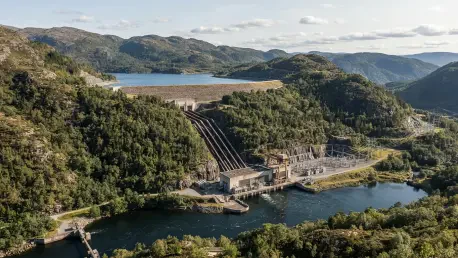

The national electricity infrastructure is undergoing a significant transformation as large-scale projects like Snowy 2.0 and Queensland’s Borumba hub become central to the clean energy shift. Australia is currently navigating a pivotal phase in its energy evolution, moving away from traditional coal-fired power stations toward a diversified mix of renewables and storage solutions. As the sun sets on older generation methods, the focus has shifted toward ensuring that the abundance of solar and wind energy captured during the day remains available during the high-demand periods of the evening. This necessitates a storage solution that is not only robust but also capable of providing power for extended durations. Pumped hydro energy storage has emerged as a frontrunner in this regard, offering a tried-and-true mechanical method for managing grid stability. By functioning essentially as a massive natural battery, these installations utilize the simple principles of gravity and hydraulics to store energy at a scale that chemical batteries are only beginning to approach. For the average Australian household, these developments represent a more stable energy future where the risk of outages is mitigated by a sophisticated network of water-based reservoirs acting in concert with modern smart-grid technologies.
1. Defining Pumped Hydro: Its Importance for Homeowners
Pumped hydro energy storage is a foundational technology that relies on the movement of water between two reservoirs at different elevations to store and release electricity. Unlike traditional hydroelectricity, which generally depends on the natural flow of rivers to turn turbines, pumped hydro is a closed-loop system designed specifically for energy management. When the grid produces more electricity than is being consumed—often during the middle of the day when solar output is at its peak—the system uses that excess power to pump water from a lower reservoir to an upper one. This process converts electrical energy into potential gravitational energy, which can be stored indefinitely as long as the water remains in the higher pool. When the sun goes down or demand spikes, the water is released back down to the lower reservoir, passing through turbines that generate electricity and feed it back into the national grid. This ability to act as a dispatchable power source makes it an essential tool for balancing the intermittent nature of modern renewable energy sources.
For Australian homeowners, the proliferation of this technology is vital because it addresses the inherent volatility of the electricity market. Power prices are largely driven by the balance of supply and demand, and without sufficient storage, the grid would be forced to rely on expensive “peaker” plants to meet evening demand. These plants often utilize fossil fuels and can drive up wholesale prices, which eventually trickles down to retail electricity bills. By providing a buffer of stored energy, pumped hydro helps to smooth out these price fluctuations, making the transition to a greener grid more economically viable for the general public. Furthermore, the presence of long-duration storage ensures that even during extended periods of low wind or cloud cover, there is a reliable backup to keep homes powered. As the nation moves toward a future where coal is no longer a primary contributor, understanding the role of these massive water batteries helps residents appreciate the technical requirements of maintaining a reliable and affordable energy supply in a carbon-conscious world.
2. Operational Mechanics: How Australia Manages Its Water Batteries
The technical execution of a pumped hydro facility involves sophisticated engineering that bridges the gap between traditional civil works and modern electrical synchronization. A standard installation consists of two major water bodies, reinforced tunnels or penstocks, and a powerhouse containing reversible pump-turbines. During the charging phase, these turbines act as pumps, consuming electricity to fight gravity and relocate massive volumes of water. While the process is highly efficient for its scale, it is important to note that energy is lost during the cycle. Approximately 20% to 25% of the initial electricity used for pumping is lost to heat and friction, meaning the system has a “round-trip efficiency” of roughly 75% to 80%. Despite this loss, the technology remains economically attractive because it allows the grid to store electricity when it is abundant and cheap, then sell it back when it is scarce and expensive. This arbitrage capability is what sustains the financial model of major infrastructure projects across the country.
Australia currently hosts several significant projects that demonstrate the operational diversity of this technology. The Snowy 2.0 project, which is currently under construction with an expected commissioning date in late 2029, stands as the most ambitious development in the nation’s history. With a target capacity of 2,200 megawatts and approximately 350 gigawatt-hours of storage, it is designed to provide enough energy to power millions of homes for several days if necessary. Other established sites, such as the Wivenhoe Power Station in Queensland and the Tumut 3 facility in New South Wales, have been providing essential grid services for years, proving the longevity and durability of mechanical storage. These facilities are not only generation assets but also providers of “inertia” and “frequency control,” technical services that keep the grid’s pulse steady. As more variable renewable energy enters the system between 2026 and 2030, the mechanical weight of these spinning turbines will be increasingly necessary to prevent sudden drops in voltage or frequency that could lead to widespread blackouts.
3. The Economic Impact: Influence on Residential Power Costs
The relationship between massive storage installations and the monthly utility bills of Australian families is multifaceted and indirect. On a macro level, the primary benefit of pumped hydro is its ability to lower the wholesale cost of electricity by reducing the grid’s dependence on expensive, fast-start gas generators. In a market where wind and solar are the cheapest forms of generation but are not always available, storage acts as the bridge that allows that low-cost energy to be used 24 hours a day. By capturing surplus energy that would otherwise be wasted or “curtailed,” pumped hydro maximizes the value of existing renewable investments. This efficiency helps to suppress the wholesale price peaks that occur during the 6:00 PM to 9:00 PM window, which is traditionally the most expensive time for households to consume power. Over the long term, a grid supported by diverse storage assets is less susceptible to global fuel price shocks, providing a level of energy independence that stabilizes the national economy.
However, the significant capital expenditure required to build these projects can also impact the cost of energy delivery. Megaprojects like Snowy 2.0, with budget estimates ranging from $22 billion to $25 billion, require massive financing and government support, which are often recovered through network charges over several decades. While these investments are essential for a reliable transition, they represent a significant portion of the infrastructure costs that residents see on their bills. Additionally, the construction of new high-voltage transmission lines to connect these remote hydro sites to major population centers is a substantial expense. The challenge for policymakers and regulators in 2026 is to ensure that the operational savings provided by these facilities—specifically the reduction in wholesale electricity prices—outweigh the capital and transmission costs passed on to consumers. For homeowners, the takeaway is that while the transition requires upfront investment, the alternative of maintaining aging coal plants or relying solely on short-duration batteries would likely lead to much higher costs and lower reliability in the coming decade.
4. Practical Strategies: Proactive Measures for Australian Homeowners
While the development of pumped hydro occurs on a national scale far beyond the reach of individual households, homeowners can adopt strategies that mirror the logic of large-scale storage to manage their own energy expenses. The most effective way for a resident to engage with this transition is through the installation of rooftop solar and residential battery storage. By generating power on-site, a household essentially becomes its own micro-utility, reducing its reliance on the grid and insulating itself from the price fluctuations that storage projects are designed to manage. A home battery operates on the same principle as pumped hydro: it stores excess solar energy produced during the day so it can be used at night. While the home version uses chemical lithium-ion or flow battery technology rather than gravity and water, the goal of maximizing self-consumption and avoiding high peak-period tariffs remains identical.
Beyond hardware installations, Australians can take immediate steps to improve their household energy efficiency, which reduces the total load that the national grid and storage systems must support. Simple measures such as improving attic insulation, installing weather stripping around doors and windows, and upgrading to high-efficiency heat pump water heaters can significantly lower a home’s demand profile. This is particularly important for the widespread adoption of electric vehicles, which represent a new and substantial load for the residential sector. Scheduling electric vehicle charging to occur during the middle of the day—when solar generation is high and the grid is often in a “pumping phase”—can help homeowners take advantage of lower rates while supporting overall grid stability. By aligning their consumption patterns with the availability of renewable energy, residents can lower their carbon footprint and their utility bills simultaneously, contributing to a more efficient national energy ecosystem from the bottom up.
5. Regional Landscapes: State-by-State Energy Storage Considerations
The geographical distribution of pumped hydro potential across Australia is varied, leading to different strategic approaches in each state. New South Wales has positioned itself as the epicenter of development, largely due to the existing infrastructure of the Snowy Mountains Scheme and the topography of the Great Dividing Range. In addition to the massive Snowy 2.0 project, the state is investigating several other sites, including those managed by WaterNSW, to provide localized storage that supports its Renewable Energy Zones. These developments are critical as the state prepares for the closure of some of its largest coal-fired power stations over the next few years. For residents in New South Wales, the focus is on a high-capacity, interconnected system that can move power across vast distances, requiring significant transmission upgrades but promising a robust backbone for the state’s future energy requirements.
Queensland has also taken a proactive stance, with the state government committing to a multi-billion-dollar energy plan that features the Borumba project as a centerpiece. The northern state faces a unique challenge due to its exceptionally high penetration of rooftop solar, which often creates a massive surplus of energy during the day. Pumped hydro provides a necessary sink for this excess power, preventing grid instability and allowing the state to export energy to the southern markets. Conversely, Western Australia operates on the South West Interconnected System, which is physically isolated from the rest of the country. This means that while the eastern states can share energy and storage capacity, Western Australia must remain entirely self-sufficient. In this context, smaller-scale pumped hydro and localized battery installations are more common. Understanding these regional differences is important for homeowners when evaluating their local energy plans and the long-term reliability of their specific state grids as they move through the 2026 to 2030 period.
6. The Storage Horizon: Future Outlook From 2026 Onward
As Australia progresses through the middle of the decade, the energy storage landscape is becoming increasingly competitive and technologically diverse. While pumped hydro remains the gold standard for long-duration storage—capable of providing firm power for 24 hours or more—it faces growing competition from rapidly declining costs in the chemical battery sector. Large-scale lithium-ion batteries are much faster to deploy and can be situated almost anywhere, including next to existing substations or inside decommissioned power plants. This speed and flexibility have already led some developers to cancel proposed hydro projects in favor of massive “big battery” installations. However, chemical batteries are currently limited in their duration, usually providing only two to four hours of storage. This creates a functional hierarchy where batteries handle short-term frequency fluctuations and peak demand, while pumped hydro serves as the deep reserve for multi-day weather events or extended outages.
Looking ahead toward the end of the decade, the focus of the industry is shifting toward a blended storage model that integrates these two technologies. The success of the national transition will likely depend on how effectively the grid can manage the different strengths of each system. Furthermore, environmental and community considerations are taking a more central role in project planning. Building large reservoirs and tunnels involves significant land use and water management, requiring developers to work closely with local communities and Indigenous groups to ensure projects are culturally and ecologically responsible. As more projects move from the planning stage to operational status between 2026 and 2030, the emphasis will be on optimizing their performance within a highly digitalized “smart grid.” This evolution promises a future where the mechanical power of falling water works in perfect harmony with high-tech sensors and artificial intelligence to deliver a cleaner, more resilient energy system for all Australians.
7. Moving Forward: Actionable Insights for Sustainable Energy
The industry recognized that the transition to a sustainable grid was not a single event but a continuous process of adaptation and investment. Throughout the mid-2020s, the development of projects like Snowy 2.0 and the Borumba hub provided a clear signal that Australia was committed to long-duration storage as a stabilizing force. Homeowners who successfully navigated this period focused on integrated energy solutions that blended their own rooftop generation with smart demand-side management. By monitoring their energy usage and aligning it with the peaks and troughs of the national market, these residents reduced their long-term exposure to wholesale price volatility. The collective shift toward electrification, supported by robust water-based storage, fundamentally changed the way the nation viewed its natural resources, turning the landscape itself into a critical component of the electrical infrastructure.
Final considerations for those looking to optimize their home energy setup involved a mix of hardware investment and behavioral changes. Many households implemented timed appliances and smart charging systems to make the most of the midday solar glut, effectively acting as a decentralized part of the broader storage solution. Seeking multiple quotes for solar and battery systems became a standard practice, ensuring that families received the best possible return on their investment while contributing to a greener grid. The path forward remains clear: while massive engineering feats provide the foundation for a stable network, individual actions at the household level provide the flexibility and efficiency needed to make the system thrive. By staying informed about grid developments and prioritizing energy efficiency, residents ensured they remained resilient and empowered throughout the historic shift toward a fully renewable future.