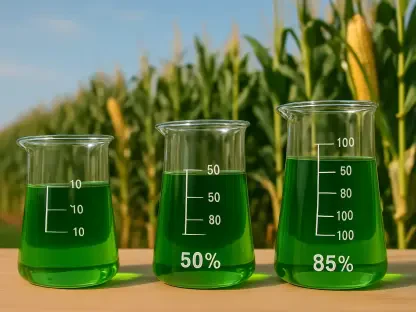

Using the BCFlow model to track mass conservation shows that the transition to ethanol often creates an atmospheric burden that persists until at least the mid-21st century. For decades, the global energy sector has operated under the assumption that liquid biofuels are naturally carbon neutral, resting on the belief that the CO2 emitted during combustion is perfectly balanced by the CO2 absorbed during the growth of the next crop cycle. However, as the world navigates the energy landscape of 2026, the scientific community is increasingly recognizing that this biological cycle is far more complex than simple addition and subtraction. Research led by John M. DeCicco highlights a significant oversight in traditional modeling: the creation of a “carbon debt.” This debt describes a multi-decadal period where the atmosphere contains higher concentrations of greenhouse gases than it would have if petroleum use had continued unabated. While biofuels have been positioned as a primary tool for climate mitigation, this evidence suggests that the immediate physical reality of their adoption may actually conflict with short-term atmospheric stabilization goals.
Reassessing Carbon Accounting Through Dynamic Modeling
The Mechanics: Understanding the Stock and Flow System
The BCFlow model provides a transparent alternative to the opaque economic models often used in policy formation. By focusing on the fundamental physical conservation of mass, it tracks how carbon moves between three essential reservoirs: the atmosphere, the terrestrial biosphere, and the fossil lithosphere. Unlike attributional lifecycle assessments that provide a snapshot of emissions per unit of fuel, BCFlow utilizes explicit differential flows to map out a continuous trajectory of carbon accumulation. This dynamic approach is critical because it identifies the “transient spike” in emissions that typically occurs during the early stages of biofuel expansion. By avoiding the oversimplification of “black box” models, this methodology allows researchers to observe the immediate perturbations caused by switching energy sources. It essentially treats the planet as a closed system where every kilogram of carbon must be accounted for, ensuring that temporary shifts in land use or industrial processing are not lost in the noise of long-term averages. This visibility is vital for identifying exactly when a new fuel technology begins to provide an actual climate benefit.
The Baseline: Establishing the Petroleum Reference Scenario
To quantify the true impact of any alternative energy source, researchers must first build a robust counterfactual world where that technology does not exist. In this study, the model establishes a fossil fuel reference scenario that reflects a transportation sector entirely reliant on petroleum, calibrated to reflect market conditions observed in the early 21st century. This baseline accounts for the carbon emissions generated both by fuel combustion and the energy-intensive processes required for refining oil. Crucially, the reference scenario also integrates the role of unperturbed natural land, which serves as a vital carbon sink by sequestering hundreds of teragrams of carbon annually. This natural sequestration creates a baseline trajectory of atmospheric carbon rise that is slower than gross emissions would suggest. By identifying this “business-as-usual” path, the model can accurately measure how the diversion of land for biofuel production disrupts existing ecological processes. This comparison ensures that the climate benefits of biofuels are not overestimated by ignoring the sequestration that would have happened naturally if the land had remained untouched and the fossil fuels had simply been burned.
The Ecological and Market Drivers of Carbon Debt
The Five-Step Transition: Market and Ecological Dynamics
The transition from a petroleum-based system to one centered on biofuels involves a sequence of ecological and economic shocks that the BCFlow model categorizes into five distinct steps. Initially, the process of extracting carbon from cropland for fuel production results in higher net emissions than petroleum refining because of the carbon released during fermentation. This initial deficit is only partially mitigated by secondary factors, such as the “deprivation factor,” where higher crop prices lead to reduced global food consumption. While agricultural intensification—using better technology to increase yields on existing fields—can help narrow the gap, it is rarely sufficient to meet the surging demand for feedstock. Consequently, the industry is forced into “extensification,” which involves clearing natural landscapes to create new cropland. This land-use change is the most damaging phase, as it releases a massive “pulse” of carbon stored in soil and plant biomass directly into the atmosphere. Furthermore, the conversion of this land permanently reduces the planet’s capacity for natural sequestration. When combined with the “rebound effect,” where displaced oil lowers global prices and stimulates consumption elsewhere, the total atmospheric burden often increases significantly before any savings are realized.
Theoretical Absorption: Gross versus Net Induced Offsets
A fundamental finding of the stock-and-flow analysis is the stark difference between “gross” offsets and “net induced” offsets. On paper, a biofuel system may appear perfectly neutral because the total amount of carbon absorbed by the crops equals the amount released at the tailpipe. This is the “gross” offset, a metric that serves as the cornerstone of many current environmental regulations. However, the “net induced offset”—the actual reduction in the rate of atmospheric carbon accumulation—is frequently much lower. In the modeled scenarios, the net offset only reached about 72% of the gross value under nominal conditions. This discrepancy is the result of various system-wide leakages, such as the loss of previous natural sinks and the continued use of fossil fuels stimulated by price changes in the global market. Essentially, for every ton of carbon theoretically recaptured by a corn or soy field, nearly a quarter of that gain is lost to market feedbacks and ecological disruptions. This realization challenges the validity of using simple carbon-intensity scores to justify renewable fuel mandates, as those scores do not account for the systemic inefficiencies that prevent biofuels from achieving their full theoretical potential in the real world.
Temporal Implications for Global Climate Targets
The 2050 Benchmark: Navigating International Agreements
The most significant insight provided by the BCFlow model concerns the timing of carbon “payback,” which has profound implications for global climate milestones. Under standard conditions, the initial carbon pulse created by land-use changes takes nearly five decades to be offset by the annual carbon savings of the fuel. This means that if a large-scale transition to biofuels began in the early 2000s, the atmosphere would not see a net benefit compared to the fossil baseline until 2053. This timeline is particularly concerning when viewed through the lens of international climate agreements, such as the Paris Agreement, which target mid-century carbon neutrality. If the benchmark year of 2050 is reached and the atmosphere still holds 40 teragrams more carbon because of a shift to biofuels, the strategy could be viewed as a hindrance rather than a help during the most critical window for climate action. This highlights a dangerous “timing gap” where short-term atmospheric stabilization is sacrificed for long-term gains that may arrive too late to prevent the most severe impacts of warming. Policy strategies that focus on rapid decarbonization must account for this multi-decadal debt to ensure that near-term climate goals are not inadvertently compromised.
Sensitivity Analysis: Variables Affecting the Payback Period
The duration of the carbon debt is not a fixed certainty but varies according to specific environmental and management factors. Sensitivity analysis reveals that the 47-year payback period can be shortened or extended based on the efficiency of agriculture and the type of land used for expansion. For instance, if yield gains from intensification are doubled, the debt period might drop to roughly 33 years. Conversely, clearing carbon-dense environments such as tropical rainforests or peatlands can push the debt cycle to nearly 70 years, effectively making the fuel a climate liability for most of a century. In the most optimistic, high-input scenarios where baseline yields are exceptional and land-use impacts are minimal, the debt might be repaid in as little as 13 years, but these conditions are rarely representative of global agricultural expansion. Furthermore, the model suggests that if the biofuel industry continues to expand steadily rather than stabilizing, the carbon debt is perpetually pushed forward. This “moving goalpost” effect means that a constantly growing market could prevent the system from ever reaching a state of net climate benefit, as new pulses of land-use emissions would continually offset the annual savings of the existing infrastructure.
Moving Toward a New Policy Paradigm
Conceptual Boundaries: The Scope of Modeling Limitations
While the BCFlow model provides a robust framework for understanding carbon dynamics, it is intended to be a conceptual tool rather than a precise measurement of every commercial fuel pathway. The research primarily focuses on biogenic and market-mediated carbon flows, purposefully omitting some of the smaller fossil fuel inputs in the supply chain to maintain clarity on the core issue of carbon debt. It is also important to consider that not all biofuels are created equal. The analysis focuses largely on crop-based fuels like corn ethanol, which compete for arable land and drive extensification. Alternative feedstocks, such as algae or cellulosic grasses like switchgrass, may offer a significantly different profile because they can be grown on marginal lands or in controlled environments that do not require the clearing of natural forests or the disturbance of rich soils. These advanced fuels might avoid the heavy initial “pulse” of emissions that defines the carbon debt of traditional biofuels. By recognizing these boundaries, researchers can use the model to identify which specific technologies are truly capable of bypassing the debt cycle and providing more immediate atmospheric benefits.
Strategic Reframing: Future Directions for Climate Policy
The analysis concluded that a significant paradigm shift was necessary in how renewable energy policies were structured and evaluated. It was determined that the long-standing reliance on static lifecycle intensity metrics failed to capture the temporal reality of carbon accumulation, leading to the promotion of fuels that actually increased atmospheric burdens in the short term. The study established that for a biofuel strategy to be truly effective, it had to explicitly account for the timing of emissions and the preservation of existing natural carbon sinks. Future regulatory frameworks were encouraged to prioritize the protection of high-carbon-density lands and to incentivize agricultural intensification that did not rely on territorial expansion. Furthermore, the findings suggested that the focus should shift toward feedstocks that minimized land-use disruption, thereby avoiding the massive initial carbon pulse that created multi-decadal debt. By moving toward dynamic, stock-and-flow accounting, policymakers were able to create more sophisticated interventions that aligned with the urgent need for mid-century atmospheric stabilization. This approach ensured that the pursuit of “renewable” energy did not inadvertently undermine the broader mission of climate mitigation during the most critical decades of the environmental crisis.