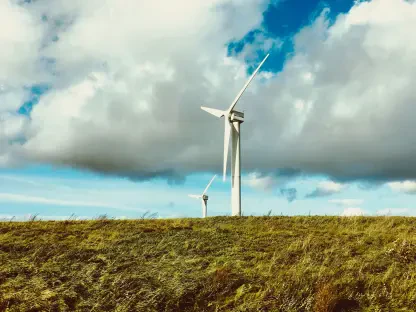

The United Kingdom has entered a transformative era where record-breaking auctions for solar and wind power signify a decisive shift away from fossil fuels, yet this environmental victory is being undermined by a physical infrastructure that was never designed for such rapid decentralization. While the sheer volume of clean energy contracts secured suggests a bright future for national decarbonization goals, the reality on the ground is a growing friction between modern generation and an aging distribution network. This misalignment creates a bottleneck where renewable capacity often exceeds the grid’s ability to safely transport it, leading to the forced shutdown of wind farms during peak production periods. Such inefficiencies translate directly into higher operational costs and increased utility bills for the public, as developers must be compensated for energy that is generated but cannot be utilized. Bridging this gap requires a radical reimagining of how electricity is stabilized and moved across the country.
The Physics: Challenges of Decentralized Power Systems
Transitioning from a centralized model dominated by massive thermal power plants to a distributed network of renewables introduces complex challenges rooted in the fundamental laws of physics. Traditional coal and gas-fired turbines provide a stabilizing force known as mechanical inertia, which acts as a kinetic shock absorber that naturally resists sudden changes in frequency across the entire system. In contrast, modern solar arrays and wind turbines interface with the electrical grid through power electronic inverters that do not possess this inherent physical momentum. Consequently, the contemporary grid has become increasingly sensitive to rapid fluctuations in supply caused by shifting weather patterns or sudden clouds, making it far more difficult to maintain the delicate balance between supply and demand. Without the stabilizing buffer provided by rotating mass, system operators must find new ways to simulate inertia through advanced digital controls and storage systems to prevent localized disturbances.
This shift toward inverter-based resources also complicates the way the electrical system responds to faults or short circuits, which were previously easy to detect and isolate using standard mechanical protection relays. In a legacy system, the massive surge of current from a synchronous generator during a fault was easily identifiable, allowing safety mechanisms to trip almost instantaneously and protect downstream equipment. However, inverters are programmed to limit their current output to protect their sensitive electronics, meaning they do not provide the same clear signals that traditional protection systems rely on to identify a failure. This lack of a strong fault current can lead to delayed responses from safety equipment, potentially allowing minor electrical issues to propagate through the network and cause cascading damage to expensive infrastructure. Engineering specialists are therefore forced to rethink the protection architecture of the entire grid, moving away from simple overcurrent detection.
Curtailment: Economic Impact of Infrastructure Gaps
One of the most pressing economic and logistical hurdles facing the energy transition is the increasing frequency of curtailment, a process where clean energy production is intentionally restricted because the transmission lines are at full capacity. As the density of wind and solar installations grows in remote areas far from major population centers, the existing high-voltage cables often become overloaded, forcing grid operators to pay developers to turn off their turbines. By the end of this decade, the amount of clean electricity lost to these structural bottlenecks is expected to reach levels capable of powering millions of homes for an entire year, representing a staggering waste of both natural resources and capital investment. This practice not only delays the achievement of carbon neutrality targets but also places an unnecessary financial burden on the end consumer, as the costs associated with managing these constraints are typically passed through to the monthly household bills.
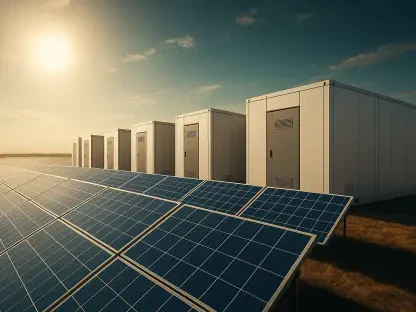
Beyond the need for more physical cables, the integration of long-duration energy storage and smart grid technologies offers a viable pathway to reducing the frequency of energy curtailment without solely relying on massive construction projects. By utilizing large-scale battery systems and green hydrogen production facilities located near renewable clusters, excess energy that would otherwise be wasted can be captured during periods of high production and released when demand peaks or transmission space becomes available. These systems provide a twofold benefit: they act as a buffer for the grid while also providing the fast-frequency response services that inverters alone cannot supply. Furthermore, implementing demand-side response programs allows industrial and residential consumers to adjust their usage in real-time based on the availability of green power, effectively smoothing out the load profile of the country. These digital and chemical solutions are essential for maximizing every kilowatt-hour.
Resilient Solutions: Strengthening the National Network
Ensuring the long-term reliability of a renewable-heavy grid requires a strategic focus on hardware that can mitigate the risks of high-voltage faults, with Neutral Earthing Resistors emerging as a critical line of defense. These specialized components are designed to limit the current that flows through the system during an earth fault, effectively preventing catastrophic damage to massive transformers and delicate underground cabling. By constraining the fault current to a manageable level, these resistors protect the most expensive assets in the distribution network from thermal and mechanical stress while still allowing enough current to flow for protection relays to detect and isolate the problem. This capability is particularly vital in the context of modern renewable sites, where the variable nature of power generation can make traditional fault detection more erratic and less predictable. Integrating high-quality earthing systems ensures that when an inevitable failure occurs, the impact is kept localized.
The evolution of the power grid from a one-way street into a complex, multi-directional web of energy flows demanded a significant update to how engineers approached system stability and equipment protection. It was eventually recognized that the success of the renewable transition depended entirely on the ability to manage electrical faults with surgical precision, rather than relying on the blunt-force protection methods of the past. By the conclusion of the most recent infrastructure assessment, it was clear that developers and grid operators had shifted their focus toward building a network that was both physically robust and digitally intelligent. The widespread implementation of resilient hardware and advanced monitoring systems proved that the technical barriers to a carbon-free grid were solvable through collaborative engineering and sustained investment. This shift not only safeguarded investments in wind and solar but also established a reliable foundation for industrial electrification.