
The global transition toward renewable energy has accelerated significantly over the last few years, making the long-term durability of photovoltaic modules a critical bottleneck for utility-scale solar deployments seeking to maximize their return on investment. Engineers and material scientists are increasingly focusing on the internal microclimate of these panels, where the buildup of moisture and heat can lead to premature degradation and failure. Traditional encapsulation methods have often struggled to maintain a consistent internal environment, especially when faced with the volatile weather patterns and high humidity levels seen in tropical or coastal regions. By addressing these internal conditions, the industry aims to push the average lifespan of a solar panel well beyond the standard twenty-five-year warranty, potentially reaching up to forty years of operational efficiency. This shift requires a move from passive protection toward more sophisticated environmental management within the glass and backsheet.
Engineering Barrier Systems to Combat Internal Moisture
Implementation: Advanced Desiccant Integrated Spacers
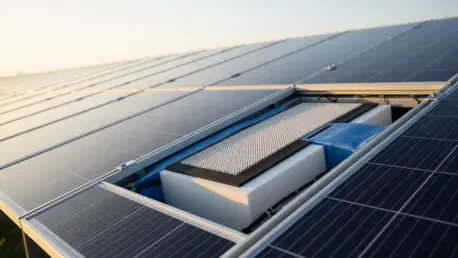
The introduction of advanced desiccant-integrated spacers has revolutionized how manufacturers handle the inevitable ingress of moisture into solar laminate structures. Unlike traditional edge seals that rely solely on physical barriers, these integrated systems utilize high-capacity molecular sieves embedded directly into the perimeter of the module. This proactive approach ensures that any water vapor that bypasses the primary sealant is immediately captured before it can reach the sensitive solar cells or the conductive silver traces. In environments with extreme humidity, such as floating solar farms or coastal installations, this internal regulation is essential for preventing potential-induced degradation and corrosion. By maintaining a relative humidity level below a critical threshold within the panel, these systems significantly reduce the risk of delamination, which has historically been a primary cause of system failure. This technology represents a move toward dynamic internal protection.
Innovation: Pressure-Equalizing Breathable Membranes
Thermal cycling remains one of the most significant challenges for solar module longevity, as the constant expansion and contraction of internal air can create a pumping effect that draws in moisture through microscopic gaps in the sealant. To address this issue, modern engineering has introduced pressure-equalizing breathable membranes that allow for controlled air exchange without permitting the entry of liquid water or water vapor. These specialized vents are strategically placed to balance the internal and external pressure, thereby reducing the mechanical stress on the edge seals and the backsheet. By mitigating this stress, the physical integrity of the module is preserved even in climates with extreme diurnal temperature swings. This approach shifts the focus from building a perfectly hermetic seal to creating a resilient system that can breathe while remaining isolated from harmful elements that lead to premature wear and catastrophic electrical failures in high-voltage arrays.
Thermal Regulation and Material Stability Enhancements
Integration: Phase Change Materials for Temperature Buffering
Managing the internal temperature of a photovoltaic module is just as critical as moisture control, as excessive heat can lead to a steady decline in conversion efficiency and the acceleration of chemical aging. Engineers are now integrating phase change materials into the backsheet assembly to act as a thermal buffer during peak solar radiation hours. These materials work by absorbing a significant amount of latent heat as they transition from a solid to a liquid state, effectively capping the temperature rise within the module. This thermal regulation prevents the solar cells from reaching the extreme temperatures that typically trigger significant efficiency losses and thermal degradation of the encapsulant. By smoothing out the temperature spikes throughout the day, the internal microclimate remains within a more stable range, which preserves the structural integrity of the silicon and the polymer layers. This technology is particularly beneficial in desert environments with high surface heat.
Evolution: Active Monitoring and Smart Backsheet Designs
The industry adopted these microclimate optimization techniques to ensure that the next generation of solar infrastructure could withstand the increasingly unpredictable environmental conditions of the late decade. Scientists developed robust testing protocols that simulated decades of environmental stress, proving that internal climate control was the most effective way to prevent the early onset of wear. Manufacturers transitioned toward using smarter materials and active monitoring as standard components, which fundamentally shifted the expectations for solar asset longevity and performance. It was determined that stakeholders should have prioritized the integration of these environmental management systems during the initial design phase to maximize returns. This shift proved that the marginal increase in initial capital expenditure was outweighed by the reduction in maintenance costs. Future researchers identified the next logical step involved miniaturizing these sensors to achieve a fifty-year operational goal.