
For generations, the persistent accumulation of construction debris on neighborhood street corners has presented a seemingly insurmountable challenge for urban centers, yet a pioneering initiative in North Philadelphia is finally shifting the focus from punishment to proactive community investment. By prioritizing resource accessibility over criminalization, the Nort#0 initiative has redefined how local governments and nonprofits approach the chronic issue of short-dumping within the 19140 ZIP code. This shift represents a departure from traditional models that rely heavily on surveillance cameras and steep financial penalties, which often fail to address the underlying economic drivers of illegal waste disposal. Instead, the program focuses on the reality that many small-scale haulers and residents simply lack the financial means or the logistical access to utilize certified recycling centers.
Moving beyond the traditional framework of law enforcement is essential because the root causes of illegal dumping are frequently tied to a lack of affordable infrastructure rather than a lack of community pride. When disposal fees at private facilities are high and municipal centers reject specific materials, the most convenient, albeit illegal, option often becomes a vacant lot. This guide examines the successful transition toward a resource-based strategy, detailing how the distribution of financial vouchers, the use of hyper-local digital outreach, and the strategic partnership with private recycling facilities created a tangible impact on the environment. By focusing on the mechanics of the voucher system and the power of neighborhood ambassadors, this analysis provides a blueprint for transforming urban waste management through community trust.
Transforming Urban Waste Management Through Financial Incentives
The Nort#0 initiative serves as a critical case study in how a nonprofit can fill the service gap left by municipal infrastructure by treating waste management as a social service rather than a regulatory burden. In the Hunting Park and East Tioga sections of North Philadelphia, illegal dumping has historically been a pervasive issue, with the 19140 ZIP code recording some of the highest volumes of sanitation-related complaints in the city. Rather than advocating for more police patrols or higher fines, the program identifies the financial barriers that prevent small-scale contractors from disposing of debris legally. By offering a direct financial subsidy, the initiative encourages a behavioral shift that benefits both the individual worker and the broader community.
Addressing the root causes of dumping requires a nuanced understanding of the local economy, where many independent tradespeople operate on razor-thin margins. Fines and penalties do little to solve the problem when the cost of legal disposal consumes a significant portion of a contractor’s daily earnings. Consequently, providing a legitimate and free alternative creates an immediate incentive for compliance that surveillance never could. This approach fosters a sense of partnership between the nonprofit and the community, proving that when the right resources are made available, individuals are far more likely to make choices that support the health and safety of their own neighborhoods.
Why Incentive-Based Programs Outperform Traditional Penalties
Incentive-based models prove more effective than the traditional “stick” approach because they eliminate the friction between residents and the regulatory bodies meant to serve them. While surveillance and fines are designed to deter negative behavior through fear, they rarely provide a viable path toward the desired outcome of a clean street. In contrast, the voucher model offers a clear, legal, and cost-free solution that immediately diverts waste from the streets. This diversion results in significant tonnage being moved to certified facilities, which reduces the long-term costs of municipal cleanups and improves the overall safety of neighborhood children who often play near these dumping sites.
Moreover, the “no questions asked” nature of these programs is a vital component in building trust within historically underserved communities. In areas where interactions with city officials are often characterized by citations or enforcement, a program that offers free assistance without bureaucratic hurdles is revolutionary. This policy removes the fear of prosecution that might otherwise prevent a hauler from seeking help, turning potential violators into active participants in the community’s environmental upkeep. By treating the community as a stakeholder rather than a suspect, the program encourages a culture of responsible waste management that can sustain itself beyond the initial intervention.
Implementing a Successful Community Anti-Dumping Initiative
Lowering Financial Barriers for Small-Scale Haulers and Residents
Effective implementation begins with the direct reduction of the financial burden associated with private disposal fees. Most commercial recycling centers charge by the weight or the type of material, which can quickly become cost-prohibitive for a resident cleaning out a basement or a small contractor working on a home renovation. By providing a financial subsidy that offsets these costs, the program transforms the decision-making process for the hauler. The removal of this barrier is the single most important step in preventing the initial act of illegal dumping, as it aligns the contractor’s financial interest with the public’s interest in clean streets.
The $120 Voucher System at Richard S. Burns & Co
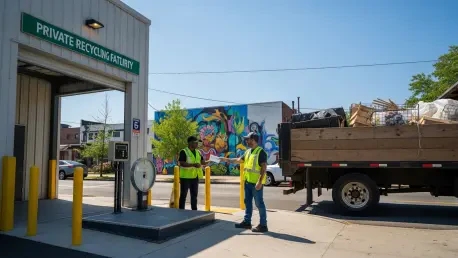
The logistical cornerstone of this initiative is a specialized $120 credit redeemable at a local private facility, Richard S. Burns & Co., which is strategically located near the affected neighborhoods. This specific dollar amount was calculated to cover approximately 2,000 pounds of construction and demolition debris, which typically includes heavy materials like wood, concrete, and drywall. By partnering with a private facility that has the capacity to handle large-scale commercial loads, the program ensures that haulers have a reliable destination for their waste. This system allows a contractor to pull up to a certified scale, dump their load, and use the voucher to clear the balance, making the legal process as seamless as the illegal alternative.
Utilizing Hyper-Local Outreach and Digital Access Points
Success in an anti-dumping initiative is also dependent on the visibility and accessibility of the resources offered. Traditional government websites or office-bound services are often too disconnected from the reality of the street to be effective. Instead, placing outreach materials directly at known dumping hotspots ensures that the solution is present at the exact moment a decision is being made. By utilizing community leaders who are already familiar with the neighborhood landscape, the program can reach individuals who might be skeptical of official city programs but are willing to listen to a trusted neighbor.
QR Codes and Neighborhood Ambassadors in Hunting Park
In the Hunting Park area, the use of QR codes on signage at chronic dumping sites has bridged the gap between digital access and physical action. When a hauler arrives at a site, they can scan the code to be immediately connected with a community ambassador who manages the distribution of the vouchers. These ambassadors do more than just hand out credits; they act as educators and advocates, explaining the benefits of the program and helping residents navigate the disposal process. This hyper-local approach ensures that the program is not just an abstract idea but a tangible resource that is available right where it is needed most.
Bridging the Service Gap for Construction and Demolition Debris
One of the primary reasons for the failure of municipal sanitation systems to stop illegal dumping is the exclusion of professional materials from residential drop-off centers. Most city-run facilities are designed for household trash and do not accept the heavy materials that constitute the bulk of construction waste, such as plasterboard or roofing shingles. By specifically targeting these materials, the voucher program addresses a massive service gap that otherwise leaves small-scale tradespeople with nowhere to go. This focus on construction and demolition debris is essential for any program aiming to make a serious dent in urban waste.
Supplementing City Services for Professional Contractors
The voucher program functions as a necessary supplement to city services by catering to the professional and semi-professional haulers who are often barred from free municipal sites. While city centers serve residents well for daily trash, they do not accommodate the commercial-grade waste generated by the local renovation economy. By providing a professional-grade disposal option for small contractors, the Nort#0 model prevents the “short dumping” that occurs when a worker is turned away from a city facility with a full truck. This integration of private-sector capacity and nonprofit funding creates a comprehensive safety net that protects the neighborhood from the consequences of municipal service limitations.
Evaluation of the Nort#0 Model and Recommendations for Future Adoption
The evaluation of the Nort#0 model revealed that a resource-based approach successfully altered the environmental trajectory of the 19140 ZIP code. Data indicated that the program diverted more than 250,000 pounds of debris from local lots, demonstrating that financial incentives were far more effective than traditional enforcement. Stakeholders noted that as the program gained momentum, residents and contractors were even willing to pay out-of-pocket when their waste loads exceeded the voucher limit, contributing thousands of dollars of their own money toward legal disposal. This behavior confirmed that the community valued the legal option once the initial financial threshold was lowered by the nonprofit subsidy.
City officials and nonprofit leaders who considered scaling this model recognized the importance of securing sustainable, long-term grant structures to meet the high demand for services. The program’s rapid utilization of its initial funding highlighted a significant hunger for legal disposal options in high-need urban areas. Recommendations for future adoption included the necessity of building strong partnerships with private recycling facilities and ensuring that neighborhood ambassadors remained the primary point of contact for voucher distribution. These local connections proved to be the most reliable method for maintaining the “no questions asked” environment that was crucial for the program’s success.
Moving forward, the legacy of the North Philadelphia initiative was defined by its ability to foster community stewardship through trust rather than fear. While illegal dumping remained a complex urban challenge, the diversion of massive amounts of trash from the vicinity of schools and daycares provided immediate health and safety benefits. Future considerations focused on how municipal governments could institutionalize these types of supports to prevent environmental degradation in underserved ZIP codes permanently. The experience in Hunting Park and East Tioga proved that when people were given the proper tools and a fair chance to do the right thing, they consistently chose to protect their neighborhoods.