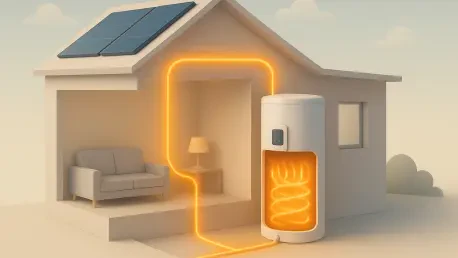

Shifting water heating cycles to midday periods of low electricity demand reduces the overall strain on the grid when energy consumption spikes in the evening. This concept, often referred to as thermal storage, transforms a common household appliance into a critical asset for modern energy management. By utilizing the insulated tank of a standard electric water heater, homeowners can store energy in the form of hot water when renewable generation is at its peak. This method effectively bypasses the need for expensive chemical battery installations, which often involve complex supply chains and high initial capital expenditures. As power grids transition toward a higher reliance on solar and wind energy, the ability to store power during periods of oversupply becomes paramount. Unlike traditional batteries that store electricity, these units store heat, providing a reliable and secondary function that serves the daily needs of a household while simultaneously acting as a stabilizing buffer for the local utility provider.
Strategic Integration of Household Technology
Digital Management and IoT Connectivity
Modern smart water heaters utilize advanced communication protocols to interact directly with utility providers through Wi-Fi or cellular networks. These systems employ machine learning algorithms to predict household usage patterns, ensuring that hot water is always available even when the heating element is deactivated during peak price periods. By analyzing historical data, the software determines the optimal window for reheating, often coinciding with high solar output from 10:00 AM to 3:00 PM. This synchronization allows the grid to shed significant load during the critical 6:00 PM to 9:00 PM window when residential demand typically surges. The hardware involved is relatively simple, often consisting of a retrofitted controller or a native smart mixing valve that precisely manages temperature. Consequently, the transition to a smarter grid does not necessarily require the immediate replacement of every existing appliance, as modular upgrades can turn legacy equipment into active grid participants.
Enhancing Grid Resilience via Demand Response
Beyond simple scheduling, these devices participate in sophisticated demand response programs that offer real-time flexibility to grid operators. In regions where solar penetration is high, such as the American Southwest, utilities often face a surplus of energy that can lead to negative pricing or the forced curtailment of renewable sources. Smart water heaters address this inefficiency by absorbing the excess electricity and converting it into thermal energy for later use. This mechanism functions as a distributed battery system that is already installed in millions of homes, representing a massive untapped reservoir of storage capacity. Furthermore, the high thermal mass of water allows these tanks to retain heat for several hours with minimal loss, provided the insulation meets current energy standards. By modulating the power draw of thousands of units simultaneously, a utility can effectively manage frequency fluctuations on the line, maintaining the balance between generation and consumption without relying on carbon-intensive peaker plants.
Assessing the Economic and Environmental Impact
Cost-Effective Alternatives to Chemical Storage
When compared to stationary lithium-ion battery systems, thermal storage via water heaters offers a significantly lower barrier to entry for the average consumer. A typical residential battery system can cost upwards of ten thousand dollars, whereas a smart water heater or an intelligent retrofit kit is available for a fraction of that price. This affordability makes it possible to scale energy storage solutions across diverse socioeconomic demographics, ensuring that the benefits of the energy transition are not limited to wealthy households. Moreover, the environmental footprint of a water tank is considerably smaller than that of a chemical battery, which requires the mining of rare earth minerals and involves complex recycling challenges at the end of its functional life. Because water heaters are already a standard component of domestic infrastructure, leveraging them for grid services maximizes the utility of existing resources, providing a reliable and safe way to store energy.
Scalability and Strategic Implementation Pathways
Stakeholders in the energy sector recognized that the most efficient way to manage the grid was to utilize the tools already present in every household. Engineers and policymakers prioritized the standardization of communication interfaces, which allowed for seamless interoperability between different brands and utility software platforms. This strategic focus on thermal storage provided a low-cost, high-impact solution that addressed the intermittent nature of wind and solar power. Homeowners who adopted these technologies found that they could contribute to environmental goals while enjoying lower energy costs and improved system reliability. Moving forward, the focus shifted toward integrating these thermal batteries into wider home automation ecosystems, where heating, cooling, and transportation loads were managed as a single, cohesive unit. These developments ensured that the transition to a sustainable energy future remained both technically feasible and economically accessible for the general public.