
Transitioning the global power grid to a net-zero state is no longer a matter of waiting for a miraculous laboratory breakthrough to save the day. Instead, the focus is shifting toward a disciplined, system-oriented approach that values proven technologies and comprehensive grid management. This strategy moves away from comparing individual storage methods in isolation and looks at the grid as a holistic environment where every component works together to ensure reliability. By establishing a clear system boundary, experts can determine the actual amount of dedicated electrical storage required for a global grid by the year 2100. Incorporating elements like long-distance transmission, flexible demand, and thermal storage into the planning model reduces the total storage requirement to roughly 108.5 terawatt-hours. This lower estimate reflects the efficiency gains found when various grid tools are integrated rather than relying on batteries alone. This integrated model suggests that the sheer volume of storage needed is manageable if engineers stop viewing batteries as the only solution to intermittency. The coordination between diverse assets allows for a more streamlined infrastructure, lowering the barrier to entry for regions that are currently lagging in renewable adoption. By treating the grid as a singular, living machine, the industry can optimize performance without the inflated costs associated with over-engineering individual parts of the energy puzzle.
The Dominance of Proven Storage Leaders
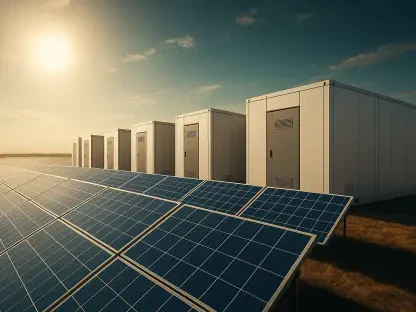
Lithium-ion batteries have established themselves as the undisputed leading force in grid storage, driven by massive price drops and rapid manufacturing scale. Since the start of 2026, stationary battery-pack prices have fallen significantly, ensuring these systems are no longer restricted to short-term balancing or simple frequency regulation. They are increasingly being proposed for durations lasting up to eighteen hours, proving that modular, manufactured products can outpace more complex, unproven alternatives that have struggled to move beyond the pilot phase. This scaling success is largely due to the maturity of the lithium-ion supply chain and the ability to deploy standardized containers in diverse environments without significant site-specific engineering. As manufacturing techniques continue to improve from 2026 to 2030, the energy density and cycle life of these cells are expected to reach levels that make them competitive for nearly all diurnal storage needs. The speed at which a lithium-ion facility can be commissioned remains one of its greatest advantages over traditional power plants, allowing developers to respond to shifting market demands in months rather than years. This rapid deployment capability is essential for meeting the aggressive decarbonization targets set for the coming decade, providing a bankable solution for investors who require predictable performance and reliable return on capital.
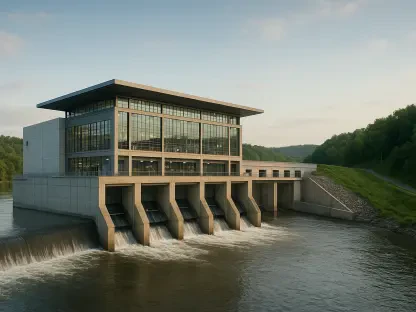
While batteries offer speed and modularity, pumped hydro remains the essential bulk anchor for the energy system across the globe. As a mature form of gravity-based storage with high efficiency and an exceptionally long lifespan, it provides a stable foundation for the grid’s long-term needs that electronic systems simply cannot match. Pumped hydro facilities often operate for half a century or more, offering a level of durability that is highly valued in national infrastructure planning. However, its growth is inherently limited by geography and the relatively slow pace of civil infrastructure projects compared to the fast-tracked deployment of battery containers. Constructing a new reservoir involves complex environmental assessments and massive excavations that can take a decade to complete. Despite these hurdles, the sheer capacity of existing and planned pumped hydro projects remains the primary defense against long-term renewable droughts. Integrating these massive mechanical storage systems with modern power electronics has improved their responsiveness, allowing them to complement the high-speed discharge of lithium-ion arrays. This synergy ensures that the grid possesses both the rapid-fire response needed for momentary fluctuations and the deep energy reserves required to sustain entire cities during extended periods of low wind or solar production.
Challenges for Speculative Energy Technologies
There is growing skepticism regarding speculative technologies like compressed air, liquid air, and gravity blocks that frequently make headlines for their novelty. These methods often lack the extensive deployment history and bankable warranties necessary to compete with established systems like lithium-ion or pumped hydro. For any novel technology to earn a place in the future grid, it must move past the experimental stage and demonstrate repeatable, industrial-scale performance that satisfies cautious utility providers. Many of these alternative concepts suffer from lower round-trip efficiencies or high maintenance requirements that negate their theoretical advantages in duration. Investors are increasingly wary of backing technologies that require bespoke engineering for every installation, as this prevents the cost reductions seen in mass-produced battery modules. Furthermore, the lack of a standardized supply chain for components like high-pressure tanks or specialized mechanical hoists makes these projects difficult to scale quickly. Without the ability to show a track record of thousands of trouble-free cycles in real-world conditions, these speculative ventures find it difficult to secure the low-cost financing needed to survive in a competitive energy market. The industry has reached a point where reliability is favored over innovation for innovation’s sake, prioritizing technologies that can be ordered from a catalog and deployed with confidence.
Building a truly resilient energy system requires more than just a promising concept; it requires a technology that can withstand the rigors of continuous industrial operation. Many of the newer storage startups have struggled to translate small-scale success into the massive arrays required for modern metropolitan grids. The engineering challenges involved in managing high-pressure air or moving massive concrete blocks are often underestimated in the early design phases, leading to cost overruns and technical failures during commissioning. In contrast, the manufacturing processes for established technologies have already been optimized for reliability and safety. This gap in operational maturity is why most large-scale procurement contracts from 2026 onwards have favored lithium-ion and pumped hydro, leaving little room for unproven entrants. To bridge this gap, proponents of novel storage methods must focus on building smaller, specialized projects where their specific characteristics, such as long-term durability in extreme temperatures, provide a clear edge. However, the window for these technologies to achieve market dominance is closing as battery prices continue to decline and grid software becomes more adept at managing traditional assets. The burden of proof has shifted entirely to the innovators, who must now demonstrate that their solutions are not only technically feasible but also economically superior to the rapidly improving status quo.
Reducing Storage Demand Through Integrated Design
The need for dedicated electrical storage can be significantly lowered through smart system design and the use of “subtractors” that perform the job of storage more efficiently than hardware alone. Long-distance transmission lines balance the load by moving electricity across different weather patterns and diverse time zones, effectively using geography to smooth out the variability of renewables. When a solar farm in one region is producing excess energy, it can be piped to a neighboring territory where the sun has already set, reducing the amount of energy that must be stored in a battery for later use. This interconnectedness transforms local intermittency into a global supply problem that is much easier to manage through diversity. Expanding the high-voltage direct current network from 2026 to 2035 is projected to be one of the most cost-effective ways to minimize the need for massive storage farms. By treating the entire continent as a single synchronized machine, grid operators can rely on the fact that the wind is usually blowing somewhere, even if it is calm in a specific location. This shift toward a more robust transmission backbone reduces the total capital expenditure required for the energy transition by decreasing the reliance on expensive, stationary storage assets that spend much of their time idling in wait for a peak demand event.
In colder climates, thermal storage and strategic reserves are vital for managing seasonal energy shifts without overbuilding battery capacity to an unsustainable degree. Using large-scale heat reservoirs, such as molten salt or specialized ceramic blocks, prevents the grid from being overwhelmed during winter peaks when heating demands are highest and solar output is at its lowest. These thermal systems can store energy as heat for days or even weeks, providing a much cheaper alternative to storing the same amount of energy in chemical batteries. Furthermore, flexible demand allows activities like electric vehicle charging and industrial pumping to shift automatically to times when renewable energy is most plentiful, acting as a virtual battery. By incentivizing consumers to use electricity when it is abundant, the grid can effectively store energy in the form of completed work or charged vehicle packs. Strategic reserves of fuels like biomethane or green hydrogen provide an additional safety net for rare, extended periods of low renewable output, ensuring resilience without the need for constant battery cycling. This multi-layered approach ensures that the energy system remains stable during once-in-a-decade weather events without requiring the massive overbuild of redundant hardware. Integrated design turns the challenge of intermittency into a solvable logistics problem, leveraging every available tool to keep the lights on efficiently.
Strategic Guidelines: Policy and Investment
Future policy and investment prioritized specific grid services, such as response time and cycling frequency, rather than favoring specific technological labels that often distracted from the ultimate goal of reliability. Capital was most effective when it was directed toward infrastructure that was already bankable and repeatable, such as lithium battery systems, advanced power electronics, and sophisticated grid management software. By focusing on these proven tools and a well-connected system, policymakers successfully built a reliable grid that avoided the high costs and risks associated with unproven technologies. The transition moved away from subsidizing experimental prototypes and instead incentivized the deployment of mature solutions at an unprecedented scale. This shift allowed the market to determine the most efficient mix of assets, leading to a rapid decline in carbon emissions while maintaining a stable price for end-users. Regulatory frameworks were updated to reward flexibility and fast-response capabilities, which encouraged the growth of virtual power plants and decentralized storage arrays. These changes ensured that the grid was not just a collection of power plants, but a dynamic network capable of adapting to real-time changes in supply and demand. The result was a more resilient energy landscape that leveraged the strengths of established manufacturing to meet the urgent needs of the climate crisis.
The most successful strategies focused on the integration of existing technologies into a single, cohesive operating platform that maximized the utility of every kilowatt-hour. This approach reduced the overall demand for new mineral extraction by making better use of the assets already connected to the network, such as the millions of electric vehicle batteries that acted as a distributed reserve. Investment in software-driven demand response programs proved to be a fraction of the cost of building new physical storage plants, allowing for a more agile response to market volatility. Policymakers also recognized the importance of regional cooperation, fostering the construction of cross-border transmission lines that shared the burden of renewable integration across entire continents. By the end of this period, the global energy system had moved past the era of isolated experimentation and entered a phase of industrial-scale implementation. This maturity provided the certainty needed for long-term planning, ensuring that the transition to a clean grid was both technically feasible and economically sustainable for future generations. The focus on system design over individual components became the gold standard for infrastructure development, proving that a well-coordinated grid was more than the sum of its parts. This era demonstrated that the path to a sustainable future did not require a constant stream of new inventions, but rather the disciplined application of the tools that were already at hand.