
The American power grid is currently undergoing a radical transformation as battery storage installations reached an unprecedented milestone during the first three months of this year, fundamentally altering how electricity is managed across the national infrastructure. This surge represents a monumental shift in the energy landscape, with the first quarter of 2026 seeing a massive uptick in both capacity and duration compared to previous seasonal benchmarks. Most of this growth has been driven by a combination of maturing supply chains and the continued momentum of federal tax incentives that have finally reached full operational efficiency. As utilities and independent power producers rush to fortify the grid against peak demand fluctuations, the sheer volume of new megawatt-hours coming online has exceeded even the most optimistic industry forecasts. This trend is not merely a statistical anomaly but a clear indicator that the era of intermittent renewable energy is being successfully stabilized by large-scale storage solutions.
Utility-Scale Dominance: The Backbone of Modern Grid Stability
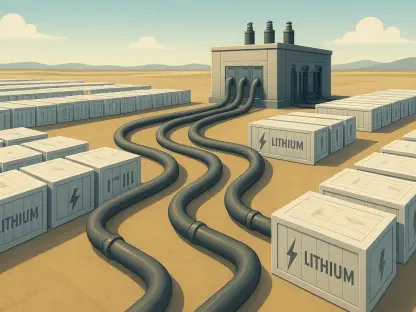
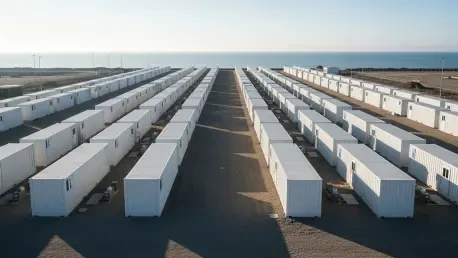
Utility-scale battery energy storage systems (BESS) have emerged as the primary driver behind this record-breaking quarter, with several massive installations coming online in rapid succession. Most of these projects utilize lithium iron phosphate chemistry, which has become the industry standard due to its balance of safety, longevity, and decreasing raw material costs. By deploying these systems at key nodes within the transmission network, operators are now able to perform critical functions such as frequency regulation and peak shaving with far greater precision than traditional gas-peaker plants could ever achieve. This technological maturation has allowed grid operators in Texas and California to integrate higher percentages of solar and wind energy without compromising the overall stability of the electrical system. Furthermore, the standardization of modular containerized units has significantly reduced construction timelines, allowing developers to move from ground-breaking to commissioning in record time.
Regional performance has played a decisive role in achieving these new highs, particularly within the territories managed by the Electric Reliability Council of Texas and the California Independent System Operator. These regions have become the testing grounds for how high-density storage can alleviate congestion and prevent the curtailment of renewable generation during periods of oversupply. In the Southwest, several new projects exceeding five hundred megawatts each have entered commercial operation, specifically designed to capture excess midday solar energy and discharge it during the critical evening ramp. This shift has not only improved grid resilience but has also started to exert downward pressure on wholesale electricity prices during peak hours, providing tangible economic benefits to the broader market. As other states observe these successes, there is a visible acceleration in procurement activity across the Midwest and the Eastern Seaboard, suggesting that storage diversification is vital for a national network.
Diversification and Innovation: Shaping the Path Toward 2028
While lithium-ion remains the dominant technology for short-duration needs, the first quarter has also highlighted a growing commitment to long-duration energy storage solutions that can provide power for eight hours or more. Several pilot projects involving iron-air and flow battery technologies have moved into the demonstration phase, signaling a diversification of the storage portfolio that will be necessary for multi-day reliability. These alternatives are particularly attractive for their ability to use abundant, non-toxic materials, which mitigates the supply chain risks associated with rare earth minerals and cobalt. The integration of these longer-duration assets is becoming a priority for state regulators who recognize that a truly carbon-free grid requires storage that can bridge the gap during extended periods of low renewable output. By investing in a variety of chemistries and mechanical storage methods, the industry is building a multi-layered defense against energy shortages that will expand through 2028.
The industry successfully established a new baseline for performance during this record-breaking quarter, yet the focus immediately shifted toward solving the remaining interconnection bottlenecks. Stakeholders recognized that maintaining this momentum required a more streamlined permitting process and a commitment to workforce development to ensure enough qualified technicians were available for system maintenance. Regulators prioritized the creation of more transparent market structures that allowed storage assets to be fairly compensated for the diverse range of services they provided to the grid. Moving forward, it became clear that the next logical step involved the widespread adoption of virtual power plants, which effectively aggregated smaller residential and commercial systems into a unified resource. Decision-makers also began to emphasize the importance of domestic manufacturing to secure the supply chain for the coming years through 2028. These proactive measures ensured that the successes of early 2026 served as a foundation.