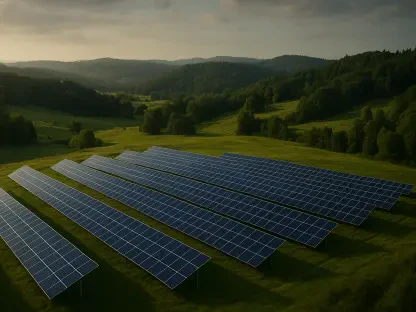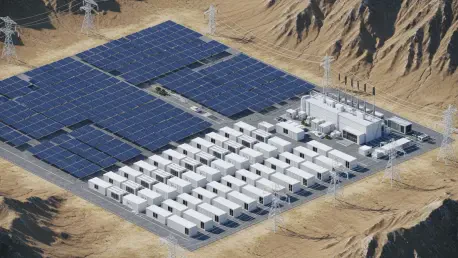

The expansive deserts of central Utah have recently witnessed a dramatic shift in their physical and economic profile as massive solar arrays now stretch across the landscape where coal once reigned supreme. The Green River Energy Center represents a pivotal achievement in the state’s transition toward a diversified power portfolio, housing roughly one million solar panels across several square miles of rugged terrain. This facility is so expansive that its operational footprint is clearly visible from orbit, as captured by the Landsat-8 satellite, highlighting the sheer scale of modern infrastructure developments. Located approximately one hundred thirty miles south of Salt Lake City in Castle Valley, the site provides a functional blueprint for how rural regions can leverage their vast natural sunlight and existing industrial ties to meet the rising demand for electricity. This development marks a transition from historical extraction methods toward a model of harvesting renewable energy, ensuring that the state remains a central hub for power production in the American West through the latter half of this decade.
Large-Scale Production and Storage Dynamics
Overcoming Intermittency: Integrating Solar with Battery Systems
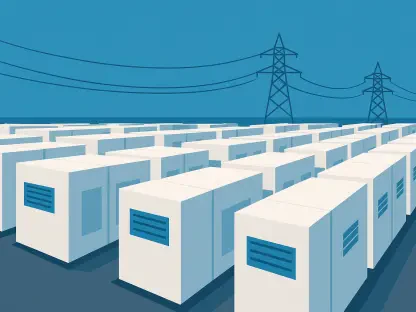
The center is engineered to solve the most persistent problem associated with renewable energy, which is the fluctuating nature of power generation when the sun is not shining. By pairing 400 megawatts of solar generation with 400 megawatts of high-capacity battery storage, the facility ensures a consistent energy supply that does not disappear the moment the sun dips below the horizon. During the peak daylight hours, the solar panels generate significantly more electricity than the grid immediately requires, allowing the surplus to be funneled into five hundred specialized battery units. These lithium-ion systems are designed to hold this charge until the evening hours when residential demand typically spikes as residents return home and engage cooling systems. This buffering capability effectively smooths out the production curve, transforming solar from a variable resource into a reliable baseline contributor that can respond to the dynamic needs of the modern regional electrical market.
Regional Energy Security: Addressing Peak Summer Demand
Meeting the needs of a growing population requires more than just raw power; it necessitates a system that can withstand the extreme thermal conditions that have become increasingly common across the United States. During the sweltering summer months, the pressure on the regional grid often reaches a breaking point as millions of air conditioning units operate simultaneously to combat record-breaking heat. The Green River project acts as a vital safety valve for the Western Interconnection, providing the necessary volume of electricity to prevent brownouts or localized failures during these critical periods. By decentralizing the power source and placing it closer to rural load centers, the facility reduces the losses typically associated with long-distance transmission while providing a dependable source of clean energy. This strategic placement ensures that businesses and households throughout Utah and neighboring states have access to a stable power supply even when the broader national infrastructure is under significant environmental stress.
Infrastructure Evolution and Future Strategy
Legacy Transformation: Repurposing Coal Transmission Assets
One of the most innovative aspects of the project involves the strategic reuse of existing electrical infrastructure that was originally commissioned to support the coal industry. For over a century, central Utah has served as a primary coal hub, and the region is crisscrossed with high-voltage transmission lines that once carried electricity from fossil fuel plants to distant urban centers. Rather than undergoing the expensive and environmentally disruptive process of building new corridors, developers utilized these legacy assets to connect the new solar facility to the broader grid. This pragmatic approach not only saved significant capital but also accelerated the timeline for getting the project online by bypassing years of potential permitting delays for new right-of-way access. It demonstrates a sophisticated method of industrial evolution, where the skeletal remains of the previous energy era are repurposed to facilitate the clean energy economy. This transition honors the region’s long history as an energy exporter while modernizing the technology.
Strategic Implementation: Lessons for Future Energy Development
Looking back at the initial phases of the Castle Valley development, the integration of large-scale battery storage provided the essential proof of concept for future independent power producers. Stakeholders observed that the most effective path forward involved a combination of federal support, existing infrastructure utilization, and community engagement to ensure project longevity. Moving forward, developers should prioritize the synchronization of solar assets with local grid requirements to maximize the displacement of more carbon-intensive thermal generation units. The project demonstrated that the transition to renewable resources was not merely an environmental goal but a practical necessity for maintaining grid reliability in an increasingly electrified society. Future considerations included the expansion of domestic battery manufacturing to support the high volume of storage required for similar massive-scale installations. By analyzing the operational data from this facility, engineers refined their understanding of how to manage high-voltage systems.