
The increasing frequency of emergency interventions by the U.S. Department of Energy through Section 202(c) of the Federal Power Act has fundamentally altered the landscape of the American electrical grid as aging coal and gas units receive sudden reprieves from their scheduled retirements. This administrative tool, originally intended for times of war or extreme national crisis, is now being deployed with regularity to counteract the perceived instability of a grid in transition. By issuing these emergency orders, federal officials have effectively bypassed local and regional planning processes, keeping expensive and carbon-intensive facilities online long after their planned sunset dates. This strategy aims to ensure that the electrical grid remains resilient during a period characterized by shifting energy demands and the rising frequency of volatile weather patterns. However, these interventions have ignited a fierce debate among energy experts, environmental advocates, and state regulators. While the government asserts that these facilities are indispensable for national security, critics argue that such measures represent a costly and inefficient response to structural challenges. The central conflict revolves around whether these aging plants are a necessary bridge to the future or an expensive anchor that prevents the modernization of the energy sector.
Strategic Imperatives: Federal Energy Interventions
The Department of Energy justifies these aggressive interventions by pointing toward a significant surge in energy consumption that was largely unexpected by previous planning cycles just a few years ago. This spike is driven primarily by the massive expansion of hyperscale data centers, which are essential for the operation of artificial intelligence and cloud-based infrastructures that define the current digital economy. Unlike the variable generation provided by wind and solar power, legacy fossil fuel plants offer what the industry calls “dispatchable” power, which can be dialed up or down at a moment’s notice to meet fluctuating needs. Federal officials argue that without the steady baseline provided by these older units, the grid would be vulnerable to catastrophic failure when renewable output drops or when regional demand peaks unexpectedly. Consequently, the government maintains that preserving this capacity is a matter of national security, ensuring that the critical infrastructure supporting modern life remains functional even as the country transitions toward more sustainable energy sources. By viewing these aging facilities as a necessary backup, the DOE believes it is providing a safety net for an electrical system that is currently in a state of high-stakes evolution.
Extreme weather events have further complicated the argument for decommissioning older generation facilities as the frequency of climate-driven volatility continues to rise. During the recent onset of Winter Storm Fern, which brought record-breaking freezing temperatures to regions unaccustomed to such cold, several facilities that were slated for immediate closure became the last line of defense against widespread blackouts. In Florida, the Stanton Unit 1 plant was called into service to meet a peak demand that would have otherwise overwhelmed the state’s modern reserves during the unusual cold snap. Similarly, the R.M. Schahfer station in Indiana provided a vital buffer during the storm, prompting the DOE to issue emergency extensions to ensure these safeguards remain in place for subsequent winter seasons. From the federal perspective, these instances prove that the current mix of renewable energy and battery storage is not yet robust enough to handle the most severe environmental stressors, making it necessary to keep fossil fuel plants online as a reliable insurance policy against the unpredictable nature of the changing climate. This reliance on legacy hardware suggests a lack of confidence in the speed at which newer, cleaner alternatives can be scaled to meet emergency requirements.
Contradictory DatThe Reality of Grid Performance
In contrast to these federal assertions, a closer examination of actual grid performance suggests that the emergency status assigned to many of these plants may be significantly overstated. Data collected from recent operational cycles indicate that several units mandated to stay online under Section 202(c) orders are producing far less electricity than they did before the government intervened. Currently, statistics show that nearly fifty percent of the units affected by these federal mandates remain largely inactive, serving only as a theoretical backup rather than contributing to the daily energy mix. This high rate of inactivity has led many market analysts to question whether the grid would have naturally remained stable without these costly federal overrides. If these plants are not being utilized even during periods of relatively high demand, the justification for their continued operation becomes increasingly difficult to maintain. This discrepancy suggests that the perceived reliability crisis may be more of a management and planning issue than a physical shortage of power generation capacity, raising concerns about the misuse of emergency executive powers.
Furthermore, reports from regional grid operators frequently suggest that the risks to reliability are well within manageable parameters, often contradicting the dire warnings issued by the DOE. For instance, recent capacity auctions in the Midwest have demonstrated that reserve margins are actually significantly higher than the minimum reliability targets, indicating that new energy additions are successfully outpacing the growth in demand. This creates a significant amount of friction between the ninety-day federal emergency cycles and the multi-year planning horizons utilized by regional transmission organizations. Plant owners and state regulators are often left in a state of limbo, unable to finalize long-term decommissioning plans because of short-term federal mandates that seem disconnected from local reality. This misalignment not only disrupts the strategic goals of utility companies but also complicates the efforts of state governments to implement their own energy policies, leading to a fragmented and inefficient approach to national grid management that could have been avoided with better coordination.
Economic Burdens: Financial Strain on Utility Consumers
The economic consequences of maintaining these aging and inefficient power plants are profound, with estimates placing the total cost to the public at over five hundred million dollars annually. Because many of these facilities are technologically obsolete, they often operate at a significant loss or require extensive and expensive maintenance just to remain in a state of operational readiness. These financial burdens are not absorbed by the federal government or the shareholders of the utility companies; instead, they are passed directly onto the consumer through adjustments in monthly utility bills. For many households already struggling with the rising cost of living, these extra fees represent a significant hardship. The practice of keeping these “zombie” plants alive effectively forces ratepayers to subsidize a form of energy production that the market has already deemed uncompetitive. This financial drain is especially concerning in regions where the cost of electricity is already above the national average, further exacerbating the economic inequality within the energy market and placing a heavy toll on low-income communities.
Specific instances across the country illustrate the scale of this financial burden on individual communities and the broader economy. In Michigan, the continued operation of the Campbell plant has resulted in hundreds of millions of dollars in additional expenses that must be recovered from local residents. Similarly, utility providers in states like Washington and Pennsylvania have sought millions of dollars from their customers to cover the costs associated with federal mandates that kept failing units online despite their poor economic performance. Beyond the direct costs, financial analysts warn of a “crowding out” effect that could have long-term negative impacts on the energy sector. The substantial funds diverted toward maintaining obsolete fossil fuel units are no longer available for the necessary modernization of the grid or for investing in emerging clean energy technologies. By tying up capital in legacy infrastructure, these emergency orders may actually delay the development of the very solutions—such as advanced storage and smart grid technology—that would eventually eliminate the need for fossil fuel backups in the first place.
Ecological Consequences: Environmental and Health Impacts
In addition to the financial toll, the environmental ramifications of the Department of Energy’s emergency orders are becoming increasingly difficult to ignore. By delaying the retirement of coal and natural gas plants, the government is essentially locking in carbon dioxide emissions that were previously scheduled to be eliminated. The scale of these emissions is vast; for example, a single mandated coal plant can produce as much CO2 in a few months as over a million gasoline-powered vehicles emit during an entire year of operation. This reversal of planned decarbonization efforts undermines the national commitment to reducing greenhouse gas levels and complicates the path toward meeting established climate milestones. As the global community pushes for more aggressive action to mitigate the effects of global warming, the continued operation of these aging facilities sends a contradictory signal to the international market. The environmental cost of these orders extends beyond the local level, contributing to the broader atmospheric changes that are driving the very extreme weather events the government is trying to guard against.
The persistence of these older generation units also presents a direct and measurable threat to public health in the surrounding areas. Aging coal and gas plants are notorious for releasing high concentrations of sulfur dioxide and nitrogen oxides, pollutants that are scientifically linked to a variety of serious health conditions. Communities located near these facilities often report higher rates of respiratory distress, chronic asthma, and other cardiovascular issues that can be traced back to the particulate matter and gases emitted during power generation. By overriding the planned closures of these units, the DOE is effectively extending the exposure time for vulnerable populations, many of whom reside in historically underserved neighborhoods. This creates a significant environmental justice concern, as the health of local residents is sacrificed in the name of a broadly defined national grid reliability. The long-term costs associated with healthcare for these conditions further add to the societal burden, making the true price of these emergency orders much higher than the figures seen on utility statements once medical expenses are considered.
Future Solutions: Modernizing the National Energy Framework
The systematic reliance on emergency federal orders during this period revealed that the traditional regulatory framework was fundamentally ill-equipped to synchronize with the rapid pace of the energy transition. Instead of fostering an environment where market competition drove the adoption of new technologies, the ongoing support for legacy fossil fuel units created a significant market distortion that stalled private sector innovation. Observers noted that the federal government’s frequent interventions favored short-term stability over the long-term structural health of the national power grid. This approach ultimately resulted in a situation where the modernization of critical infrastructure was sidelined in favor of maintaining a status quo that had become both economically and environmentally unsustainable. The lessons learned from these interventions highlighted the urgent need for a more integrated policy that balanced immediate reliability needs with the overarching goal of a decarbonized and modernized electrical system. It became clear that continuing down the path of reactive emergency mandates was a strategy that offered diminishing returns while imposing mounting costs on the public.
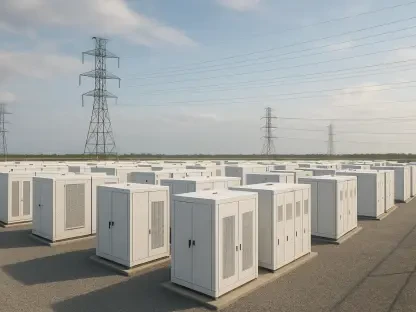
To address these systemic challenges, stakeholders recognized that the only viable solution was to accelerate the deployment of long-duration energy storage and to expand regional transmission networks to better share renewable resources. These initiatives provided a far more resilient and cost-effective foundation for grid stability than the repeated use of Section 202(c) orders for failing coal plants. By investing in grid-forming inverters and advanced demand-response systems, the industry began to prove that reliability could be maintained through flexibility and intelligence rather than through sheer thermal capacity. Furthermore, the shift toward decentralizing the energy grid through distributed energy resources allowed for a more localized response to peak demand, reducing the pressure on centralized fossil fuel facilities. These forward-looking strategies proved that a successful energy transition required moving beyond the stop-gap measures of the past and embracing a comprehensive modernization of the grid. By prioritizing these structural changes, the energy sector finally established a path toward a reliable, affordable, and clean power future that no longer depended on the costly life-support of obsolete technology.