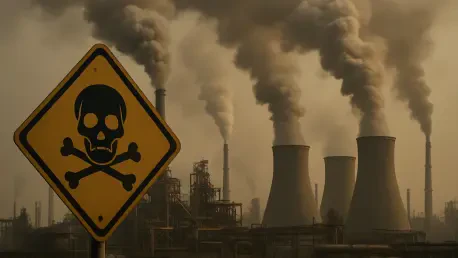

The industrial landscape of Calvert City, Kentucky, has become the focal point of an intense debate regarding whether national security can justify the postponement of life-saving environmental regulations. With the recent announcement of a two-year compliance extension for chemical plants like Westlake Vinyls, the federal government has effectively hit the pause button on the Hazardous Organic National Emission Standards for Hazardous Air Pollutants. This policy shift, known as the HON Rule, was originally intended to be a cornerstone of modern environmental protection, aiming to slash thousands of tons of toxic emissions that have long plagued residential areas near manufacturing hubs. However, the decision to push back deadlines suggests that the immediate mandates of public health are being weighed against a broader, more complex set of priorities involving industrial stability and economic independence. As this extension takes effect, the tension between safeguarding citizens and maintaining the strength of the domestic chemical supply chain continues to escalate.
The Scope and Mechanism of Environmental Oversight
Protecting Public Health: Stricter Environmental Standards
The implementation of the Hazardous Organic National Emission Standards for Hazardous Air Pollutants, commonly referred to as the HON Rule, represents a monumental shift in how the government regulates industrial air quality. At its core, this regulatory framework is designed to eliminate more than 6,200 tons of toxic air pollution each year, focusing on specific substances that have been linked to severe health complications. Among the primary targets are chemicals such as ethylene oxide, vinyl chloride, and benzene, which are notorious for increasing cancer risks in populations situated near major industrial complexes. For decades, residents in manufacturing zones have advocated for stricter oversight, and these standards were viewed as a definitive response to those concerns. By mandating that facilities reduce these specific hazardous outputs, the Environmental Protection Agency aims to create a measurable decrease in the long-term health burdens faced by communities that live in the shadow of chemical production.
Monitoring Systems: Property Boundary Surveillance
A vital component of the updated regulatory framework is the establishment of comprehensive fenceline monitoring programs, which require industrial facilities to track air quality at their specific property boundaries. This technological mandate ensures that chemical concentrations are measured where the industrial zone meets the public domain, providing a transparent record of emissions that might otherwise go unnoticed. Under these new rules, plant operators are required to monitor for six specific hazardous pollutants using advanced sensory equipment that provides real-time or frequent data updates. This shift from estimated emissions to actual, measured data represents a major leap in accountability, as it removes much of the guesswork previously involved in environmental reporting. By placing the onus on the facilities to prove they are staying within safe limits, the fenceline monitoring program was designed to offer residents peace of mind and provide regulators with the empirical evidence needed for enforcement.
Debating the Necessity of Regulatory Delays
National Security: Industrial Stability and Resilience
The primary justification provided by federal officials for granting the two-year extension centers on the preservation of national security and the stability of the domestic economy. Arguments have been made that forcing chemical plants to meet immediate compliance deadlines could lead to unintended consequences, including temporary shutdowns or reduced production capacities. Officials maintain that the technology required for sophisticated fenceline monitoring and high-efficiency emission controls is not yet available for rapid, universal deployment across all affected industrial sectors. Furthermore, the administration suggests that the logistics of upgrading complex chemical systems require more time than the original mandate allowed. By extending the deadline, the government aims to ensure that these facilities can transition to the new standards without suffering catastrophic operational failures. This perspective prioritizes the continuous operation of the industrial base as a matter of strategic importance, particularly in an era of global economic competition.
Legal Challenges: Addressing Community Health Concerns
The decision to postpone these toxic air rules has met with fierce opposition from legal advocates and residents who argue that the delay directly compromises the lives of those in industrial zones. In Calvert City, the human cost of industrial pollution is already the subject of high-profile litigation, exemplified by a lawsuit filed by a former resident against Westlake Vinyls. The plaintiff, who spent decades living near the facility, attributes her diagnosis of liver cancer to the chronic inhalation of hazardous chemicals emitted by the plant. Her legal team argues that granting a two-year extension is equivalent to providing a “license to pollute,” allowing known carcinogens to enter the air without the promised oversight. This case has become a rallying point for community members who feel that their health is being traded for industrial convenience. The legal battle underscores a growing resentment toward federal policies that appear to favor corporate timelines over the immediate safety and constitutional rights of private citizens.
Scientific Realities: Local Data and Actionable Solutions
Recent scientific assessments conducted in Calvert City provided a sobering context for the policy debate as monitoring data revealed elevated levels of ethylene dichloride within the local atmosphere. While state environmental experts noted that these concentrations did not trigger an immediate health emergency, they did acknowledge an increased cancer risk over the course of a lifetime. The Mayor of Calvert City and other local leaders recognized their limited influence over federal EPA mandates but remained committed to pursuing independent transparency measures. They established a roadmap for deploying additional community-led air sensors and advocated for a centralized database to provide residents with real-time pollution alerts. By prioritizing these localized monitoring initiatives, the community sought to bridge the information gap created by the regulatory extension. Moving forward, the focus shifted toward fostering a collaborative model where industrial operators and local governments worked to implement voluntary emission reductions. These proactive steps offered a pragmatic path toward safety while federal timelines remained in flux.