
The sealing of the Holy Temple of Christ demonstrates a broader trend of holding religious organizations accountable for their auditory impact on neighboring homes. The Lagos State Environmental Protection Agency (LASEPA) has significantly intensified its enforcement operations to combat the growing challenges of urban pollution. Recent campaigns across key areas like Mushin and Agege have led to the sealing of numerous establishments that failed to meet state standards. These actions are designed to mitigate environmental hazards, specifically targeting noise and air pollution alongside improper waste management. By addressing these issues, the agency aims to protect public health and maintain the ecological balance of Nigeria’s rapidly expanding economic hub. The regulatory landscape in Lagos is undergoing a profound transformation as the government prioritizes environmental integrity over unchecked growth. This shift reflects a commitment to ensuring that the city’s status as a global commercial center does not come at the cost of the health of its citizens.
Targeted Enforcement in Residential and Commercial Zones
In the Mushin local government area, the agency recently shut down several facilities, with a specific focus on religious institutions. Establishments such as the Akorohunfayo Central Mosque and various gospel churches were sealed due to excessive noise pollution that disrupted residential tranquility. This move highlights a growing regulatory shift where communal and spiritual practices are held accountable to the same noise standards as industrial entities, ensuring that the rights of residents to a peaceful environment are upheld. The enforcement teams deployed specialized decibel meters to confirm that sound levels frequently exceeded the legal thresholds established for mixed-use zones. This data-driven approach removes subjectivity from the enforcement process, providing clear evidence for the closures. For many years, religious centers operated with a degree of relative immunity regarding noise, but the current administration has made it clear that public peace is a non-negotiable right for every Lagosian.
Beyond religious centers, LASEPA has extended its reach to educational and commercial sectors to address air quality and non-compliance. A prominent bakery academy was sealed for repeatedly ignoring regulatory directives, while a marble business was closed due to harmful air emissions. These actions demonstrate a zero-tolerance policy toward repeat offenders and illustrate that no sector is exempt from oversight. The agency’s intervention serves as a necessary check on activities that compromise the atmospheric and auditory quality of the city’s built environment. Educational institutions are often perceived as low-risk entities, but when industrial-scale baking or manufacturing occurs within their premises, the resulting soot and particulate matter can cause respiratory distress for neighbors. By holding these facilities to the same stringent standards as large factories, the agency ensures a level playing field for all operators while safeguarding the immediate surroundings from the long-term effects of localized pollution.
Institutional Accountability and Future Compliance Strategies
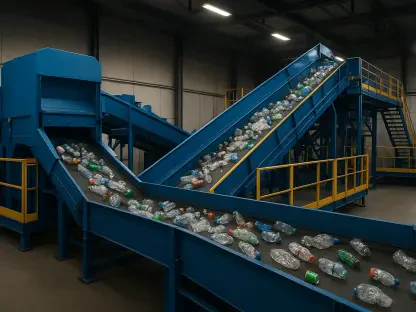
A major component of LASEPA’s strategy involves the strict regulation of the scrap metal and e-waste industry. Several scrap yards in Agege and Mushin were recently sealed for operating without valid E-Waste Permits and failing to adhere to administrative warnings. This sector poses unique environmental risks, as the improper handling of discarded electronics and metals can lead to heavy metal leaching and the release of toxic substances. By formalizing this traditionally loose sector, the agency prevents hazardous materials from contaminating the soil and air in nearby neighborhoods. The statutory authority for these enforcement actions is derived from the Lagos State Environmental Management and Protection Law of 2017. This legal framework empowers the agency to monitor compliance and execute closures when standards are breached. Operators are now required to secure necessary permits and prove their adherence to environmental guidelines before they are allowed to function within the city.
The recent crackdown served as a vital reminder to property owners, investors, and business operators that environmental due diligence was a prerequisite for operating in Lagos. For industrial and semi-industrial sectors, environmental permits were no longer optional paperwork but fundamental requirements for business viability. This shift necessitated a cultural change across all levels of society, fostering an environment where commercial growth and community welfare coexisted through a disciplined commitment to environmental law. Moving forward, businesses should have prioritized the installation of soundproofing technologies and high-efficiency filtration systems to avoid costly closures. Investors were advised to integrate environmental impact assessments into their initial feasibility studies to ensure long-term compliance. The agency successfully demonstrated that a cleaner, quieter Lagos was achievable when the rule of law was applied consistently. Future development now depended on a collaborative effort between the state and the private sector to maintain these improved standards.