
The pristine landscapes of Meghalaya, often referred to as the “Abode of Clouds,” are currently facing an unprecedented environmental crisis that threatens to undermine their natural beauty and ecological stability. For years, the rapid pace of urbanization within the state has outpaced the development of essential waste management infrastructure, leading to a precarious accumulation of refuse in fragile highland ecosystems. In a decisive move toward environmental justice, the Meghalaya State Pollution Control Board has transitioned from a period of advisory oversight to one of strict financial accountability. By levying heavy fines against three major municipal bodies, the board signaled that the era of administrative leniency regarding trash disposal has come to a definitive end. This shift represents a broader movement across the region to prioritize public health over political convenience, forcing local governments to confront the consequences of their historical inaction regarding solid waste.
Identifying the Failures in Local Governance
Systematic Neglect: Regulatory Breaches and Infrastructure Gaps
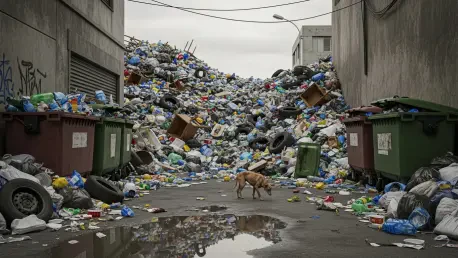
Detailed technical assessments conducted by environmental experts recently exposed a pattern of systemic neglect that has become the hallmark of local governance in several districts. These inspections revealed that established waste protocols are being ignored on a massive scale, with municipalities failing to implement basic source segregation of organic, dry, and hazardous materials. Without these fundamental steps, the waste stream remains a chaotic mixture that makes scientific processing nearly impossible, leading to a reliance on primitive disposal methods. Many of these civic bodies continue to operate open dumping sites that lack the most basic engineering safeguards, such as impermeable liners or gas collection systems. This regressive approach to sanitation not only violates modern environmental laws but also demonstrates a fundamental breakdown in the chain of administrative responsibility that was supposed to protect the citizens of Meghalaya from health risks.
Environmental Impact: Public Health and Safety Risks
The environmental ramifications of these administrative failures are manifesting as a severe threat to the region’s biodiversity and the long-term safety of its water resources. Unregulated landfills act as toxic reservoirs where rainwater percolates through untreated garbage to form hazardous leachate, which then seeps into the local groundwater tables. This contamination poses a direct risk to rural communities that rely on natural springs and wells for their daily needs, potentially introducing heavy metals and pathogens into the food chain. Furthermore, the decomposition of unmanaged organic waste in open pits releases significant volumes of methane, a potent greenhouse gas that exacerbates local climate concerns and increases the risk of spontaneous landfill fires. The State Pollution Control Board has emphasized that the degradation occurring at these sites is not merely an aesthetic issue but a localized ecological disaster. Without a total overhaul of disposal practices, the damage to the soil and water will reach a point where restoration becomes impossible.
Implementing a Scientific Approach to Urban Waste
Resource Recovery: Transitioning Toward Circular Economy Pillars
To address these chronic issues, the state is aggressively promoting a transition toward a circular economy model that redefines waste as a valuable resource rather than a burden. This strategic shift moves away from the traditional “take-make-dispose” mentality in favor of resource recovery and material circularity. By implementing robust composting programs for organic waste and establishing material recovery facilities for recyclables, Meghalaya aims to drastically reduce the volume of refuse that eventually reaches a permanent disposal site. The goal is to create a closed-loop system where glass, plastic, and paper are fed back into the industrial supply chain, thereby reducing the environmental footprint of urban consumption. Success in this area depends heavily on the active participation of the private sector, which is being encouraged to partner with municipalities in developing waste-to-energy projects. This approach ensures that even non-recyclable materials are utilized to generate electricity.
Technological Investment: Modernizing Urban Infrastructure
Modernizing the state’s waste infrastructure requires a multi-faceted investment strategy that combines cutting-edge technology with comprehensive human capital development. The pollution control authorities have mandated the adoption of digital reporting frameworks and real-time GPS tracking for waste collection vehicles to ensure that disposal protocols are strictly followed. These digital tools provide the transparency necessary to hold municipal workers and contractors accountable, preventing the illegal dumping of trash in unauthorized forest areas. Furthermore, there is an urgent need to train municipal staff in the technical aspects of landfill engineering and the operation of sophisticated sorting machinery. Strengthening the technical capacity of these agencies is crucial because the complexity of managing modern municipal waste exceeds the capabilities of traditional sanitation departments. By integrating data-driven decision-making into urban planning, the state can optimize collection routes and processing schedules, ultimately lowering the operational costs.
Future Outlook for Environmental Stewardship
Proactive Surveillance: Long-term Monitoring and Engagement
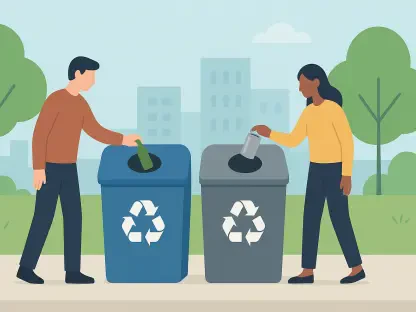
The path forward for Meghalaya involves a transition from reactionary penalty-based enforcement to a proactive system of environmental surveillance and continuous monitoring. This new governance model relies on frequent audits and the use of satellite imagery to detect unauthorized landfill expansions or clandestine dumping sites before they become major problems. Central to the success of these long-term initiatives is the deep integration of public participation into the waste management hierarchy. Extensive awareness campaigns are being launched to educate households on the importance of segregation at the source, bridging the gap between high-level policy and daily habits. When citizens understand the direct link between their disposal habits and the health of their local rivers and forests, they are much more likely to comply with new regulations. Fostering a culture of shared responsibility ensures that the burden of environmental protection is a collective effort by every individual who calls this state home.
Strategic Outcomes: Actionable Solutions and Global Standards
Ultimately, the state demonstrated that accountability was the only viable mechanism for reversing decades of ecological neglect within its urban centers. The decision to penalize underperforming municipalities established a clear legal precedent that prioritized the long-term health of the biosphere over short-term administrative convenience. Authorities moved to implement standardized training programs for all sanitation officers, ensuring that technical expertise was distributed evenly across the region. Local communities engaged with these new systems by adopting rigorous home-sorting practices that significantly reduced the contamination of recyclable streams. Furthermore, the government secured funding for state-of-the-art processing plants that transformed organic refuse into high-grade agricultural compost for local farmers. These combined efforts provided a roadmap for other mountainous regions facing similar urbanization pressures, proving that scientific waste management was achievable through a mix of strict regulation and technological innovation.