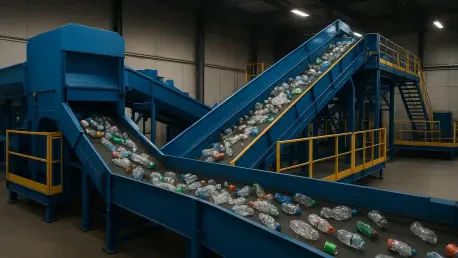

Town officials have mandated a shift to an every-other-week recycling schedule starting January 1, further testing the patience of a community already divided over equipment changes. This decision is part of a push to modernize municipal waste management through a five-year contract with Republic Services. The cornerstone of this modernization is the introduction of standardized 95-gallon collection bins, a significant upgrade from the smaller containers previously used. With an investment of $330,000, the town aimed to align its infrastructure with industry standards that favor automated collection methods. However, the transition has been anything but seamless for many. While the intention was to increase efficiency and reduce manual labor costs, the sheer scale of the equipment sparked a debate that transcends simple logistics, touching upon issues of accessibility and the physical suitability of the town’s existing street layouts for such massive machinery.
Technological Integration and Operational Challenges
The move toward automation necessitates a precise set of operational guidelines that many residents find difficult to implement within unique property constraints. To accommodate the mechanical arms of the newer collection trucks, bins must be placed exactly three feet apart, with handles facing the residence and arrows pointing toward the street. This requirement is particularly challenging for those living on narrow coastal roads or dead-end streets where space is at a premium. In some neighborhoods, the logistics have become so complex that all households on a street are now required to move their heavy carts to a single side of the road to ensure the truck can operate without obstruction. These rigid placement rules represent a significant shift from the more flexible manual pickup era, where workers could navigate around obstacles. The transition highlights the friction that occurs when standardized technology meets the varied geography of an established New England town.
Beyond physical placement, the reliability of the automated system has become a central point of discussion among local stakeholders. Republic Services has provided assurances regarding driver training and labor stability, yet some residents report that the large automated trucks struggle to navigate the town’s tighter corners. There have been instances where households were inadvertently skipped because the mechanical arm could not safely reach the bin without risking damage to property or parked vehicles. While the town remains committed to the five-year service agreement, these early operational hiccups suggest that the one-size-fits-all approach of 95-gallon bins may require further refinement to handle Swampscott’s specific infrastructure. The efficiency gains promised by automation are currently being weighed against the practical reality of missed pickups and the increased time residents spend ensuring their disposal site meets the strict criteria required by the mechanical hardware.
Resident Sentiment and Safety Considerations
Public reaction to the new system has been polarized, with a recent survey indicating that over half of the respondents are dissatisfied with the current arrangement. A primary concern is the physical maneuverability of the 95-gallon carts, which weigh significantly more than their predecessors even when empty. Elderly residents and those with steep driveways have expressed anxiety regarding the potential for accidents. While no major injuries have been reported within the town limits during this phase, the community remains wary following reports of bin-related accidents in neighboring municipalities. Conversely, roughly thirty percent of the population has embraced the change, noting that the larger capacity allows for substantial recycling volumes without the overflow issues common to the old bins. This divide suggests that the perceived value of the technology is largely dependent on a resident’s specific physical environment and their ability to physically manage the equipment.
To address the ongoing friction, the municipal administration provided several paths forward for those struggling with the equipment. Residents were given the option to request smaller cart alternatives, providing relief for those with limited storage space or mobility constraints. Furthermore, for households that produced higher volumes of waste, the town established a system to purchase additional bins for a fifty-dollar annual fee, ensuring that the service remained scalable to individual needs. Looking ahead, town planners focused on a phased evaluation process to monitor the contractor’s performance on difficult routes. Future considerations included the potential for specialized narrow-access vehicles that could bridge the gap between automation and accessibility. The success of the program rested on a commitment to iterative improvements. By prioritizing flexible equipment options and data-driven route adjustments, officials worked to reconcile efficiency with the daily realities of the community.