
High-density computing clusters currently consume electricity at a rate that threatens to overwhelm local utilities, forcing developers to reconsider their reliance on a national infrastructure that predates the modern digital economy. The American electrical grid is facing a bottleneck so severe that AI developers are now waiting up to a decade just to plug in their hardware. While traditional data centers once sought the stability of the public utility, the explosive demand for high-density computing has triggered a radical shift toward “islanded” power. Companies are no longer asking how to work with the grid, but rather how to build around it. This transition from consumer to producer represents one of the most significant infrastructure pivots in the history of the digital age, trading the security of a shared utility for the high-stakes speed of independent generation.
The stakes in this race are unprecedented, as the computational requirements for training next-generation large language models have moved from megawatts to gigawatts in just a few short years. This rapid escalation has essentially turned the pursuit of energy into a zero-sum game where the winners are those who can secure independent power sources today rather than waiting for utility upgrades tomorrow. The move toward self-sufficiency reflects a fundamental change in the tech sector’s identity, as software giants evolve into industrial power magnates. This evolution is driven by the realization that computational supremacy is no longer just a matter of better algorithms, but of who controls the physical flow of electrons at the source.
The Gigawatt Gamble: Speed vs. Stability in the AI Race
The move toward off-grid, or “behind-the-meter” (BTM) development, is a direct response to a utility system that was never designed for the scale of artificial intelligence. As AI workloads require power volumes measured in gigawatts, the interconnection queue has become the industry’s primary adversary. This infrastructure lag has created a “land grab” for energy, where the ability to bypass utility red tape determines which companies survive the AI gold rush. Large-scale projects in West Virginia, Texas, and Utah are now being built directly on top of gas fields or alongside dedicated energy plants, treating power as a localized raw material rather than a delivered service.
Securing a competitive edge in the current market requires a complete rethink of the construction timeline. By decoupling the data center from the slow-moving bureaucracy of regional transmission organizations, developers can slash years off their deployment schedules. However, this speed comes at a price. The shift toward fossil gas as a primary on-site fuel source often places these projects at odds with the long-term corporate sustainability goals that many of these same tech companies have championed. The industry is currently caught in a paradox: it must accelerate energy production to fuel innovation, yet doing so independently often means relying on older, carbon-intensive technologies that were supposed to be phased out by the turn of the decade.
Gridlock and the Rise of Behind-the-Meter Computing
Behind-the-meter computing represents more than a technical workaround; it is a declaration of independence from a failing utility model. In regions like the PJM Interconnection, which spans much of the Eastern United States, the backlog of projects waiting for grid access has grown to thousands of gigawatts. This congestion is not just a nuisance but a structural barrier that threatens to stall the progress of generative AI. Consequently, the “island” model has emerged as the only viable path for massive campuses that cannot afford to wait until 2030 or beyond for a simple connection.
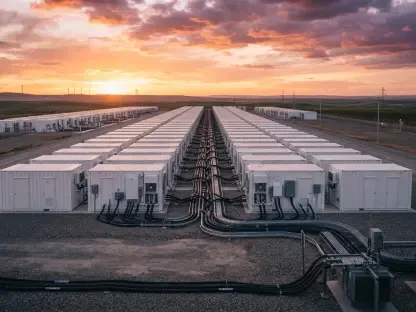
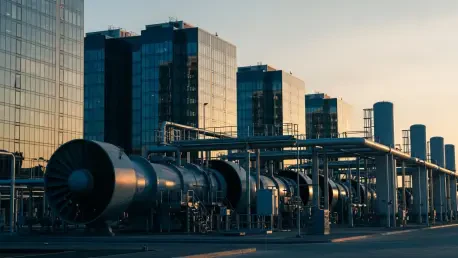
This trend is manifesting in ambitious projects that look more like small cities than traditional server farms. In Texas, developers are leveraging the state’s unique deregulated market to create self-contained power ecosystems. These facilities utilize on-site natural gas turbines, solar arrays, and massive battery storage systems to operate in a state of perpetual autonomy. By controlling the entire energy value chain—from extraction to generation to consumption—these operators insulate themselves from the price volatility and reliability issues of the broader public grid. Yet, this isolation creates its own set of logistical burdens, as data center operators must now manage complex fuel supply chains and maintain industrial-grade power plants alongside their high-tech server racks.
Technical Barriers and the Volatility of AI Workloads
Bypassing the grid introduces a set of engineering challenges that go far beyond simple power generation. Unlike standard commercial loads, AI training clusters are notoriously erratic, capable of ramping from idle to peak power in mere milliseconds. This “jumpy” load profile can be physically damaging to traditional gas turbines, which are designed for steady-state operation. To compensate, off-grid developers are forced to overbuild their systems, integrating massive battery arrays and redundant generation capacity to prevent catastrophic failures. This necessity for over-provisioning often drives capital expenditures to levels that threaten the long-term economic viability of the project.
The mechanical stress placed on on-site generators cannot be overstated. A gas turbine prefers a smooth, predictable demand curve, but an AI model performing backpropagation creates massive surges and dips that can lead to rapid equipment wear or total system collapse. To mitigate this, developers are increasingly turning to advanced power electronics and kinetic energy storage, such as flywheels, to act as a buffer between the raw generation and the sensitive silicon. These additional layers of hardware add significant complexity and potential points of failure, making the “simple” solution of going off-grid much more technically demanding than many initial investors anticipated.
Expert Analysis: The High Cost of Energy Isolation
Industry veterans and energy analysts increasingly view off-grid projects as a temporary symptom of grid failure rather than a sustainable future. Expert voices from firms like Engie North America and Google emphasize that isolated power islands often result in “stranded assets”—facilities that may lose their economic value as fuel prices fluctuate or environmental regulations tighten. While companies like Microsoft and Joule are testing the limits of BTM solutions, the consensus among leaders suggests that these projects will likely remain a niche specialty. The primary concern is that isolated generation is inherently inefficient, as excess power cannot be fed back into the public system to stabilize the grid during peak demand.
Furthermore, the economic risk of a “failed island” is massive. If an off-grid data center loses its anchor tenant or if the specific AI technology it was built for becomes obsolete, the entire on-site power infrastructure becomes a multi-billion-dollar liability. Analysts point to the recent volatility in the “Hypergrid” sector as evidence that building gigawatt-scale power plants for a single customer is a precarious business model. Without the diversity of a broader grid to absorb excess capacity or provide backup during maintenance, these projects operate on a razor’s edge where one mechanical failure or fuel spike can erase years of projected profit.
Navigating the Hybrid Future: Strategies for Power Resilience
For developers looking to navigate the complexities of modern energy demands, a hybrid approach offers a more sustainable path than total isolation. Success in the current landscape requires a framework that utilizes off-grid generation as a bridge rather than a permanent divorce from the utility. Key strategies involve designing “Grid-Ready” Islands, which means building BTM infrastructure with the technical specifications required for future utility integration once interconnection queues clear. This allows for immediate operation while preserving the option to eventually join the larger energy marketplace.
Implementing load flexibility is another vital strategy, using on-site battery storage to smooth out the violent power spikes inherent in AI training, reducing the strain on local generation equipment. Developers are also exploring the potential of Virtual Power Plants (VPPs), transitioning from isolated consumers to active grid assets by selling excess capacity back to the utility during periods of low data center activity. Finally, prioritizing modular generation—utilizing scalable power units that can be redeployed or adjusted—allows facilities to evolve as computational needs change. These approaches ensured that the push for AI dominance did not result in a fragmented and inefficient energy landscape.
The industry eventually recognized that total isolation was a precarious strategy, choosing instead to develop a symbiotic relationship with the utility sectors. The strategic transition prioritized flexibility over isolation, as developers integrated sophisticated energy management software to balance on-site generation with broader market demands. Successful operators moved toward a model where the data center acted as a stabilizing force for the local grid rather than a parasitic drain. By adopting modular energy architectures and investing in long-duration storage, the sector bridged the gap between the immediate need for speed and the long-term necessity of a reliable, interconnected power system. These innovations ultimately provided a blueprint for how high-density industries could thrive without compromising the stability of public infrastructure.