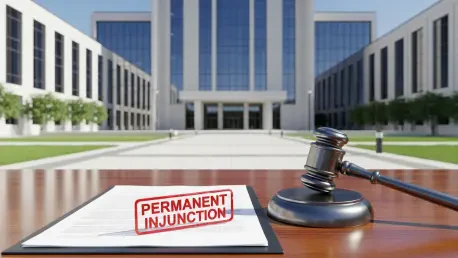

The legal confrontation between industrial waste management and public safety standards has culminated in a resounding shift toward local autonomy and environmental protection in Michigan. Wayne County Circuit Judge Kevin Cox recently issued a permanent injunction that prevents Wayne Disposal Inc. from receiving thousands of cubic yards of radioactive debris from historical atomic weapons programs. This landmark ruling effectively neutralizes the immediate threat posed by the proposed relocation of materials from the Niagara Falls Storage Site, which were initially slated for disposal in the local landfill. The court’s decision prioritizes the biological security of the surrounding population over the federal Formerly Utilized Sites Remedial Action Program’s logistical requirements. This legal barrier serves as a defense for citizens who argued that the introduction of Manhattan Project waste would compromise the integrity of their community’s health. By recognizing the permanent nature of radioactive hazards, the court established a standard for protection.
Historical Residue: Evaluating Atomic Health Risks and Waste Origins
The materials at the center of this legal dispute consist of approximately six thousand cubic yards of Technologically Enhanced Naturally Occurring Radioactive Material, commonly referred to as TENORM. These hazardous remnants originated from uranium processing conducted between 1944 and 1952 as part of the Manhattan Project, which was the mid-twentieth-century initiative to develop atomic weapons. For decades, this waste remained at the Niagara Falls Storage Site before federal authorities sought to transfer it to Michigan for final burial. However, the unique properties of these radionuclides mean they do not decay in the same timeframe as standard industrial pollutants, remaining dangerous for geological durations that exceed the operational life of any commercial landfill facility. The judge observed that while federal programs may view these shipments as routine logistics, the chemical profile of the waste presents a persistent threat that requires more robust and remote storage solutions.
Judge Cox’s legal reasoning focused on the irreparable nature of the health hazards associated with radionuclides, concluding that environmental injury of this magnitude cannot be compensated with financial settlements. The trial provided evidence indicating that the introduction of Manhattan Project materials would result in a statistically significant increase in cancer risks for the residents living in the immediate vicinity of the disposal site. Because the biological damage from low-level radiation exposure is often cumulative and latent, the court found that prevention is the only viable remedy available under the law. The ruling emphasized that once radioactive isotopes enter the human body, the damage is essentially permanent, making the precautionary principle a necessary component of judicial oversight. This perspective shifts the burden of proof onto waste operators to demonstrate safety, which the court determined was not achieved during the proposal process, justifying the injunction.
Structural Vulnerability: Engineering Failures and Site Suitability
A critical component of the judicial findings involved the engineering limitations of modern landfill containment systems when tasked with isolating radioactive byproducts like radon gas. Testimony during the trial suggested that standard liners and covers, which are designed for municipal waste, are insufficient for preventing the migration of gaseous radionuclides into the atmosphere. The court expressed specific concern regarding the potential for radon to seep through microscopic fissures in containment barriers, eventually reaching the air inhaled by students in nearby neighborhoods. Furthermore, the lack of comprehensive monitoring stations at sensitive locations, such as local schools, was cited as a significant failure in the facility’s public health strategy. Without a real-time, high-precision detection network, the judge noted that the facility could not provide adequate assurance that the public remained protected. This technical oversight underscored the mismatch between standard protocols and the requirements of atomic waste.
The ruling also highlighted the geographic unsuitability of Wayne County when compared to alternative disposal locations in the arid regions of the western United States. The court noted that the population density of Wayne County is vastly higher than that of potential sites in states like Utah or Idaho, where disposal areas often have one hundred and fifty times fewer residents per square mile. Introducing Manhattan Project waste into a metropolitan area represents an unnecessary risk when more isolated environments with lower environmental stakes are available. Additionally, Michigan’s vast freshwater resources, including the proximity to the Great Lakes, make the local ecosystem uniquely vulnerable to long-term contamination. Unlike the dry climates of the West, the moisture-rich environment of the Midwest increases the likelihood of leaching and liquid transport of isotopes. The judge concluded that placing hazardous materials in a water-rich, populated corridor was an environmental miscalculation that the law could not allow.
Collective Action: Advocacy and Long-Term Environmental Strategy
The successful legal challenge was propelled by a unified coalition of local townships, including Van Buren, Canton, and Romulus, whose leaders fought to prevent their jurisdictions from being stigmatized as atomic dumping grounds. Local officials testified that the presence of radioactive waste would cause lasting reputational damage to the region, leading to a measurable decline in business investment and a reduction in residential property values. This collective advocacy reflected a broader movement among Michigan municipalities to assert their right to control the types of hazardous materials crossing their borders. The court acknowledged that the psychological impact on the community, combined with the potential for economic stagnation, constituted harm that warranted judicial intervention. By blocking the shipments, the judge validated the townships’ concerns regarding the socioeconomic future of the region, ensuring that local development would not be hindered by the legacy of mid-century weapons production.
The resolution of this case established several actionable pathways for regional environmental policy and the management of legacy hazardous materials. Lawmakers recognized the necessity of updating zoning ordinances to specifically address the transport and storage of radioactive materials in high-density areas. The court emphasized that future remediation projects must prioritize sites with lower hydrological risks and significantly lower population exposure to avoid the legal pitfalls encountered in this instance. Local authorities were encouraged to implement more rigorous independent monitoring programs from 2026 to 2030 to verify the safety of existing operations without relying solely on corporate reporting. This ruling also signaled to federal agencies that the logistical convenience of remediation programs did not supersede the sovereign rights of local communities to protect their public health. Ultimately, the decision prompted a re-evaluation of how historical military waste was distributed, favoring safety over simple convenience.