
The unique geographic constraints of the Florida Keys have historically presented significant hurdles for waste management, but the city of Key West is currently transforming these challenges into a sophisticated blueprint for circular resource recovery that other coastal communities are now eager to replicate. Unlike mainland municipalities that rely on vast landfills, this island chain must navigate the logistical nightmare of transporting materials over narrow bridges or across open water. This necessity has sparked a radical shift toward localized processing and high-tech sorting mechanisms. By integrating artificial intelligence and robotic pickers into their recovery facilities, officials are drastically reducing the contamination rates that previously rendered much of the recycled material useless. The focus has moved away from simply collecting waste to actively manufacturing high-quality raw materials that can be reintegrated into the local economy immediately. This evolution represents a departure from traditional “pick up and dump” mentalities, signaling a more industrial approach to environmental stewardship.
Implementation of Advanced Sorting: A Technological Shift
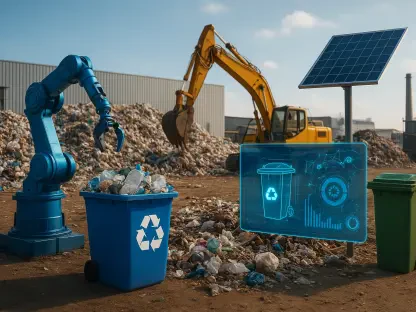
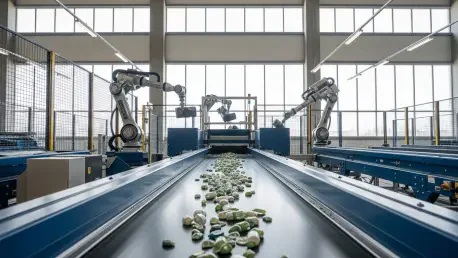
The deployment of optical sorting systems and robotic arms equipped with hyperspectral imaging has revolutionized how Key West manages its mixed recycling streams. These machines are capable of identifying various polymer types and paper grades at speeds that far exceed human capabilities, ensuring that the final output meets the stringent purity standards required by modern manufacturers. By isolating high-value materials at the source, the city is able to offset the high costs associated with island logistics. This technology-first approach has also allowed for a significant reduction in the amount of “wish-cycling,” where residents place non-recyclable items into bins hoping they will be processed. Instead, the automated system filters these contaminants out with nearly ninety-nine percent accuracy, creating a clean stream of commodities that can be sold on the global market. The transition to such high-tech infrastructure demonstrates a commitment to operational efficiency that goes beyond basic environmental compliance and into the realm of profitable resource management.
Beyond the mechanical sorting process, the integration of real-time data analytics provides the city with a comprehensive overview of waste generation patterns across different neighborhoods and commercial districts. Smart sensors installed within municipal collection bins communicate directly with the central processing facility, allowing for optimized routing of collection vehicles and reducing fuel consumption across the island. This data-driven strategy enables the waste management department to predict surges in specific types of debris, such as increased glass during peak tourist seasons or higher cardboard volumes during holiday periods. By understanding these flows, the municipality can adjust its processing capacity dynamically, preventing bottlenecks and ensuring that no recyclable material is diverted to landfills due to temporary overflows. This level of precision transforms the waste management system into a responsive utility, akin to a smart power grid, where resources are managed with surgical accuracy. The result is a more resilient infrastructure that can withstand the unique pressures of a high-traffic maritime environment.
Localized Resource Recovery: Building Coastal Resilience
One of the most innovative aspects of the current strategy involves the localized processing of glass, which is traditionally a heavy and expensive material to transport back to the mainland for recycling. Key West has implemented specialized glass-crushing technology that transforms discarded bottles and jars into high-quality glass sand and cullet right on the island. This material is then utilized in local construction projects, beach nourishment efforts, and even as a filtration medium for municipal water systems. By keeping this resource within the local ecosystem, the city eliminates the carbon emissions associated with trucking heavy glass over the Overseas Highway and reduces the need for imported aggregate materials. This closed-loop system provides a tangible example of how a circular economy can function in a remote setting, where the waste of today becomes the infrastructure of tomorrow. The success of this glass recovery program serves as a proof of concept for other isolated regions looking to minimize their environmental footprint while simultaneously boosting their local industrial capacity.
The comprehensive transformation of the waste management system in Key West established a new standard for how coastal cities navigated the complexities of resource scarcity and environmental vulnerability. By prioritizing localized processing and the adoption of cutting-edge sorting technologies, the municipality successfully reduced its reliance on mainland disposal sites while creating a steady supply of recycled commodities. The integration of glass-to-sand projects and advanced plastic recovery demonstrated that circularity was achievable even in geographically isolated locations. Moving forward, it became clear that the most effective path toward sustainability involved a combination of technological precision and proactive community engagement. Other municipalities began adopting these strategies, recognizing that the actionable steps taken in the Florida Keys provided a scalable framework for global ocean health. The focus shifted toward long-term infrastructure resilience, ensuring that recycling systems were capable of adapting to changing environmental conditions and evolving material compositions. This proactive stance ensured that the region remained a leader in environmental innovation.