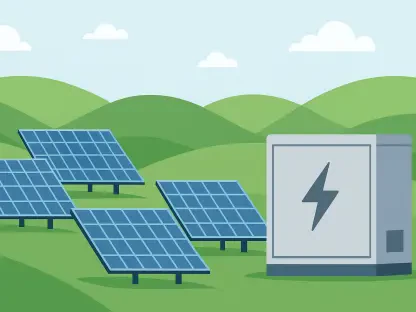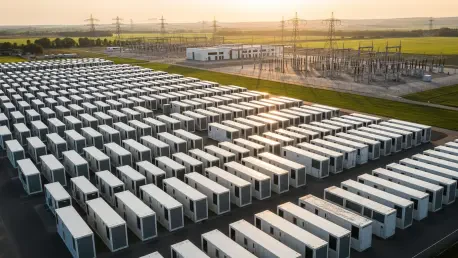

The American power grid underwent a seismic shift during the first quarter of the year as utility-scale battery installations reached an unprecedented milestone that redefined national energy security. This surge in capacity represents the culmination of aggressive policy incentives and rapid technological maturation that have finally synchronized to address the intermittent nature of renewable energy sources. Unlike previous incremental gains, the current data shows a vertical climb in deployments across several critical regions, moving beyond the traditional hubs of California and Texas into the Midwest and Southeast. This expansion indicates that storage is no longer a luxury for affluent utilities but a fundamental requirement for maintaining reliable baseload power. As the sun sets and wind speeds fluctuate, these massive battery arrays now provide the necessary buffer to prevent price spikes and potential blackouts during peak demand periods. The industry has effectively transitioned into a dominant market force.
Grid Modernization: Technological Diversity and Stability
The current dominance of lithium-iron phosphate chemistries has been bolstered by the arrival of iron-air and liquid metal batteries, which offer significantly longer discharge durations necessary for multi-day storage. These newer technologies are being deployed in large-scale pilot programs across the PJM Interconnection and ISO New England, providing a blueprint for how the grid can withstand prolonged weather events without relying on peaker plants. Engineering firms have successfully optimized the integration of these diverse storage assets using advanced artificial intelligence platforms that predict demand surges with nearly perfect accuracy. This algorithmic management allows the grid to balance supply in real-time, effectively smoothing out the volatility associated with the high penetration of solar and wind energy. The result is a more resilient architecture where local distribution networks can operate independently if the main transmission lines fail, a concept known as microgridding.
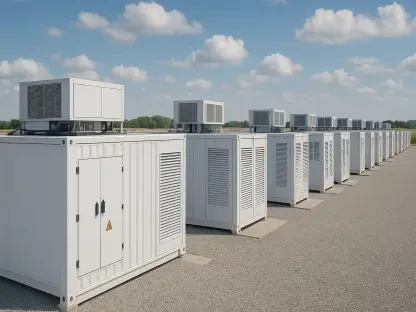
Moreover, the manufacturing sector has seen a localized boom with the opening of several domestic gigafactories that have drastically reduced the supply chain constraints that previously hampered industry growth. By streamlining the production of battery modules and power conversion systems on American soil, developers have been able to cut lead times for major projects from years down to months. This logistical efficiency is mirrored in the field, where modular containerized solutions allow for rapid onsite assembly and commissioning of facilities that can provide hundreds of megawatts of instantaneous power. These systems are now frequently co-located with existing decommissioned coal sites, utilizing existing interconnection infrastructure to minimize costs and environmental impact. This strategic reuse of brownfield sites not only accelerates the deployment timeline but also revitalizes local economies by creating high-tech maintenance jobs in regions that were previously dependent on traditional mining.
Economic Integration: Financial Models and Future Growth
Financial institutions have responded to these record-breaking storage numbers by offering more sophisticated project financing models that reflect the reduced risk profile of large-scale battery systems. The implementation of the domestic content bonuses and transferability provisions from recent federal tax legislation has created a secondary market for tax credits, drawing billions in new capital from diverse sectors of the economy. This influx of investment has driven the levelized cost of storage to new lows, making it the most competitive option for utilities seeking to meet state-mandated clean energy standards. Institutional investors are no longer viewing storage as a speculative venture but as a core infrastructure asset class with predictable returns and long-term stability. This shift has enabled smaller municipal utilities and rural electric cooperatives to participate in the storage boom, often through joint action agencies that aggregate demand to achieve better pricing for customers.
The historic achievements recorded during this period established a definitive benchmark for the global energy sector, proving that a decarbonized grid was both technically feasible and economically superior. Regulatory bodies moved quickly to finalize the rules for market participation, which allowed storage operators to stack multiple revenue streams from frequency regulation and capacity markets. These structural changes ensured that the momentum gained in the early months of the year translated into a sustainable growth trajectory for the remainder of the decade. Stakeholders focused on standardizing safety protocols and recycling mandates to ensure the long-term viability of the massive battery fleet being deployed across the country. Future efforts remained centered on expanding the domestic raw material supply chain and exploring even longer-duration storage mediums like thermal and compressed air systems. The successful integration of these assets demonstrated that the transition toward a cleaner power system was no longer a question of viability.