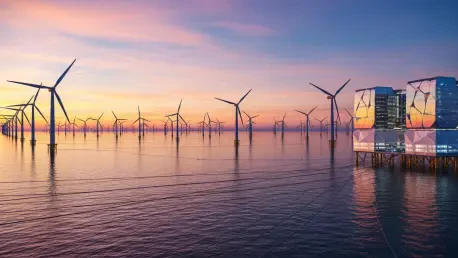

Deep within the Atlantic waters off the coast of Virginia, the steady hum of construction marks the rise of the nation’s largest offshore wind farm while on land, a silent digital revolution consumes energy at a pace never before seen in industrial history. This juxtaposition defines the current landscape for Dominion Energy as it navigates a high-tension balancing act. The utility is currently attempting to marry the 2.6-GW Coastal Virginia Offshore Wind (CVOW) project with a record-shattering surge in electricity demand. While the wind turbines rise from the ocean floor, the explosive growth of the data center industry—fueled by the global race for Artificial Intelligence—is testing the structural limits of the existing power grid.
The success of this dual-track strategy will determine whether a major utility can decarbonize at scale without sacrificing reliability or causing costs to skyrocket for average consumers. Virginia is now the site of a high-stakes collision where net-zero ambitions meet the physical realities of the AI boom. Navigating this transition requires more than just engineering prowess; it demands a fundamental shift in how utilities manage the relationship between green generation and industrial consumption. The outcome in Virginia will likely serve as a harbinger for the future of the American energy transition.
The High-Stakes Collision: Net-Zero Ambitions and the AI Boom
The tension in Virginia serves as a localized version of a global struggle between environmental mandates and the thirst for computing power. As state laws push for a zero-carbon grid, the rapid proliferation of high-density data centers creates a massive, constant load that renewable sources alone struggle to meet. This creates a friction point where the intermittent nature of offshore wind must be reconciled with the 24/7 uptime requirements of the world’s most powerful server farms.
Dominion Energy finds itself at the center of this storm, managing the United States’ largest offshore wind endeavor while simultaneously feeding the world’s largest data center hub. The complexity of this task cannot be overstated, as every new megawatt of renewable energy must be carefully integrated to ensure the lights stay on for both the neighborhood grocery store and the massive AI clusters. The success of this strategy is the true test of whether the modern economy can truly decouple economic growth from carbon emissions.
The Dominion Strategy: A Blueprint for Global Utilities
The challenges facing Virginia are not isolated incidents but a preview of the “new normal” for energy providers worldwide. As data centers become the dominant driver of load growth globally, the pressure to integrate massive amounts of intermittent renewable energy while maintaining a reliable power supply has reached a fever pitch. Utilities across the globe are watching Dominion’s trajectory because it provides a real-world stress test of whether current infrastructure can handle a 51 GW pipeline of industrial demand while hitting aggressive net-zero targets.
Understanding this strategy matters because it highlights the necessity of “grid hardening” as a prerequisite for renewable adoption. Without a robust transmission network, the green energy generated miles out at sea cannot reach the urban and industrial centers where it is most needed. This blueprint emphasizes that the transition to sustainable energy is as much about the wires and substations on the ground as it is about the turbines in the water or the panels in the field.
Navigating the Dual Pressures: Large-Scale Renewables and Industrial Load
Despite the turbulent history of offshore wind in the United States, the 2.6-GW flagship project is nearing completion with surprising financial stability. Now roughly 75% complete and targeting a June 2027 commission date, the project has maintained a levelized energy cost of $84/MWh. This consistency is a rare win in a sector often plagued by inflation and supply chain delays. The project is expected to deliver approximately $5 billion in fuel savings to consumers over its first decade, serving as a critical hedge against volatile global fuel markets.
In tandem with this renewable expansion, the commercial sector has seen a staggering 8.4% year-over-year jump in electricity sales, driven by a 51 GW pipeline of contracted data center capacity. To protect residential and smaller industrial customers from the costs of this expansion, a specific policy shift has occurred. Large-load customers are now required to fund the specific infrastructure needed to power their facilities directly. This ensures that the financial burden of the AI revolution does not fall on the shoulders of the general public.
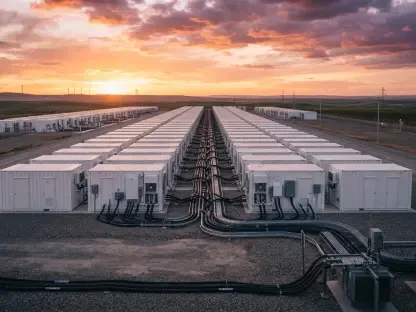
Supporting this massive growth is a $65 billion capital plan through 2030, which prioritizes the modernization of the grid. Nearly 50% of this budget is dedicated to transmission and distribution, ensuring the system can handle both the variability of wind and the constant draw of data centers. Furthermore, the pivot toward energy storage has become a cornerstone of the strategy, with long-term targets expanding from 3 GW to a massive 20 GW by 2040 to manage the inherent intermittency of offshore wind.
Expert Perspectives: Long-Term Viability and Financial Risk
Industry analysts maintain a posture of cautious optimism, noting that the capital budget for the wind project actually decreased slightly to $11.4 billion even during a period of high inflation. Management highlights that the durable demand from the data center sector acts as a primary catalyst for a projected 5% to 7% annual earnings growth through 2030. This financial stability provides the necessary foundation to continue investing in the complex infrastructure required for a zero-carbon future.
However, experts also point out that the transition is not purely green. The continued reliance on natural gas, which accounts for nearly 20% of planned spending, remains a necessary bridge to ensure grid reliability. This highlights a pragmatic reality: while offshore wind provides the bulk of the new energy, natural gas remains the essential backup that prevents blackouts during periods of low wind or high demand. Balancing these two extremes is the defining challenge for the current decade of energy management.
Frameworks for Balancing: Rapid Expansion with Ratepayer Protection
To maintain this delicate balance, utilities can follow the model of requiring data center developers to pay for the transmission and substation upgrades their projects necessitate. This direct-funding approach prevents the costs of industrial expansion from leaking into residential utility bills. By forcing the tech industry to internalize the costs of its energy-hungry infrastructure, the utility preserves affordability for the broader community while still facilitating technological progress.
Successful balancing also requires the careful synchronization of renewable commissioning with demand forecasts. Aligning the completion dates of major generation projects, like the 2027 wind deadline, with the phased activation of data center clusters prevents localized grid shortages. Furthermore, maintaining a diverse energy mix—including rapid-response energy storage and natural gas—is critical for managing the high-utilization profiles of modern facilities that require constant, uninterrupted power.
The strategic framework established a robust precedent for integrating massive industrial demand with a carbon-free generation plan. Stakeholders recognized that grid modernization required a proactive approach to funding and technology to avoid cost shifts. The coordination between offshore wind development and data center requirements demonstrated that decarbonization and economic growth coexisted through disciplined capital allocation. Industry leaders concluded that a diversified energy portfolio served as the most effective safeguard against the inherent volatility of a transforming power market. These actions provided a clear path toward maintaining reliability while pursuing ambitious environmental targets.