
The rapid global expansion of artificial intelligence applications is currently hitting a massive infrastructure wall as the electricity required to sustain high-performance computing centers continues to outpace traditional grid capabilities. While wind and solar power have made significant strides in the renewable sector, the sheer intensity of constant power consumption in modern data centers demands a more consistent and dense energy source. Eco Wave Power is addressing this critical energy gap through a strategic collaboration with the NVIDIA Inception program, focusing on the untapped kinetic potential of ocean waves. By deploying energy conversion technology directly onto existing coastal infrastructure, such as breakwaters and piers, this partnership provides a localized power solution that circumvents the costly and time-consuming process of upgrading long-distance electrical transmission lines. This shift toward marine-based energy generation represents a fundamental change in how the industry views the proximity of power production to data consumption.
Coastal Infrastructure: Engineering for Scalable Power Generation
Unlike historical attempts at offshore wave energy that often succumbed to the punishing forces of the open sea, the current engineering approach utilizes a modular system of floaters attached to fixed coastal structures. This design choice leverages the extreme density of seawater, which is roughly eight hundred times denser than air, allowing for the generation of significant power from relatively compact machinery compared to massive wind turbines. The modularity of these converters means they can be scaled according to the specific energy needs of a nearby facility, making them ideal for urban coastal environments where space is at a premium. By keeping the most sensitive hydraulic and electronic components housed safely on land, the system avoids the chronic issues of salt corrosion and mechanical failure that plagued earlier designs. This layout ensures that only the durable steel floaters interact directly with the ocean waves, significantly extending the operational lifespan of the entire installation.
The strategic placement of these systems on existing man-made structures like sea walls and breakwaters significantly reduces the environmental impact and cost associated with traditional seabed-mounted energy arrays. Engineers can access the power conversion units easily from the shore, which dramatically lowers the costs of routine inspections and repairs that would otherwise require specialized diving teams or expensive marine vessels. This logistical advantage translates into a higher return on investment and a more reliable power output for the intensive demands of artificial intelligence processing. Furthermore, the ability to harvest energy from the surge and fall of the water in real time provides a level of predictability that is often lacking in other intermittent renewable sources. By focusing on the resilience of the mechanical interface between the ocean and the grid, the partnership ensures that the energy flow remains steady even during periods of moderate weather variability, supporting critical digital assets.
Virtual Intelligence: Digital Twins and Predictive Management
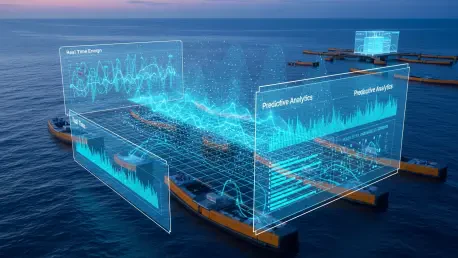
A vital component of this technological evolution is the integration of NVIDIA Omniverse to create high-fidelity digital twins of complex marine environments before any physical hardware is deployed. These virtual environments allow developers to simulate thousands of different wave scenarios and structural responses, accurately modeling how different currents and tidal patterns affect the floating infrastructure. By utilizing advanced simulation, the engineering team can optimize the geometry of the floaters to capture the maximum amount of energy possible while ensuring structural integrity during storms. This data-driven methodology effectively de-risks the capital-intensive process of marine engineering by providing a clear picture of expected performance. Beyond structural safety, these simulations help in planning the layout of entire wave farms to avoid interference between units, maximizing the total energy yield per square meter of coastal frontage, which is essential for scaling the technology to meet global power demands.
The role of accelerated computing extends deep into the operational management of these wave energy systems through the implementation of real-time analytics. By processing vast amounts of sensor data directly at the edge, the system monitors its own health and performance metrics without the latency of cloud-based processing. Predictive maintenance algorithms identify subtle patterns in mechanical vibrations or hydraulic pressure changes that might indicate an impending component failure, allowing operators to intervene before a breakdown occurs. This proactive approach is crucial for maintaining the high uptime requirements of modern data centers, where even a brief power interruption can lead to significant data loss. The integration of artificial intelligence into the hardware management layer creates a self-healing infrastructure capable of adapting to the constantly shifting dynamics of the marine environment with minimal human oversight, ensuring a steady stream of clean electricity for computing.
Global Implementation: Strategic Scaling and Sustainable Success
The practical application of this technology is currently being demonstrated through several high-profile international programs at major maritime hubs across the globe. Installations at Jaffa Port in Israel and the Port of Los Angeles are testing the feasibility of using wave energy to power data centers independently of the main utility grid. Expansion plans are also moving forward in Portugal, Taiwan, and India, targeting regions with established port infrastructure and a growing need for industrial-scale clean electricity to support local economic growth. These projects provide the foundational metrics needed to prove that wave energy can compete with traditional fossil fuels on both cost and reliability in real-world conditions. By situating these converters in busy industrial ports, the projects show how clean energy can be generated in the same locations where it is most needed for logistics and manufacturing. Each new installation provides a richer dataset that feeds back into efficiency models, continuously improving the overall output.
The integration of physical ocean power with predictive software marked the definitive transition of wave energy from a theoretical concept to a practical, grid-connected reality. Coastal nations successfully moved forward by prioritizing the deployment of modular systems that minimized the need for invasive seabed construction, thereby protecting marine ecosystems while securing energy independence. Stakeholders focused on refining the real-time feedback loops between wave generators and data centers to enable energy-aware computing, ensuring that the most intensive workloads coincided with peak power production. This commitment to data-driven engineering allowed for the rapid expansion of wave energy across diverse international markets, effectively decoupling industrial growth from carbon emissions. Future considerations shifted toward the creation of fully autonomous coastal energy hubs that managed their own maintenance through edge computing. By adopting these solutions, organizations secured a reliable and green power supply.