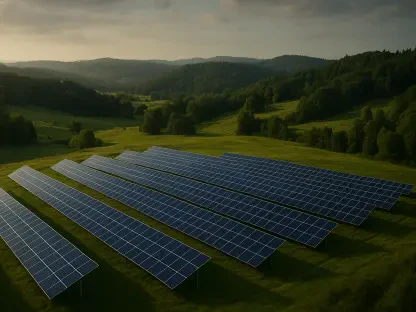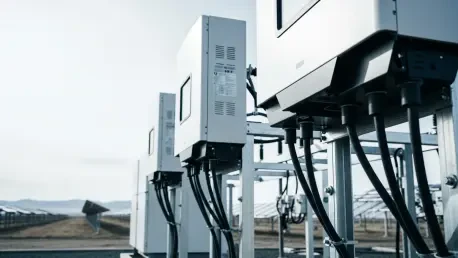

The vast horizons of the American West are currently undergoing a radical transformation as global tech giants and energy titans converge to solve the most pressing bottleneck of the digital age: power. Known colloquially as the “Cowboy Project,” this ambitious $1.2 billion endeavor in Wyoming represents a bold synthesis of 365 MW of solar generation and a massive 1,600 MWh battery storage system. As the demand for artificial intelligence and high-speed data processing reaches a fever pitch, this partnership between Enbridge and Meta serves as a high-stakes experiment in corporate responsibility and industrial-scale decarbonization. This roundup examines how the project redefines the high-plains energy frontier by proving that massive data centers can actually enhance regional grid stability rather than just draining it.
Redefining the High-Plains Energy Frontier
Industry analysts increasingly view the “Cowboy Project” as a sophisticated blueprint for the next generation of energy-intensive infrastructure. By integrating solar capacity with a colossal battery storage system, the project addresses the historical volatility of renewable energy in a region known for its unpredictable weather. This initiative stands out because it focuses on a holistic ecosystem where power generation and consumption are balanced in real-time. It suggests that the path to a carbon-free future requires more than just panels and turbines; it demands a fundamental rethinking of how energy is stored and distributed at the edge of the grid.
Moreover, the sheer scale of the $1.2 billion investment signals a shift in how multinational corporations approach their environmental footprints. Rather than relying on distant carbon offsets, Meta is investing in physical assets that provide tangible benefits to the local landscape. This transition from “green-washing” to “green-building” reflects a growing consensus among energy experts that the tech sector must take ownership of its supply chain. By anchoring this project in Wyoming, a state traditionally associated with fossil fuels, Enbridge is demonstrating that the energy transition is an inclusive economic opportunity that bridges the gap between old and new industrial legacies.
Orchestrating the “Cowboy Project” Through Infrastructure and Policy
Harnessing Eight Hours of Storage via Tesla’s Battery Technology
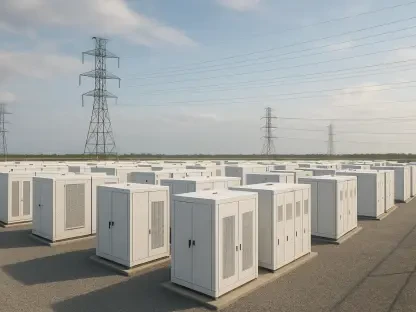
At the heart of this technical marvel lies the 200 MW / 1,600 MWh battery energy storage system, which leverages Tesla’s cutting-edge hardware to achieve an unprecedented eight-hour discharge duration. While most utility-scale batteries currently operate on a four-hour cycle, this extended capacity is vital for maintaining the constant uptime required by Meta’s regional data centers. Experts in grid management note that this extra duration effectively “firms” the solar power, allowing the facility to provide a steady stream of electricity well into the night. This move shifts the focus from intermittent renewable credits to a continuous, 24/7 carbon-free energy supply that mimics the reliability of traditional baseload power.
Furthermore, the choice of Tesla technology underscores a broader trend toward hardware verticalization in the clean energy sector. By utilizing high-density storage, the project maximizes the utility of every photon captured by the solar array, reducing waste and increasing the overall efficiency of the site. This approach is particularly important in high-altitude environments where temperature fluctuations can stress lesser battery systems. The integration of long-duration storage signifies that the tech industry is no longer satisfied with the status quo, pushing instead for infrastructure that can withstand the rigorous demands of the modern computing era without relying on the broader fossil fuel-heavy grid during peak hours.
Navigating the LPCS Tariff to Protect Local Ratepayers
One of the most innovative aspects of this project is the use of Wyoming’s Large Power Contract Service (LPCS) tariff, a regulatory mechanism designed to shield everyday citizens from the costs of massive industrial growth. This framework allows companies with energy loads exceeding 13 MW to negotiate market-based rates for renewable power without passing the infrastructure bill to residential neighborhoods. Legal and economic strategists point out that such policies are essential for maintaining public support for large-scale developments. By isolating the $1.2 billion cost within a private contract, the project ensures that Meta’s growth does not become a financial burden for the local population.
This decoupling of corporate expansion from public utility rates provides a template for other states grappling with the influx of energy-hungry data centers. The LPCS tariff acts as a safeguard, ensuring that the utility can serve its largest clients while maintaining its primary duty to the general public. Consequently, the “Cowboy Project” is often cited by policy advocates as a model of equitable development. It demonstrates that with the right regulatory tools, industrial progress and community interests can exist in a symbiotic relationship, fostering a business environment where technological advancement does not come at the expense of social stability or local affordability.
Strengthening Grid Resilience Through “Behind-the-Meter” Dispatch
The project also functions as a strategic safeguard for the regional utility, Cheyenne Light, Fuel and Power, through a unique “behind-the-meter” dispatch arrangement. Under this agreement, the utility gains the right to tap into the 1,600 MWh battery system during times of extreme stress or peak demand. This capability effectively transforms a private corporate asset into a public emergency resource, capable of preventing brownouts and stabilizing the regional frequency. Engineers highlight that this dual-purpose design is a significant departure from traditional “behind-the-meter” systems that exclusively serve a single facility, turning the data center into a critical provider of grid reliability.
This collaborative approach addresses one of the primary criticisms of the data center industry—its massive consumption of public resources. By offering a portion of its storage capacity back to the community, Meta and Enbridge are repositioning the data center as a “grid citizen” that contributes more than it takes during times of crisis. This level of integration is increasingly seen as a necessity for the survival of the grid as more intermittent renewables come online. The ability to discharge 200 MW of power at a moment’s notice provides the local utility with a powerful tool to manage the complexities of modern energy distribution, ensuring that the lights stay on for everyone.
Scaling the Enbridge-Meta Alliance into a Clean Energy Powerhouse
The Wyoming venture represents the latest milestone in an expansive 1.6 GW partnership between Enbridge and Meta, building on previous successes in Texas with projects like Clear Fork Solar and Easter Wind. This long-term alliance illustrates a shift toward strategic, multi-state collaborations rather than isolated, one-off power purchase agreements. Strategic consultants observe that by working together across different geographic regions, these companies can balance their energy portfolios and hedge against localized weather patterns. The Cowboy Project, specifically, serves as the crown jewel of this partnership, highlighting the evolution from simple wind farms to complex, integrated storage solutions.
This trend toward deeper corporate involvement in the energy sector suggests that “Big Tech” is becoming a primary driver of the energy transition. As these companies seek to meet aggressive sustainability targets, they are increasingly willing to fund the massive capital expenditures required for utility-scale battery installations. The scale of the Enbridge-Meta collaboration indicates that the future of the energy market will likely be dominated by these types of high-value, long-term partnerships. This move toward localized, high-capacity infrastructure allows tech firms to secure their energy future while providing the financial stability necessary for energy providers to build out the next generation of the American power grid.
Strategic Blueprints for Navigating the Energy Transition
To replicate the success of this Wyoming initiative, future developers should prioritize the co-location of generation and storage to minimize transmission losses and maximize grid flexibility. Stakeholders must realize that the technical success of a project is often dependent on the regulatory environment in which it operates; therefore, engaging with local governments to create specialized tariffs is a non-negotiable step. Organizations aiming for long-term sustainability should move away from the simplicity of unbundled renewable energy credits and toward the complexity of physical infrastructure ownership. This shift not only provides a better hedge against volatile energy markets but also builds the necessary social capital to operate in sensitive regional markets.
The Future of Integrated Green Infrastructure
The Cowboy Project was a definitive statement on the changing dynamics of the American energy landscape, proving that massive industrial expansion could be both environmentally sustainable and economically fair. By blending Enbridge’s engineering prowess with Meta’s logistical scale and Tesla’s storage innovations, the project established a new standard for corporate energy procurement. Looking forward, the focus must shift toward expanding these integrated models to include hydrogen storage and advanced grid-forming inverters to further enhance reliability. As the global thirst for data continues to grow, the ability to harmonize massive power needs with community resilience became the most vital success factor for any technology firm operating in the modern era.