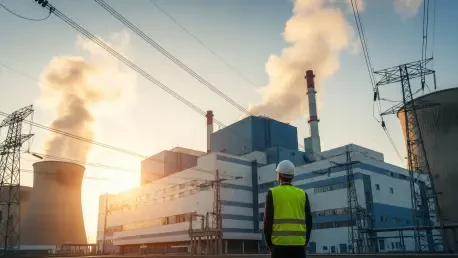

While the United States currently maintains a dominant position in global oil and gas production, a significant vulnerability exists within the domestic power grid that often escapes public scrutiny. Nuclear energy accounts for approximately 20% of the total electricity generated across the country, providing a stable and carbon-free baseline that supports millions of homes and industrial facilities. However, the fuel required to keep these reactors operational is heavily dependent on a fragile international supply chain dominated by state-owned entities in geopolitical regions that are increasingly volatile. This reliance on foreign enriched uranium presents a strategic risk to national sovereignty, as any disruption in the global market could lead to immediate price spikes or even local energy shortages. By focusing on rebuilding a domestic fuel cycle, the nation is attempting to bridge the gap between its current energy needs and the long-term goal of total energy independence. This effort is not merely an industrial upgrade but a fundamental shift in how the government and private sector collaborate to protect the critical infrastructure that powers the American economy.
Strategic Shifts in Global Energy Markets
The geopolitical landscape has undergone a radical transformation since the onset of the Russia-Ukraine conflict, forcing a rapid reassessment of how the United States sources its nuclear fuel. Historically, Russia has controlled nearly half of the world’s uranium enrichment capacity, and until very recently, it supplied about one-quarter of the requirements for American nuclear reactors. To mitigate this over-reliance, federal policy has moved toward a total prohibition on Russian uranium imports, with full enforcement scheduled to take effect by early 2028. This legislative shift has already sent ripples through the energy sector, as utilities scramble to secure alternative sources in a market where supply is increasingly constrained. As the availability of Russian material diminishes, the price for enrichment services has soared, nearly tripling over a short period. This inflationary pressure is expected to filter down to consumers and businesses, manifesting as higher electricity bills unless a robust domestic alternative is established quickly to stabilize the market.
Beyond the immediate concerns of fuel availability, the concentration of enrichment technology in the hands of a few foreign entities creates a technical bottleneck that threatens long-term security. Currently, many non-Russian suppliers depend on a extremely limited number of manufacturers for the high-precision centrifuges required to separate uranium isotopes. This lack of industrial diversity means that a mechanical failure or a localized economic downturn at a single facility in Europe could halt global production efforts. To counter this, Centrus Energy is actively scaling up its operations at the American Centrifuge Plant in Piketon, Ohio. By leveraging advanced domestic technology, the project aims to create a redundant and resilient infrastructure that does not rely on foreign proprietary hardware. This move toward vertical integration is essential because it ensures that the United States can maintain its nuclear fleet without being subject to the whims of international trade disputes or the logistical failures of overseas manufacturing partners.
Expanding Domestic Manufacturing and Production
The revitalization of the American nuclear industry requires a multi-pronged approach that extends from the laboratory to the factory floor. In Oak Ridge, Tennessee, efforts are underway to expand the manufacturing of advanced centrifuges, which are the primary engines of the enrichment process. This facility is critical because it represents the only current domestic capability to produce the specialized components needed for large-scale uranium enrichment. By increasing production capacity in Tennessee, the industry is laying the groundwork for a scalable expansion of the Piketon enrichment plant. This strategy allows for a phased rollout of new capacity, ensuring that as the 2028 deadline for Russian imports approaches, there is a steady increase in domestic supply to fill the void. This manufacturing push also creates a ripple effect throughout the regional economy, fostering a highly skilled workforce and supporting a network of sub-tier suppliers who provide the specialized materials and electronics necessary for nuclear technology.
Establishing a reliable supply chain also necessitates a focus on the “upstream” segments of the nuclear fuel cycle, including mining and chemical conversion. While enrichment often receives the most attention, the process cannot begin without a steady stream of raw uranium ore and the subsequent conversion of that ore into a gaseous state for processing. For decades, these sectors were neglected in favor of cheaper foreign imports, leading to a decay of domestic expertise and infrastructure. Current initiatives are now incentivizing the reopening of dormant mines in the American West and the modernization of conversion facilities. By addressing these foundational steps, the United States is working to eliminate every potential point of failure within the domestic supply chain. This comprehensive “mine-to-market” strategy is vital for supporting the ambitious goal of quadrupling nuclear energy output by mid-century, as new reactor designs and small modular reactors will require a diverse and reliable fuel base that only a sovereign industry can provide.
Future Policy and Infrastructure Integration
The transition toward a secure and sovereign nuclear supply chain was characterized by a period of intense collaboration between federal policymakers and private industrial leaders. Moving forward, the focus must shift toward the long-term sustainability of these domestic facilities through guaranteed procurement contracts and continued research into advanced fuel types. High-Assay Low-Enriched Uranium, or HALEU, is particularly important for the next generation of small modular reactors which promise greater efficiency and safety. These reactors are designed to be deployed in a variety of settings, from remote industrial sites to existing coal plants that are being decommissioned. To ensure these technologies are viable, the government should prioritize the establishment of a strategic uranium reserve, similar to the Strategic Petroleum Reserve, which can act as a buffer against future market volatility. This would provide utilities with the confidence needed to invest in new nuclear projects, knowing that the fuel supply is protected from sudden geopolitical shifts or global supply chain interruptions.
Looking ahead, the integration of digital monitoring and advanced logistics will be essential to maintaining the integrity of the nuclear fuel cycle. Implementing blockchain-based tracking for uranium canisters and utilizing artificial intelligence for predictive maintenance in centrifuge plants can significantly reduce operational risks and lower long-term costs. Furthermore, the United States should seek to lead an international coalition of democratic nations to establish a “trusted supplier” network, ensuring that allies can also benefit from American enrichment capabilities while reducing their own dependence on adversarial states. This proactive stance not only strengthens domestic energy security but also restores the country’s role as a global leader in nuclear non-proliferation and safety standards. By treating the nuclear fuel supply chain as a critical component of national defense rather than a mere commodity market, the nation can ensure that its transition to a clean energy future is built on a foundation of reliability, independence, and technological excellence.