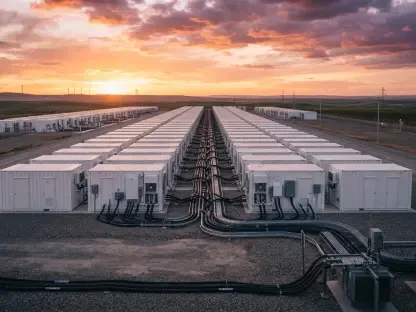

Data localization laws and security requirements are pushing organizations to move away from monolithic cloud strategies toward hybrid environments for sensitive AI tasks. Cisco Systems is currently undergoing a major transformation, moving beyond its traditional role as a hardware provider to become a foundational architect for the artificial intelligence era. This shift is driven by the global demand for infrastructure that can support the massive data requirements of AI while maintaining strict security and performance standards. As organizations rethink how they deploy AI workloads, Cisco is positioning its technology at the center of this new digital landscape. The way enterprises approach AI is evolving from a simple fascination with large language models to a sophisticated, workload-by-workload strategy. Decision-makers are now carefully choosing where to run their AI tasks based on a variety of factors, including data sovereignty, latency, and overall cost. This means moving away from a cloud-only approach toward a hybrid model that balances public clouds for general tasks with private data centers for sensitive operations.
Shifting Paradigms: From Cloud Centralization to Hybrid Intelligence
The strategy for deploying artificial intelligence has transitioned from experimental curiosity to a disciplined operational requirement focused on efficiency. Enterprises are no longer content with sending all their data to a centralized public cloud, as the costs and latency issues associated with such models have become prohibitive for real-time applications. Instead, there is a marked trend toward distributed intelligence where the network acts as the primary coordinator between local edge computing and specialized cloud clusters. This evolution requires a networking fabric that is both flexible and robust, capable of identifying which workloads require the massive scale of the cloud and which must remain on-premises for compliance or speed. By offering solutions that bridge these disparate environments, Cisco allows businesses to maintain a consistent policy framework across their entire digital estate. This approach ensures that the migration of data is governed by logic rather than technical limitations, enabling a more agile response to market demands.
Data Sovereignty: Navigating Local Regulations and Performance
Global organizations face an increasingly complex web of regulations that dictate where data can be stored and processed. In regions with strict localization laws, the ability to run AI models within national borders is not just a preference but a legal necessity for business continuity. This regulatory pressure has led to the rise of sovereign clouds, which are designed to keep data within specific jurisdictions while providing the high-performance computing necessary for modern machine learning. Cisco has responded by developing infrastructure that supports these localized environments, providing the same level of performance and security found in global hyperscale data centers. This ensures that sensitive information, such as financial records or proprietary source code, never leaves the controlled environment of a private or regional cloud. By prioritizing sovereignty, the company helps its clients avoid the risks of international data transfers while still leveraging the transformative power of generative AI and automated analytics.
Financial Indicators: The Surge in Specialized Infrastructure
The financial data confirms that the demand for AI-ready networking is surging across all sectors of the global economy. Cisco has seen a massive spike in orders for its Enterprise Nexus switches, which are specifically designed to handle the heavy data traffic generated by large-scale AI applications. This growth is not limited to traditional tech giants; while hyperscalers remain a primary customer base, there is a significant rise in investment from sovereign clouds and smaller enterprises looking to build their own secure environments. Cisco’s projected revenue from AI-related infrastructure is expected to reach billions of dollars from 2026 to 2027. This growth highlights a broader industry trend where organizations are prioritizing high-speed, low-latency networking to ensure their AI investments can function at scale. The company is successfully capturing this market by providing the essential “plumbing” that makes large-scale AI possible, turning the network into a strategic asset rather than a cost center for modern businesses.
Infrastructure Resilience: Meeting the Needs of Hyperscalers
While the enterprise market is expanding, the relationship between Cisco and the world’s largest data center operators remains a critical component of its market leadership. Hyperscalers require a level of throughput and reliability that far exceeds traditional enterprise networking standards, as they manage the world’s most demanding AI training clusters. To meet these needs, Cisco has introduced a new generation of high-capacity silicon and optical interconnects that minimize data bottlenecks between thousands of interconnected GPUs. These technological advancements allow for the seamless scaling of AI models, ensuring that the physical network does not become a limiting factor in the speed of innovation. By focusing on the unique requirements of these massive environments, the company has established a blueprint for high-performance networking that eventually trickles down to the broader enterprise market. This symbiotic relationship ensures that Cisco stays at the cutting edge of hardware development while supporting the backbones of the global digital economy.
Internal Innovation: Circuit as a Blueprint for Agentic Systems
Cisco is not just selling AI tools; it is using its own operations as a real-world test case for its customers to prove the viability of its solutions. Through its internal AI assistant, known as Circuit, the company manages millions of requests by orchestrating tasks between different language models based on specific needs. This demonstrates to other businesses that they can achieve operational efficiency by matching the complexity of a task with the most cost-effective and capable AI model available. The success of these internal deployments serves as a powerful proof-of-concept for organizations that are still hesitant to fully commit to an AI-driven workflow. By automating thousands of customer support inquiries and optimizing internal development cycles, Cisco is showing that agentic AI—systems capable of performing complex tasks independently—is no longer a theoretical concept. This practical application helps build trust with enterprise clients who are looking for reliable ways to integrate AI into their own unique business processes.
Operational Efficiency: Proving the Value of AI Orchestration
The use of AI within a corporate environment requires a high degree of orchestration to ensure that resources are not wasted on simple tasks that could be handled by smaller models. Cisco’s internal success with automated agents has shown that the intelligent routing of queries can lead to significant cost savings and faster response times for both employees and customers. By utilizing a diverse array of models, the company has created a tiered system where the network intelligently directs data to the most appropriate processing unit. This mirrors the strategy they recommend to their clients: the network should be the brain that decides where and how data is processed. This shift toward intelligent orchestration reduces the burden on human operators and allows IT teams to focus on higher-value strategic initiatives. As more companies see the tangible benefits of this internal transformation, the demand for networking hardware that supports such complex orchestration is expected to grow, further solidifying Cisco’s role in the AI ecosystem.
Technical Specifications: High-Capacity Silicon and Optical Networking
The technical demands of AI are far more intense than those of traditional data center workloads, requiring a complete rethink of how hardware is designed. AI architectures often require connecting computing resources across multiple locations, which can generate over ten times the traffic of standard web or database systems. To meet this challenge, Cisco has expanded its portfolio of high-capacity silicon and optics, providing the necessary bandwidth for GPU clusters to communicate without performance-degrading bottlenecks. As AI agents become more prevalent across enterprise networks, the pressure on infrastructure to perform reliably and with minimal delay will only increase. Cisco’s strategy is to provide the connective tissue that links these agents across diverse environments, from the edge to the core cloud. By focusing on low-latency and high-throughput hardware, the company ensures that the network remains a facilitator of AI performance rather than a constraint that holds back the potential of modern digital transformation.
Security Architecture: HyperShield and the Rise of Sovereign AI
As AI moves into the core of business operations, the security landscape must change to protect both proprietary data and the autonomous agents themselves. Cisco is responding by integrating AI defense mechanisms directly into its security architecture, moving away from perimeter-based defense to a more granular, distributed approach. New tools like HyperShield are designed to protect distributed AI environments, ensuring that sensitive data remains secure as it moves through the network from one processing node to another. A key part of this security strategy is the move toward sovereign AI and small language models that can run locally without external dependencies. By using smaller, task-specific models that can run on-premises, companies can avoid the risks associated with sending sensitive code or customer data to external cloud providers. This approach not only lowers costs but also ensures that organizations maintain strict control over their most valuable digital assets while adhering to global security standards.
Budget Realignment: Modernization in the Face of Constraints
In many global markets, technology leaders are facing a dilemma where they must balance the need for AI modernization with increasingly tight budget constraints. Rather than simply increasing their total spending, many organizations are reallocating funds from traditional maintenance and legacy systems to focus on AI readiness and cybersecurity. This shift in spending patterns suggests that AI is now viewed as a foundational requirement for long-term survival rather than a discretionary luxury that can be deferred. Cisco’s role as a partner in this transition is critical, as it provides the infrastructure that allows businesses to modernize their operations while staying compliant with local laws and regulations. The network is becoming the bridge that connects disparate data sources to the powerful computing resources needed to unlock the value of AI. This budget realignment signifies a permanent change in how IT departments view their infrastructure, prioritizing intelligence and security over simple connectivity.
Strategic Implementation: Navigating the AI-Native Transition
The successful implementation of AI networking required organizations to adopt a holistic view of their infrastructure that prioritized visibility across the entire stack. Technology leaders who moved away from rigid, legacy architectures discovered that flexibility and software-defined control were the most valuable assets in the transition to an AI-native environment. By adopting automated security protocols and high-bandwidth silicon early in the cycle, these businesses achieved a level of operational resilience that was previously unattainable. It became clear that the network was no longer a passive utility but the primary engine for digital growth and competitive advantage. To replicate this success, future strategies focused on consolidating security and networking into a single unified framework that could adapt to changing workloads in real-time. Prioritizing sovereign AI models and localized data processing proved to be the most effective way to maintain compliance while fostering continuous innovation across diverse and regulated global markets.