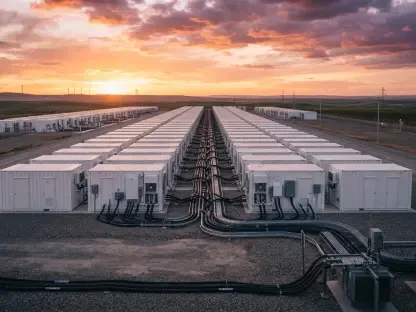

Geespace’s low Earth orbit infrastructure provides critical communication links for water resource management and energy infrastructure in remote regions. As a key subsidiary of the Geely Technology Group, this aerospace entity has aggressively expanded its satellite footprint to address the limitations inherent in conventional terrestrial networks. By the middle of 2026, the constellation has become a cornerstone of global industrial operations, offering high-speed, low-latency connectivity that reaches the most isolated corners of the planet. These satellites do not merely provide internet access; they serve as a sophisticated data backbone for an increasingly automated world. From the depths of the ocean to the peaks of remote mountain ranges, the GeeSAT constellation enables real-time monitoring of assets that were once considered invisible to central management. This evolution in satellite IoT is not just a technological milestone but a fundamental shift in how global enterprises manage risk, optimize resources, and maintain operational continuity across diverse and challenging environments.
Global Infrastructure: The Expansion of Satellite Networks
Bridging the Coverage Gap: Beyond Terrestrial Limits
The transition from terrestrial-based Internet of Things to a hybrid model involving low Earth orbit satellites represents a significant pivot in global telecommunications strategy. While cellular towers are efficient in densely populated urban centers, they leave approximately seventy percent of the Earth’s surface without reliable coverage. Geespace has effectively closed this gap by positioning its satellites at an altitude that minimizes signal delay while maximizing the breadth of geographic reach. In the current landscape of 2026, industries such as mining and maritime shipping are leveraging this omnipresent connectivity to transmit vital telemetry data without the fear of signal dropouts. Unlike traditional high-altitude geostationary satellites, which suffer from significant latency issues, the Geespace network provides a responsive link that is essential for autonomous systems. This infrastructure allows for the immediate transmission of health and safety data from remote sites, ensuring that automated machinery can be monitored and controlled with a precision previously reserved for land-based operations.
Automotive Integration: Transforming Connected Vehicles
Within the automotive sector, the synergy between satellite technology and vehicle telematics has redefined the concept of the connected car. Geespace’s integration with Geely’s broader ecosystem has facilitated the development of vehicles that remain connected regardless of their proximity to urban 5G infrastructure. This is particularly vital for the deployment of advanced driver-assistance systems and autonomous driving functions that require constant updates and high-precision positioning data. As these vehicles travel through mountainous regions or across vast plains, the satellite link takes over seamlessly when terrestrial signals fade, maintaining the integrity of navigation and safety protocols. By 2026, this capability has moved from a luxury feature to a standard safety requirement for long-haul trucking and international logistics fleets. The ability to push over-the-air updates to an entire fleet simultaneously, regardless of where individual units are located, has significantly reduced the time and cost associated with maintenance and software deployment for large-scale transportation providers.
Strategic Applications: Industry Impact and Efficiency
Logistics Visibility: Monitoring the Global Supply Chain
In the realm of global logistics, the ability to maintain continuous contact with cargo as it moves across international borders has become a non-negotiable requirement for modern commerce. Geespace’s satellite IoT services offer a robust solution by integrating sensors directly into shipping containers and transport vehicles. This ensures that environmental conditions, such as temperature and humidity, are constantly monitored, which is particularly critical for the transport of pharmaceuticals and perishable food items. As we move through 2026 and look toward 2028, the integration of these satellite links into standard logistics workflows has drastically reduced the incidence of cargo loss and spoilage. Furthermore, the data collected through these orbital links provides companies with actionable insights into route efficiency and fuel consumption. By analyzing real-time positioning data, fleet managers can make informed decisions that reduce carbon footprints and operational costs, illustrating how satellite-based IoT acts as both a commercial and environmental tool for the shipping industry.
Resource Stewardship: Managing Environment and Energy
Modern environmental management demands a granular level of data that terrestrial sensors alone cannot provide, especially in vast wilderness areas or offshore sites. Geespace has addressed this need by providing the primary communication layer for a new generation of smart environmental sensors. These devices monitor everything from water levels in remote reservoirs to the structural integrity of hydroelectric dams and offshore wind farms. By 2026, this technology has become indispensable for energy companies that must manage distributed assets across thousands of miles of rugged terrain. The satellite link ensures that even the most remote sensor can report anomalies instantly, preventing potential infrastructure failures before they escalate into environmental disasters. The progress made in recent months proved that orbital connectivity is no longer a niche luxury but a foundational utility for the global economy. By securing these communication pathways, stakeholders successfully mitigated the risks of data isolation. The primary recommendation for organizations involves a rapid transition toward dual-mode hardware that automatically switches between signals to ensure maximum uptime.