
The vulnerability of a modern military installation often lies not in its physical perimeter but in the fragile copper wires that connect its high-tech infrastructure to an aging civilian power grid. A single cyberattack on a regional substation or a severe weather event can plunge a high-readiness base into darkness, leaving national security operations dependent on finite diesel reserves. To break this dependency, the U.S. Army is moving away from the fragile civilian grid and toward a future powered by the atom.
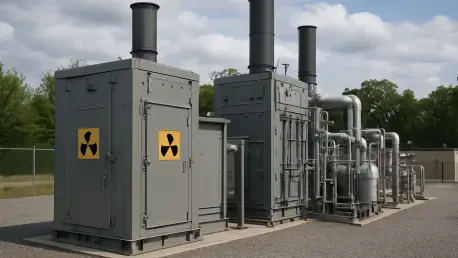
Through the ambitious Janus program, the Department of Defense is not just looking for a backup generator; it is seeking a permanent, carbon-free energy source. This initiative seeks to deploy microreactors that can fit on a truck and run for years without refueling. This shift marks a transition from viewing energy as a simple utility to treating it as a strategic asset that must be localized and protected within the wire.
The End of the Tethered Military: Energy Independence at the Perimeter
Breaking the tether to the regional grid represents a fundamental shift in how the military conceives of its domestic presence. For decades, installations have functioned as extensions of civilian infrastructure, sharing the risks of rolling blackouts and equipment failure. The introduction of microreactors allows for a clean break from this vulnerability, providing a baseline of power that remains unaffected by external fluctuations or deliberate sabotage of the surrounding energy network.
Furthermore, the transition away from diesel-powered generators addresses a significant logistical and tactical liability. Diesel is carbon-intensive and requires constant refueling, creating a supply chain that is both expensive and susceptible to disruption. By adopting a nuclear solution that operates for nearly a decade on a single fuel load, the Army is establishing a new standard for resilience that ensures the mission continues uninterrupted regardless of external circumstances.
Why Energy Resilience Defines Modern National Security
Modern warfare is increasingly digital and data-heavy, making energy resilience a cornerstone of national security in 2026. From drone operations to artificial intelligence processing, the modern soldier relies on a constant stream of electricity. In contrast to the kinetic battlefields of the past, today’s threats are often invisible, targeting the energy networks that sustain command and control centers. This reality necessitates a move toward decentralized power that can withstand sophisticated cyber warfare.
By deploying microreactors, the Army aims to solve the twin challenges of eliminating its massive carbon footprint and ensuring mission continuity. This transition views energy not as a utility provided by a third party, but as a resource that must be guarded with the same intensity as an ammunition depot. Localizing power generation ensures that even if the surrounding civilian world goes dark, the military’s eyes and ears remain active and ready for any contingency.
The Janus Program: A Strategic Blueprint for Deployment
The Army has moved beyond theoretical planning into a distributed national rollout involving five key industry players and several major military hubs. Contracts have been awarded for deployments at Fort Liberty in North Carolina, Fort Moore in Georgia, Fort Campbell in Kentucky, Fort Cavazos in Texas, and Fort Drum in New York. This geographically diverse testing ground allows officials to evaluate how different microreactor designs perform under various climatic conditions and regional grid constraints.
Using a financial model inspired by the private space sector, the program utilizes “other transaction authority” agreements to foster rapid innovation. This milestone-based payment system incentivizes private investment, aiming to create a self-sustaining commercial nuclear industry rather than a permanent government subsidy. While these reactors typically support the local utility, they are designed with “islanding” capabilities to decouple from the main grid during emergencies, ensuring dedicated power for the installation.
Engineering Safety: TRISO Fuel and Generation IV Technology
The credibility of this nuclear pivot rests on “inherently safe” designs that differ fundamentally from the massive reactors of the previous century. Experts point to the use of TRISO fuel, which encapsulates uranium in specialized layers that prevent radioactive leakage even under extreme thermal stress. This robust design ensures that the reactor remains contained, regardless of the severity of an external attack or internal malfunction, effectively neutralizing traditional safety concerns.
Unlike older plants that required complex mechanical pumps, these Generation IV microreactors rely on passive cooling systems. By utilizing natural air circulation to dissipate heat, the reactors are engineered to shut down automatically without human intervention in the event of a system failure. This “walk-away” safety feature makes these units ideal for deployment near personnel and sensitive infrastructure, providing a reliable power source that requires minimal oversight.
Practical Frameworks for Deployment and Waste Management
To ensure these reactors are viable in a military setting, the Army established frameworks that prioritize safety and public trust. A critical component involves the strategy for High-Assay Low-Enriched Uranium, which is currently sourced by downblending federal stockpiles while domestic production scales up. Additionally, a strict “no-waste-left-behind” policy mandates that all spent fuel and radiological materials must be removed from the installation within two years of decommissioning.
Army officials also prioritized collaboration with local utility providers to ensure these reactors stabilize the local energy ecosystem. Once these domestic models are proven successful from 2026 to 2028, the Army intended to scale the technology for use in austere environments like the Pacific Islands. Planners identified standardized transport protocols as a priority, ensuring that these units moved seamlessly from domestic testing to the tactical edge. These steps ensured that the military did not just adopt new technology but fundamentally transformed its sustainment model.