
The New Frontier of American Nuclear Ambition
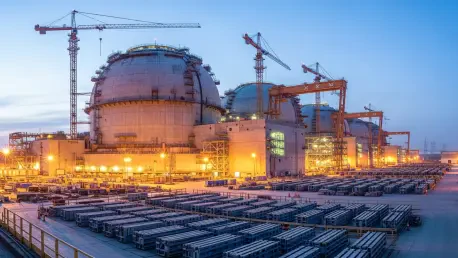
The recent injection of seventeen point five billion dollars into the American power grid marks the most significant federal attempt to revitalize domestic energy since the mid-twentieth century. Orchestrated by the Office of Energy Dominance Financing, this strategic move utilizes conditional loans to kickstart the construction of ten large-scale nuclear reactors. The initiative focuses on more than just physical infrastructure; it aims to accelerate project timelines by three years while revitalizing a dormant supply chain. As the nation pursues a massive goal of deploying 300 GW of new nuclear capacity by 2050, this investment serves as a crucial litmus test. Analyzing whether this capital is a sufficient catalyst or merely a minor contribution to an industry with high entry barriers is essential for understanding the current energy trajectory.
A Legacy of Stagnation and the Push for Modernization
To grasp the weight of this announcement, one must consider the recent history of domestic nuclear power, which has faced significant cost overruns and chronological delays. For decades, these hurdles led many utilities to prioritize natural gas or renewables over nuclear projects. The primary obstacle remains the first-of-a-kind challenge, where the lack of a standardized supply chain makes each reactor a bespoke and expensive undertaking. The federal mandate to have ten reactors under construction by 2030 represents an attempt to break this cycle by shifting toward a standardized model. By focusing on nth-of-a-kind efficiency, the government intends to make repeated builds faster and more affordable, departing from the failed strategies of previous decades.
Deconstructing the $17.5 Billion Federal Framework
The Public-Private Partnership and the AP1000 Model
Central to this initiative is a partnership with Westinghouse to utilize the AP1000 reactor model through a unique procurement strategy. This model involves collaboration with several utilities to secure essential components at fixed prices, shielding projects from the inflationary pressures that derailed previous efforts. By standardizing the technology, the Department of Energy creates a predictable environment intended to encourage utility commitments. While major regional players show interest through letters of intent, the transition toward finalized construction contracts represents a significant leap for the market.
The Massive Funding Gap and Private Equity Requirements
Despite the optimism regarding federal support, a staggering math problem persists for industry stakeholders. Experts note that the total cost for ten reactors is projected to exceed $200 billion, meaning the current funding is merely a bridge rather than a full payment. Each project must secure $1 billion in upfront equity to access federal loans, placing a heavy burden on regulated utilities. These entities must justify massive expenditures to state regulators and ratepayers, creating a challenge in bridging the gap between federal support and the total capital required for completion.
Supply Chain Revitalization and Regional Considerations
The complexity of building multiple reactors involves a total overhaul of the domestic supply chain and careful consideration of regional demand. Much of the current capital is earmarked for component orders—the internal mechanics of the reactors—rather than immediate on-site assembly. This methodology aims to prevent bottlenecks, yet it keeps financial risk high if the broader market does not stabilize. Utilities in different states face varying degrees of regulatory scrutiny, which influences their willingness to commit to these long-term projects.
Looking Ahead: The 2030 Milestone and Technological Evolution
The future of the sector depends on how the industry evolves over the next few years toward advanced reactor technologies. Emerging trends suggest a shift toward a more streamlined regulatory process at the Nuclear Regulatory Commission, potentially paving the way for small modular reactors. The success of the current ten-reactor plan will likely determine whether the nation can realistically achieve its 2050 carbon-free goals. If these projects fail to reach the construction phase soon, the industry may face another period of long-term stagnation despite the current momentum.
Strategic Recommendations for Navigating Nuclear Investment
Utilities and investors looking to capitalize on this momentum must secure diverse capital streams, as federal loans alone are insufficient for the $200 billion requirement. Finalizing labor agreements and supply chain contracts early is essential for derisking projects. Professionals in the sector should remain informed about shifts in financing requirements to maintain eligibility for federal support. Furthermore, advocating for long-term policy stability is vital, as nuclear projects span decades and require consistency across different political administrations.
Final Verdict: A Catalyst for Growth or a Symbolic Gesture?
In summary, the seventeen point five billion dollar allocation functioned as a significant down payment, yet it remained insufficient as a total solution for the construction of ten new nuclear reactors. The initiative succeeded in providing the necessary momentum to revitalize the supply chain and lowered the entry fee for utilities, although the massive funding gap continued to be a formidable obstacle. The significance of this topic lay in its role as the centerpiece of the American clean energy transition. Whether this investment led to a nuclear renaissance or became another cautionary tale depended on the industry’s ability to secure further private capital and meet the looming deadlines. For the period analyzed, the federal government provided the spark, but the responsibility for sustaining the fire fell to the private sector.