
Nearly 20 million people and five million acres of farmland depend on the Colorado River, yet 95 percent of the basin is currently suffering from a severe and prolonged drought. This environmental strain exposes the fragile nature of a network designed for a demographic and climatic reality that no longer exists. Across the United States, municipal water systems lose an estimated two trillion gallons of treated water annually due to deteriorating infrastructure. The American Society of Civil Engineers has repeatedly signaled that the system requires an investment exceeding one trillion dollars over the next two decades just to maintain current service levels. Many of these buried assets, particularly in the Northeast and Midwest, are over a century old, predating modern engineering standards. As urban populations continue to shift and expand, the mismatch between existing capacity and contemporary demand creates a precarious scenario where localized failures could trigger systemic regional collapses.
The Technological Shift: Leak Detection and Management
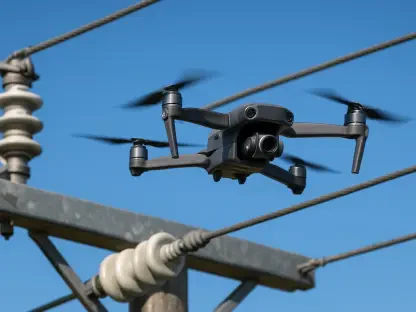
Municipalities are increasingly moving away from reactive repairs toward proactive asset management by integrating Internet of Things (IoT) sensors directly into their distribution lines. Acoustic monitoring devices, such as those produced by Xylem or Mueller Water Products, can identify the distinctive sound frequency of a pinhole leak long before it erupts into a catastrophic main break. This technology allows utility operators to visualize the real-time health of their pipe networks on centralized dashboards, effectively prioritizing repairs based on risk rather than age alone. By deploying these smart sensors, cities like Houston or Los Angeles can drastically reduce the non-revenue water loss that has historically drained municipal budgets. Furthermore, the integration of cellular-based advanced metering infrastructure (AMI) provides granular data on consumption patterns, enabling a more precise understanding of system-wide pressure fluctuations that often precede mechanical failures.
Beyond hardware, the implementation of digital twins—virtual replicas of physical water systems—has become a cornerstone of modern utility management. These digital models use machine learning algorithms to simulate various stress scenarios, such as sudden surges in demand or the impact of a significant pipe failure. Companies like Bentley Systems and Autodesk provide the software environments where engineers can test the efficacy of different pressure-management strategies without risking actual assets. This computational approach allows for the optimization of pump operations, which not only saves energy but also extends the operational life of the infrastructure by reducing mechanical wear. As these AI models ingest more historical data, their predictive capabilities improve, allowing utilities to forecast potential weak points with accuracy. This shift from physical intuition to data-driven decision-making represents a fundamental evolution in how the nation manages its most vital resource, ensuring that funding is allocated effectively.
Strategic Imperatives: Advanced Reclamation and Governance
To combat the depletion of traditional reservoirs, engineers are looking toward unconventional sources through advanced water reclamation and desalination technologies. The Orange County Groundwater Replenishment System in California serves as a global benchmark, utilizing a three-stage process of microfiltration, reverse osmosis, and ultraviolet disinfection to convert wastewater into high-quality drinking water. This potable reuse strategy provides a drought-proof supply that is significantly more energy-efficient than long-distance water transport. Meanwhile, advancements in membrane technology have reduced the costs associated with seawater desalination, making it a viable option for coastal communities facing saltwater intrusion. New graphene-based filters are currently being tested to further lower the energy threshold required for filtration, potentially revolutionizing the economics of desalination between 2026 and 2028. These technological leaps are transforming wastewater from a liability into a localized asset, reducing the reliance on over-tapped surface waters.
Policy shifts focused on decentralized water systems and localized treatment modules eventually played a critical role in stabilizing the national outlook. Rather than relying solely on massive, centralized treatment plants that remained vulnerable to single points of failure, many regions adopted distributed infrastructure models. These smaller, modular units were deployed in rapidly growing suburban areas, providing immediate capacity without the need for extensive and costly pipeline expansions. Stakeholders recognized that the path to a resilient future required immediate investments in workforce development and cybersecurity for industrial control systems. Programs were established to train technicians capable of managing complex SCADA systems and IoT networks, filling the gap left by an aging workforce. Ultimately, the successful stabilization of the water infrastructure depended on a commitment to innovation and the recognition that water security was the fundamental prerequisite for national resilience.