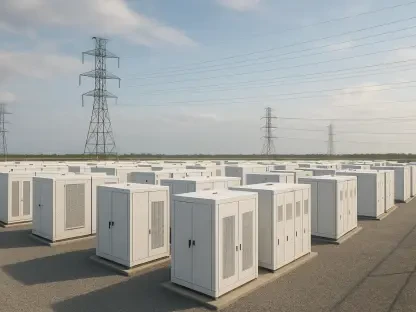

The rapid expansion of utility-scale battery energy storage systems has become a defining characteristic of the modern American electrical grid, yet the speed of this transition has significantly outpaced the development of comprehensive federal safety standards. As state and local governments scramble to incorporate these massive lithium-ion installations into their renewable energy portfolios, the absence of a unified regulatory framework has created a patchwork of safety protocols that often lack the rigor necessary for industrial-grade hazards. To bridge this gap, Representative Jimmy Panetta introduced the Better Energy Storage and Safety Act, designated as H.R. 8706, which represents a pivotal shift in how the federal government approaches grid modernization. Rather than focusing solely on the efficiency and deployment of new storage technologies, this legislative effort prioritizes the physical security and health of the communities where these systems are built. This bill marks a transition toward a more cautious and research-driven era of renewable energy development.
Analyzing the Impact of the Moss Landing Incident
The momentum behind this federal intervention reached a critical threshold following a severe industrial fire at the Vistra energy storage facility in early 2025. This site, recognized as one of the largest high-capacity battery installations in the world, suffered a massive thermal runaway event that resulted in a public health emergency. For several days, toxic smoke billowed from the facility, drifting across four California counties and forcing thousands of residents to shelter in place as air quality plummeted to hazardous levels. The scale of the smoke and the sheer intensity of the fire served as a visceral warning to policymakers that the risks associated with high-density energy storage are not merely theoretical but possess the potential for regional disruption. This event highlighted the vulnerabilities inherent in current lithium-ion technology when deployed at a massive scale, demonstrating that a single point of failure can escalate into a massive environmental and public health crisis for surrounding communities.
Beyond the immediate environmental impact, the fire exposed the glaring limitations of contemporary emergency response strategies when dealing with large-scale battery failures. Local fire departments found themselves battling a chemical fire that defied traditional suppression techniques, as lithium-ion cells can enter a self-sustaining cycle of heat generation that renders standard firefighting methods ineffective. These incidents highlighted a troubling reality: most first responders currently lack the specialized training and high-tech equipment required to safely manage or extinguish a thermal runaway event at an industrial scale. The realization that these fires can burn uncontrollably for extended periods, releasing a cocktail of hazardous pollutants, underscored the urgent necessity of a proactive federal framework. Instead of reacting to disasters after they occur, the goal shifted toward developing advanced failure-prevention technologies and disaster mitigation strategies that are integrated into the design phase of every storage project across the nation.
New Mandates for Stress Testing and Failure Prevention
At the core of the BESS Act is a significant revision of how the Department of Energy evaluates energy storage technologies, moving the priority from basic functionality to extreme-case survivability. The legislation mandates a transition toward “stress testing to failure,” a rigorous methodology that forces systems beyond their normal operating limits to identify the precise moment and mechanism of a catastrophic breakdown. This shift ensures that engineers and regulators understand how battery modules will behave under the worst possible conditions, such as extreme heat, electrical surges, or physical impacts. By institutionalizing these tests, the federal government aims to prevent the deployment of hardware that might be prone to latent defects or unexpected volatility. Identifying these weaknesses before a system is installed near residential areas or critical industrial centers is essential for maintaining public trust in the transition toward a carbon-neutral power grid. This proactive evaluation process sets a new standard for hardware reliability.
To support these heightened safety requirements, the bill proposes an annual allocation of $30 million dedicated specifically to research focused on thermal runaway prevention and advanced fire abatement technologies. These funds are slated to empower the National Institute of Standards and Technology and the U.S. Fire Administration to develop a comprehensive 10-year strategic plan for the safer implementation of storage technology. The scope of this oversight is remarkably broad, encompassing not only the individual battery cells but also the internal components, cooling systems, and monitoring software that make up the entire storage ecosystem. By examining the system as a whole, the legislation ensures that no component is left unmonitored or unanalyzed. This investment represents a long-term commitment to evolving battery chemistry and cooling designs so that the next generation of storage systems is inherently resistant to fire. This approach moves the industry toward a safety-first model that acknowledges the complexities of modern energy chemistry.
Building Bipartisan Support and National Standards
While energy policy is often a point of contention in Washington, the focus on safety and community protection has garnered unexpected bipartisan support for H.R. 8706. Representatives from states like North Carolina, which has seen a surge in battery manufacturing and grid investments, have joined the effort to ensure that local infrastructure is backed by national safety standards. This collaboration is driven by the understanding that a lack of standardized safety protocols creates unnecessary risks for first responders and local taxpayers alike. Currently, emergency crews in different states may follow entirely different procedures when responding to a battery fire, leading to confusion and potential injury during high-stress incidents. By involving National Labs in the data-gathering process, the bill aims to provide firefighters with a science-based playbook for managing electrochemical emergencies. This unified national approach ensures that a firefighter in any state has access to the same high-level training and information as their counterparts in larger metropolitan areas.
The legislation also seeks to harmonize federal policy with the stringent fire protection standards that some states have already begun to implement. California, having been at the epicenter of several high-profile storage incidents, has led the way in developing localized safety mandates, but the BESS Act aims to elevate these localized successes into a national framework. By creating a consistent set of expectations for developers and operators, the bill reduces the regulatory uncertainty that can hinder large-scale energy projects. This alignment ensures that every citizen, regardless of their location, benefits from the highest level of industrial safety. Furthermore, the establishment of national standards facilitates the growth of the domestic battery industry by providing a clear roadmap for compliance and safety-led innovation. As the country moves toward a more resilient and decentralized grid, the ability to maintain safety through standardized protocols becomes a cornerstone of national energy security and public welfare. This effort bridges the gap between state-level action and national energy priorities.
The legislative landscape of 2026 reflected a growing consensus that the transition to sustainable energy must be anchored in rigorous safety research rather than just rapid deployment. Lawmakers determined that the path to a carbon-neutral future required a systematic overhaul of how the Department of Energy and industrial partners managed technical failures. It became clear that the integration of utility-scale storage demanded new insights into chemical volatility and fire suppression that were previously overlooked. Experts identified the need for real-time monitoring sensors and automated shutdown protocols as the next critical frontier in battery design. Industry leaders began to advocate for the adoption of solid-state and other non-flammable chemistries to mitigate the risks associated with traditional lithium-ion systems. This period established a precedent where public safety was viewed as an essential component of technological progress, ensuring that future grid expansions remained secure. This strategic shift provided a definitive framework for the safe management of national energy resources.